5 min read · Last updated July 14, 2026
By the YourAutoOptions Editorial Team. Reviewed by Steven Sun.
- Dealer mechanics generally cost about 25% more per hour than independent shops, per AAA.
- The parts are often identical, so what you are really comparing is the labor rate and the reason to upsell.
- Recall and warranty work is free at the dealer and should never be paid for at an independent shop.
- Independent shops usually win on routine repairs and older, out-of-warranty cars.
In this article
- Why the dealer costs more
- When the dealer is the smart call
- When the independent shop wins
- Dealer vs independent at a glance
- How to get an honest quote from either
- Frequently asked questions
Two shops quoted Priya for the same job on her 2019 Subaru Outback: replace the front brake pads and rotors. The dealer wanted $780. The independent shop down the street wanted $520. Same parts, same two-hour job. The $260 gap was almost entirely labor rate.
For repair disputes and estimates, the FTC’s auto repair guidance recommends getting written estimates and understanding shop policies before authorizing work. When dealer work is tied to a used-car purchase, the FTC’s used-car dealer guide also warns shoppers to review warranty terms before relying on dealer promises.
The dealer-versus-independent question does not have one answer. It depends on the repair. Here is how to know which shop to call for which job. On a few repair categories, like a transmission replacement quote, the better move isn’t picking a shop at all but paying for a second one to weigh in; see when a second opinion diagnostic fee is worth paying.
Why the dealer costs more
Most of the gap is labor. According to AAA, almost half of all repair shops charge between $120 and $159 an hour, and dealer mechanics generally cost more than independents by 25% or more. In high-cost states the spread is dramatic: AAA lists average rates above $270 an hour in Connecticut and California.
The dealer has real reasons for the higher rate. It pays for factory-trained technicians, brand-specific diagnostic equipment, and the overhead of a large franchised facility. For a routine brake job, you are paying for capability you do not need. For a complex electronics fault on a late-model car, that same capability is exactly what you are paying for.
The parts are often a wash. A dealer uses OEM (factory) parts by default, but a good independent shop can install the identical OEM parts if you ask, or quality aftermarket parts for less.
When the dealer is the smart call
There are jobs where the dealer is not just acceptable, it is the right choice:
- Recalls and warranty repairs. These are free at the dealer, and warranty work must be done there to stay covered.
- Complex electronics and software. Advanced driver-assist systems, transmission control modules, and factory software updates often need the dealer’s tools.
- Rare or new models. If your car is uncommon, the dealer may be the only shop with the parts and the training.
Before you assume a repair is out of warranty, check. You can look up open recalls for free by entering your VIN at the federal safety site, and many powertrain warranties run to 60,000 miles or more. See exactly how to check and what it can save you before you approve either shop’s estimate.
An independent shop using an aftermarket or remanufactured part is not automatically a warranty risk either. Federal law protects your car’s warranty even when a repair uses a non-dealer part, and knowing which parts warranty is actually worth paying for can matter more than which shop’s name is on the invoice.
When the independent shop wins
For most everyday repairs on an out-of-warranty car, a trusted independent shop is the better value:
- Routine maintenance and wear items: brakes, suspension, belts, batteries, fluid service.
- Older vehicles past the factory warranty, where OEM-only pricing buys you nothing.
- Anything where you want to choose the parts and get a mechanic who talks to you directly instead of a service writer.
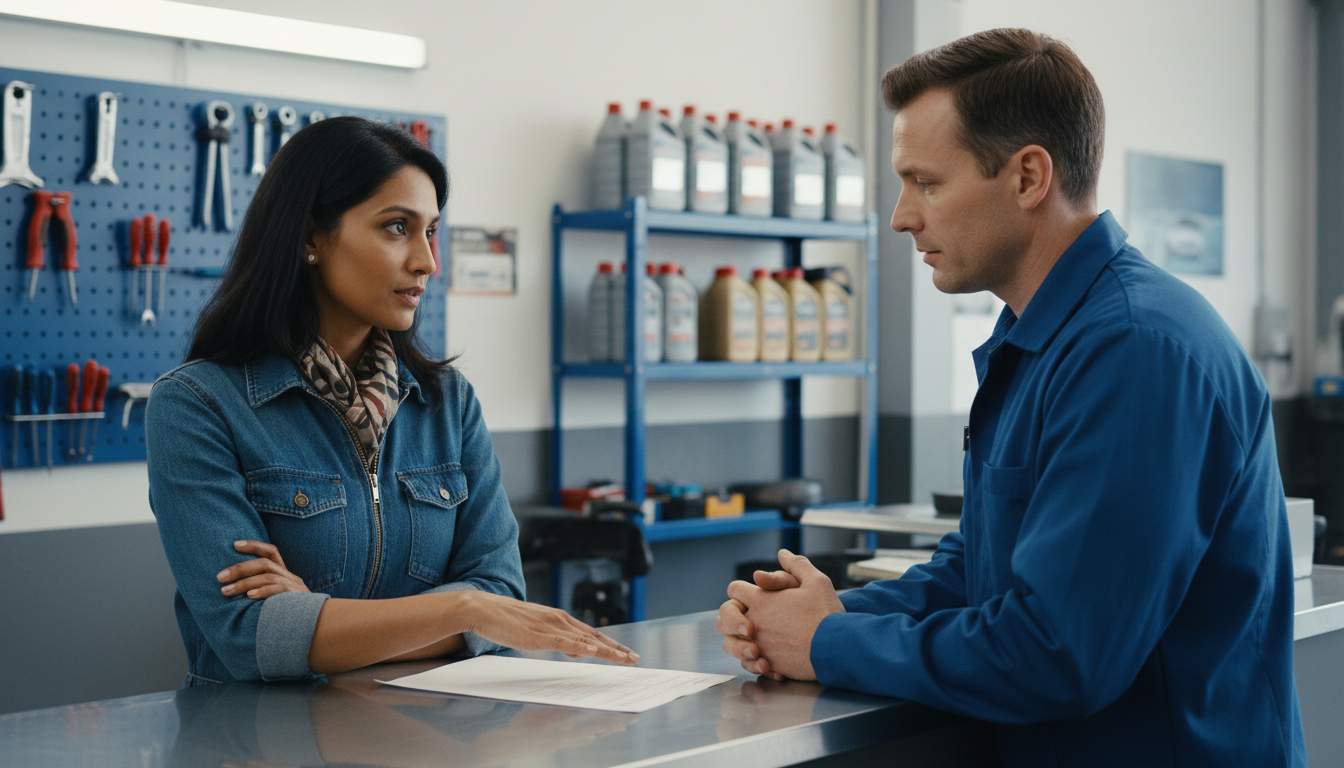
The savings are not small. On Priya’s brake job, the independent shop’s lower labor rate alone saved $260 on a single visit. Across a year of ownership, AAA’s Your Driving Costs study puts maintenance, repair, and tires at about 10 cents per mile, so shaving 25% off labor adds up fast for a daily driver.
Dealer vs independent at a glance
| Factor | Dealership | Independent shop |
|---|---|---|
| Typical labor rate | About 25% higher, often $155 to $280+ per hour | Often $120 to $159 per hour |
| Parts used | OEM factory parts by default | OEM or quality aftermarket, your choice |
| Tools and training | Factory diagnostic tools, brand-specific training | Strong on common makes, may refer out rare jobs |
| Recall and warranty work | Free, and required to keep coverage | Cannot perform warranty or recall work |
| Best for | Warranty, recalls, complex electronics, rare models | Routine repairs, older cars, out-of-warranty maintenance |
How to get an honest quote from either
The shop type matters less than how you handle the quote. Three moves protect you at either one:
1. Get the estimate itemized. Labor and parts should be listed separately, with the labor hours shown. That is how you catch an inflated rate. 2. Ask for the labor rate up front. A shop that will not tell you its hourly rate before the work is a shop to avoid. 3. Get a second quote on anything over about $500. Two estimates on the same job, like Priya’s, is the single best way to see who is fair.
Do that, and the dealer-versus-independent question mostly answers itself: use the dealer for warranty, recalls, and the hard electronic jobs, and a trusted independent shop for everything else.
Whichever shop you choose, knowing how to read the estimate itself before you approve it is what actually protects you from an inflated bill.
Part of that labor-rate gap comes down to how the hours themselves get billed. Flat-rate book time works the same way at both a dealer and an independent shop, and it is worth understanding before you compare quotes.
Frequently asked questions
Does going to an independent shop void my warranty? No. Federal law protects your right to use an independent shop for routine service without voiding the factory warranty. Warranty repairs themselves, however, must be done at the dealer to be covered.
Are dealer parts better than what an independent shop uses? Not necessarily. Dealers use OEM factory parts, but a good independent can install the same OEM parts if you ask. Quality aftermarket parts are often just as reliable for common repairs and cost less.
Why is the dealer’s quote so much higher for the same repair? Mostly labor rate. AAA reports dealers generally charge 25% or more per hour than independents, to cover factory training, specialized tools, and franchise overhead. The parts and the actual work are often identical.
When should I always use the dealer? For recalls, warranty repairs, and complex electronic or software issues. Recall and warranty work is free at the dealer, and their brand-specific tools are sometimes the only ones that can diagnose newer systems correctly.
How do I know if a repair quote is fair? Get it itemized with labor and parts separated, ask for the hourly labor rate, and get a second quote on anything over about $500. Comparing two written estimates for the same job is the fastest way to spot an inflated price.
Leave a Reply