7 min read · Last updated August 19, 2026
- NHTSA recall campaign 14V311 covered 461,338 Subaru vehicles across 20 named salt-belt states plus Washington, D.C., after road salt reached the brake lines through a gap in the fuel tank protector and caused corrosion-driven brake fluid leaks.
- Pennsylvania’s official state safety inspection bulletin lists a frame that isn’t in solid condition, rust that lets exhaust gases enter the cabin, and rusted-through bumpers as automatic rejection criteria, not judgment calls left to the inspector.
- The same bulletin explicitly treats surface rust or pitting on a brake rotor as cosmetic, not a failure, unless it’s actually reducing stopping performance, which is the real line between what’s rejectable and what’s just ugly.
- A mechanically sound engine and a structurally rusted frame are not the same car; Frank’s 142,000-mile truck still started on the first try, and the frame-mount repair that followed the same rust still ran $2,400.
In this article
- Why the engine outlives the frame in salt states
- What rust actually does to a frame, and how fast
- What an inspector is required to fail, versus what’s cosmetic
- The ten-minute check you can do yourself
- Frequently asked questions
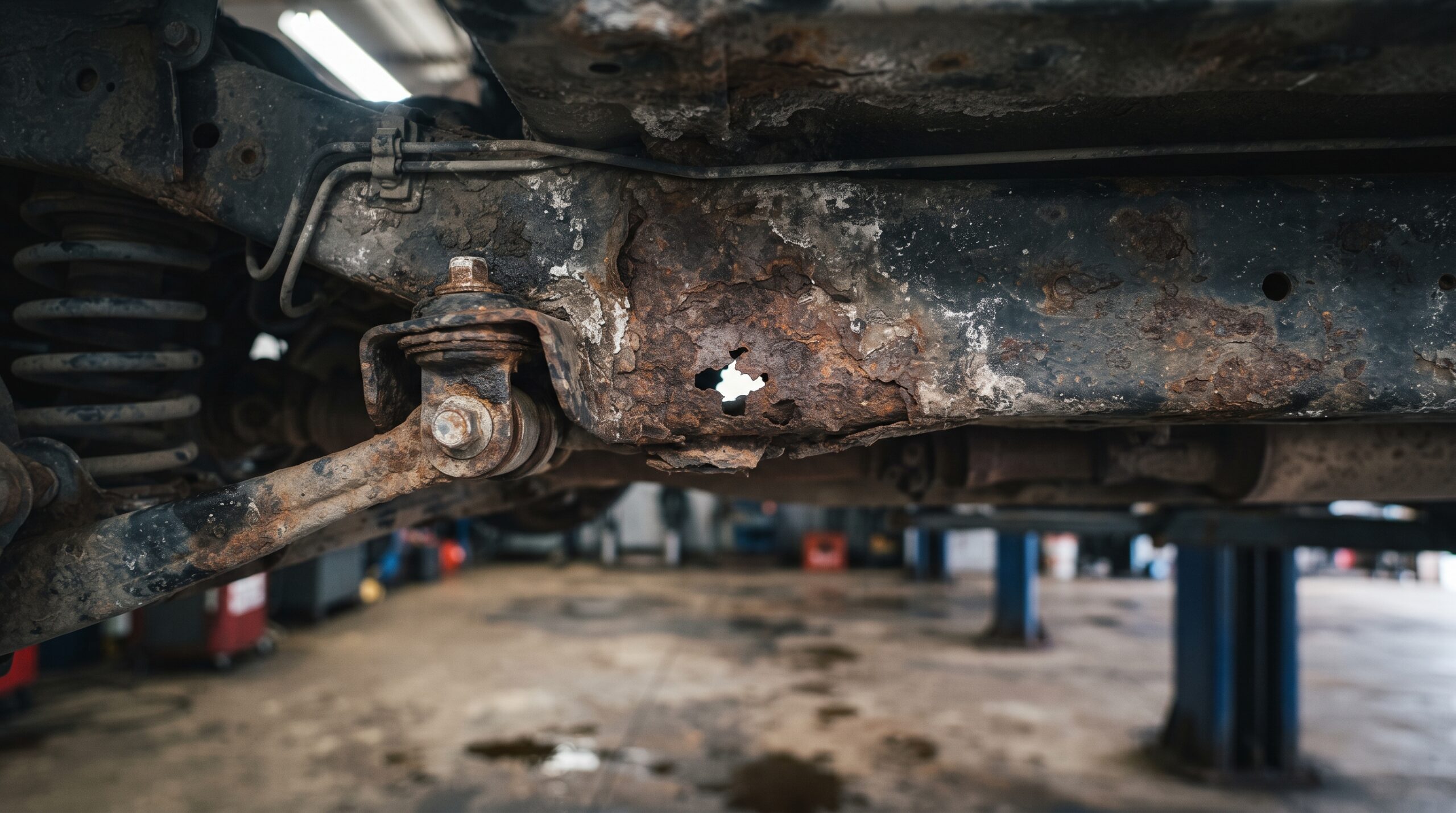
Frank’s 2013 Chevrolet Silverado has 142,000 miles on an engine that still starts on the first try every morning in Syracuse, New York. At his state inspection this spring, the mechanic failed it anyway: the frame had rusted through at a suspension mount, the exact kind of structural rust defect that salt-belt states like Pennsylvania treat as an automatic failure, and the repair quote came back at $2,400.
Why the engine outlives the frame in salt states
An engine’s wear is driven by heat, friction, and mileage, things an owner can see and manage. A frame, subframe, rocker panel, or brake line’s wear is driven by something almost nobody checks: road salt used for winter de-icing, splashing up onto the underside of the car for months at a time, every year, for as long as the car is driven in a cold-weather state. The two clocks run independently. It’s entirely normal for an engine with plenty of life left to be sitting on a frame that’s already structurally compromised, because nothing about how the engine runs tells you anything about what’s happening six inches below it.
Manufacturers already know this geography matters. In 2014, Subaru recalled certain 2005-2014 Legacy, Outback, Impreza, and Forester models, 461,338 vehicles in total according to NHTSA’s recall database, specifically in Connecticut, New York, Pennsylvania, Ohio, Michigan, and 15 other named salt-belt states plus Washington, D.C. Salt water was reaching the brake lines through a gap in the fuel tank protector, corroding them from the outside. NHTSA’s own summary of the consequence is blunt: “brake line corrosion may result in brake fluid leakage. Fluid leakage may result in longer distances being required to slow or stop the vehicle, increasing the risk of a crash.” Notably, Subaru still covered the repair for free even on cars registered outside those states, on request, because the company knew a car’s registration history doesn’t fully capture where it actually spent its winters.
What rust actually does to a frame, and how fast
Corrosion on structural steel doesn’t stay cosmetic. It starts as surface rust, progresses to flaking scale that eats into the metal’s thickness, and eventually perforates, meaning a hole forms clean through. Once a frame rail or brake line is perforated, welding or patching it back to the manufacturer’s original strength specification often isn’t realistic, which is why inspectors treat perforation, not surface rust, as the real line. Frank’s $2,400 frame-mount repair on a 142,000-mile truck is exactly the kind of number worth running through a repair-or-sell break-even calculation before committing, because a frame repair doesn’t reset the corrosion clock on the rest of the underside, it just fixes the one spot an inspector happened to catch.
What an inspector is required to fail, versus what’s cosmetic
Pennsylvania’s own official state safety inspection bulletin spells out the rejection standard directly: rust that permits exhaust gases to enter the passenger or cargo compartment, protruding metal or loose parts creating a hazard, bumpers rusted so they’re no longer firmly attached, and “frames that are not in solid condition” are all automatic failures. There’s no discretion built in for how good the engine sounds.
The same bulletin draws a real distinction most owners don’t expect: rust or pitting on a brake rotor, by itself, does not fail an inspection. An inspector has to determine that the rust is actually reducing stopping performance, not just present, before it counts against the car. That’s the genuine split between rejectable and cosmetic, and it applies well beyond Pennsylvania: surface-level rust on a part that still does its job is not the same defect as rust that has compromised something structural or safety-critical.
| Component | Rejectable when | Cosmetic when |
|---|---|---|
| Frame or subframe | Not in solid condition; visibly compromised structural integrity | Surface rust on paint or coating with no metal loss |
| Brake or fuel lines | Perforated, leaking, or corroded enough to risk failure | Light surface discoloration with the line still intact |
| Brake rotors | Rust or pitting that measurably reduces stopping performance | Surface rust from sitting, with no effect on braking distance |
| Bumpers | Rusted so they’re no longer firmly attached, or torn and protruding | Surface rust with the bumper still solidly mounted |
| Body panels and rockers | Rust-through creating a hazard or exhaust intrusion into the cabin | Surface bubbling or paint rust with the panel still structurally sound |
The ten-minute check you can do yourself
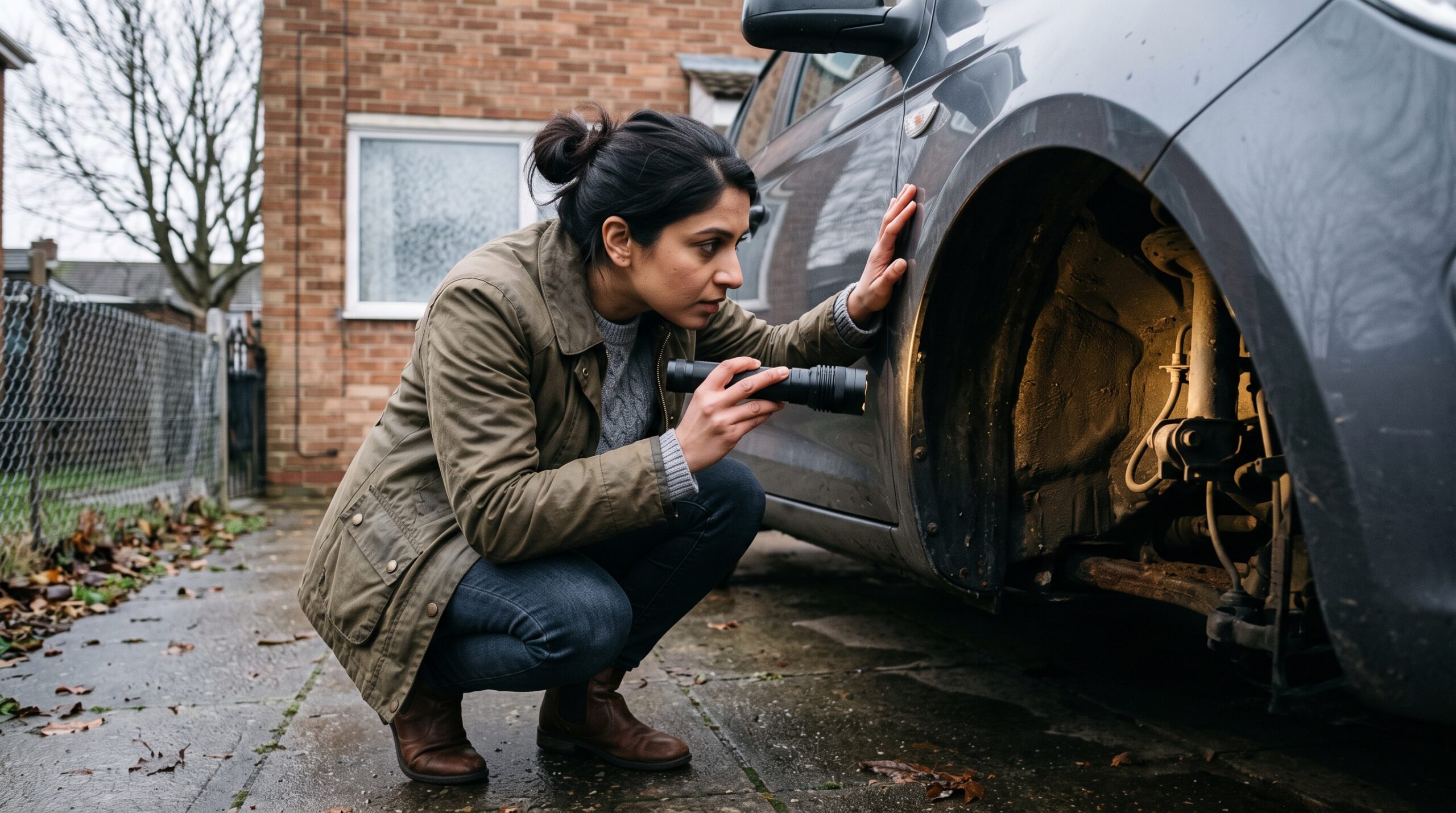
Park on a flat, level surface. With the vehicle properly supported, never on a jack alone, use a flashlight and a small screwdriver or awl to check the frame rails near the suspension mounts, the rocker panels beneath both doors, and any visible brake and fuel lines. Real structural rust often looks different than it feels: a light touch with the screwdriver tip on healthy metal scrapes the surface, while metal that’s rusted through from the inside can let the tip sink in with almost no resistance. If you find flaking scale, bubbling paint over a line, or a spot the screwdriver sinks into, that’s worth a lift inspection at a shop before your next scheduled service, not a wait-and-see. It’s also worth revisiting how a corroded frame interacts with everything else you already know about the vehicle, including how it stacks up against published reliability data by brand, since a reliable powertrain sitting on a compromised frame is still a car with a real, structural end date.
Frequently asked questions
Will my car fail inspection just for having rust? Not automatically. Most state inspection standards, including Pennsylvania’s, treat surface rust as cosmetic. What fails a car is rust that has actually compromised something structural or safety-critical, like a perforated frame rail, a rusted-through brake line, or a loose bumper.
Is the Subaru brake-line recall the only time a manufacturer has dealt with this? No, it’s simply a well-documented example. NHTSA’s recall database lists corrosion-related campaigns from multiple manufacturers over the years, almost always concentrated in the same cold-weather, salt-using states.
Can a rusted frame be repaired instead of replaced? Sometimes, if the corrosion is caught early and limited to a specific mount or section. Once a frame rail is perforated, a shop may be able to weld in a reinforcement plate, but that’s a judgment call for a qualified frame or body shop, not a DIY fix.
Does frame rust affect resale value even if the car passes inspection? Yes. A buyer’s own inspection, or a private mechanic they hire, can flag frame corrosion that a passed state inspection didn’t specifically test for, and that finding can affect a private sale price well before the car would actually fail on the road.
How can I check my car for frame rust before I take it in? With the car safely supported, use a flashlight and a small screwdriver to check the frame rails near the suspension mounts, the rocker panels, and visible brake and fuel lines for flaking, bubbling paint, or a spot where the tip sinks in rather than scraping the surface.
Leave a Reply