7 min read · Last updated September 21, 2026
- The Internal Revenue Service (IRS) caps most vehicle-donation deductions at the gross proceeds the charity actually receives when it auctions the car, not the vehicle’s fair market value.
- A car with a $2,600 repair bill and a $500 top private offer still has real value through two other channels: scrap weight and individual parts.
- Scrap yards pay by curb weight against that day’s local scrap-steel price, so same-day quotes from two or three yards beat any online estimate.
- A charitable deduction is only worth your marginal tax rate, and only if you itemize. A $650 deduction at 22% saves $143, not $650.
The IRS generally caps a car donor’s deduction at the gross proceeds the charity gets when it sells the vehicle, not its Kelley Blue Book or fair market value. A same-day scrap-yard quote based on the car’s weight often puts more real cash in hand than that deduction is worth.
In this article
- The three ways out when a normal sale is not an option
- The IRS rule that caught Mateo off guard
- What the scrap yard actually pays
- Parting it out means a higher ceiling and a real cost
- Frequently asked questions
Mateo Reyes’ 2011 sedan threw a code for a blown head gasket at 172,000 miles in August, deep into the mileage range where major repair bills get harder to justify. The independent shop quoted $2,600 to fix it. The one private buyer who looked at the non-running car offered $500 cash, take it or leave it. Mateo figured a local charity’s tow-away donation program was the better deal: he had seen a private-party guide put a car like his around $900, and he planned to claim that on his taxes. Six weeks later, the charity’s written acknowledgment showed the car had sold at auction for $650.
The three ways out when a normal sale is not an option
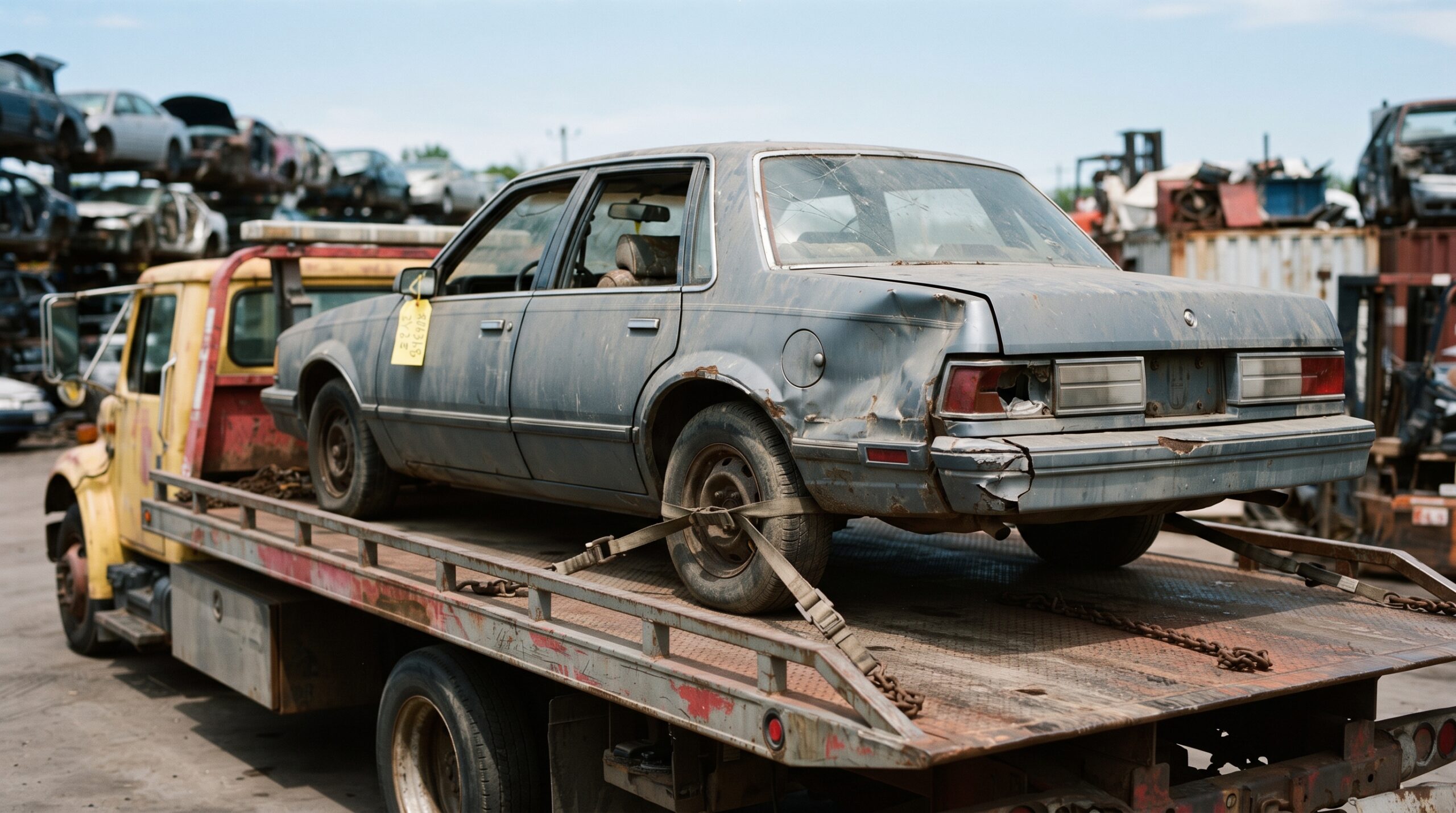
A car that needs more in repairs than any private buyer will pay for it still has three real exits. Donate it to a charity for a tax deduction, sell it to a scrap yard for its metal weight, or part it out and sell the individual components. Each pays differently, on a different timeline, for a different amount of effort. This is the far end of the repair-or-sell break-even math: the repair bill has already crossed that line. The comparison below uses Mateo’s car as the reference point.
| Factor | Donate | Scrap | Part out |
|---|---|---|---|
| Proceeds | Capped at the charity’s gross auction proceeds, often far below the assumed value; a tax deduction, not cash, and only helps if you itemize | $280 to $310 cash the same day in this example, based on curb weight and that week’s local scrap-steel price | Highest ceiling if every part sells, but no single guaranteed total |
| Effort | Low. One phone call; the charity arranges the tow | Low. One drop-off or yard pickup | High. Remove, test, photograph, list, and ship or meet buyers for each part |
| Timeline | 1 to 4 weeks for pickup plus the written acknowledgment; the tax benefit isn’t realized until you file | Same-day cash | Weeks to months until the last part sells |
| Best for | Owners who itemize deductions and want the vehicle gone with zero effort | Owners who want guaranteed cash today with no listing effort | Owners with time, storage space, and a specific high-value part worth more alone than as scrap weight |
The IRS rule that caught Mateo off guard
Most car donation programs work the same way. A charity contracts with a middleman that tows the car and sells it at a wholesale auto auction, then passes a share of the proceeds to the charity. IRS Publication 4303, A Donor’s Guide to Vehicle Donation states that once a charity sells a donated vehicle, the donor’s deduction is generally limited to the gross proceeds from that sale. That is not the vehicle’s fair market value on the day it was donated. The charity’s written acknowledgment has to state the sale price, and it has to reach the donor within 30 days of the sale. Mateo’s $900 private-party estimate never applied once the charity sold the car. His real deduction was $650, the figure on the auction receipt.
Three exceptions exist. The first is the charity keeping the car for significant intervening use. The second is a material improvement to it, meaning a major repair that meaningfully increases its value, not routine maintenance. The third is the charity giving or selling it to a needy individual at a steep discount. Any of the three lets the donor claim fair market value instead of the gross-proceeds figure. None of the three applied to Mateo’s car. There is also a floor: if the sale nets $500 or less, the donor can claim the lesser of fair market value or $500. Mateo’s $650 sale price cleared that floor, so the plain gross-proceeds rule applied.

A donation deduction only has value if you itemize on Schedule A, and only at your own tax rate, per the same IRS guide. At a 22% federal rate, a $650 deduction saves $143 on the tax bill. The $900 Mateo originally expected to claim would have saved $198, a $55 difference driven entirely by what the charity actually received for the car. Before donating, the Federal Trade Commission recommends confirming the organization is registered as tax-exempt, since a donation to an ineligible group is not deductible at all regardless of what the car sells for.
What the scrap yard actually pays
Scrap buyers are not paying for the car as a car. They are paying for its weight in recyclable steel, plus a premium if the catalytic converter, battery, and major parts are still attached. An average sedan weighs roughly 3,000 to 3,500 pounds, and the payout moves with the scrap-steel market, which changes weekly and by region. Mateo called two yards the same afternoon. One quoted $280. The other, twelve miles further out, quoted $310 and offered a free tow. He took the $310, paid in cash at drop-off, with no written acknowledgment, no 30-day wait, and no tax filing required.
Parting it out means a higher ceiling and a real cost
Selling components individually almost always beats scrap weight in total, because a single working catalytic converter, alternator, or infotainment unit is worth several times its weight in scrap steel on its own. The tradeoff is time. Pulling parts, testing them, photographing them, listing them, and either shipping them or meeting buyers in person can take weeks to months, and a partially disassembled car still needs somewhere to sit. For Mateo’s car, with the engine itself compromised, the realistic high-value parts were the wheels, the infotainment unit, and the catalytic converter. He decided the scrap yard’s same-day cash was worth more to him than the extra weeks a part-out would have taken.
Frequently asked questions
Can I still get a tax deduction if my donated car doesn’t run? Yes. A non-running car still qualifies as long as the charity is a recognized tax-exempt organization and you itemize deductions. The deduction is capped at whatever the charity’s auction sale actually brings in, the same gross-proceeds rule that applies to running vehicles, unless the charity keeps the car for its own use.
Why can’t I just claim my car’s Kelley Blue Book value as the donation? Kelley Blue Book estimates fair market value, but once a charity sells your donated car rather than using it, the IRS caps your deduction at the actual sale price on the written acknowledgment. Book value only applies if the charity keeps the vehicle or gives it to someone in need at a steep discount.
Do I need paperwork to sell a car for scrap? Most states require the seller to sign the title over to the scrap yard, and some require notifying the state motor vehicle agency that the car has been junked. Bring your title and a photo ID, and ask the yard what your state requires before you tow the car over.
Is parting out a car legal without a dealer license? Selling parts off a car you personally own and titled to yourself is legal in every state. A dealer license only becomes relevant if you are regularly buying cars specifically to disassemble and resell as a business, not for a single vehicle you already owned.
What happens to the title when I scrap or donate a car? For scrapping, you typically sign the title directly over to the yard at drop-off. For donating, the charity or its towing partner handles the title paperwork, and you should keep a copy for your own records before the car leaves your driveway.
Leave a Reply