
7 min read · Last updated September 23, 2026
- Toyota doubles its recommended oil-change frequency, from every 10,000 miles to every 5,000, for cars making repeated trips under five miles in freezing temperatures. That’s proof manufacturers already weigh trip pattern over mileage.
- A catalytic converter needs 400 to 600°F to start working, well below its 1,200 to 1,600°F operating range. A car that rarely holds highway speed can spend most of its life below that line.
- A highway commuter driving 65 miles round trip, 5 days a week, reaches 118,000 miles in under 8 years with roughly 3,600 cold starts. A city car built from short errands can log 61,000 miles in about 13.5 years with more than 20,000.
- A highway car sees 1 to 2 cold starts a day; a city car sees 4 to 6. Oil condition, exhaust exposure, and starter/battery cycling diverge most between the two duty cycles, while brakes and tires wear faster on the city car regardless of cold-start count.
Cold-start count and time below operating temperature predict engine and exhaust wear better than mileage does, which is why a 118,000-mile highway car can carry less real wear than a 61,000-mile city car.
In this article
- Why the odometer doesn’t measure wear the way you think
- What a cold start actually costs the engine and exhaust
- The math: counting cold starts instead of trusting the odometer
- Which components actually diverge between highway and city driving
- How to read your own car’s wear signals, not just its mileage
- Frequently asked questions
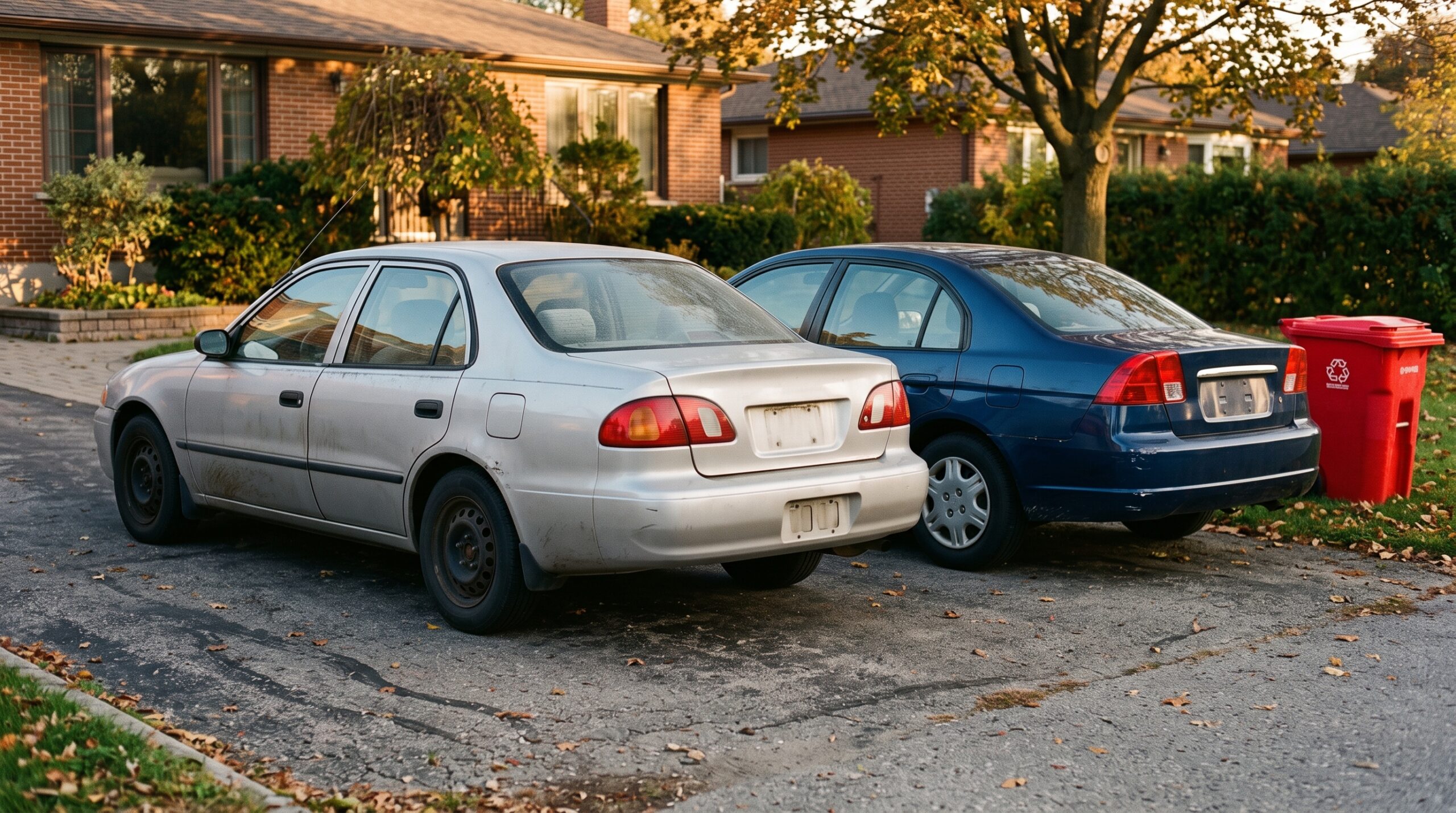
Mai Tran and her neighbor Owen Castellano brought their cars to the same shop the same week: her sedan at 118,000 highway miles, his at 61,000 from school runs and errands. The mechanic’s read surprised both of them: her engine, despite nearly twice the odometer reading, had logged less than a fifth of the cold starts his had.
Why the odometer doesn’t measure wear the way you think
Reliability rankings by brand and model, the kind how-long-will-my-car-last-reliability-by-brand walks through, assume miles driven stand in for wear. That breaks down at the extremes: a highway-heavy commute on one end, a short-trip, stop-and-restart pattern on the other.
The U.S. Department of Energy’s fueleconomy.gov confirms the mechanism from an unexpected angle. Cold temperatures increase “engine and transmission friction… due to cold engine oil and other drive-line fluids,” and “this affects shorter trips more, since your car spends more of your trip at less-than-optimal temperatures.” That’s a statement about wear, not just fuel economy: the same cold window where oil runs thickest is where combustion byproducts build up before the engine runs warm.
What a cold start actually costs the engine and exhaust
Two systems take the direct hit: the oil, and the exhaust. The American Automobile Association’s (AAA) own guidance confirms this without overstating it. An engine only needs “about the time it takes to buckle your seatbelt and adjust your mirrors” to circulate oil. But “prolonged idling can actually stress engine components and lead to premature wear,” and the real damage is the minutes after, while unburned fuel and moisture work past the piston rings into the oil.
A single cold start in mild weather does little. Repeated short trips in freezing weather are different. Toyota’s 2025 Corolla Warranty and Maintenance Guide doubles the oil-change interval, every 10,000 miles down to every 5,000, for vehicles that “make repeated trips of less than five miles in temperatures below freezing.” That’s a manufacturer stating, in writing, that trip pattern changes oil wear independent of mileage. See oil-change-interval-how-often for how base intervals get set.
The exhaust takes a parallel hit. A catalytic converter does nothing until it reaches light-off temperature, which AA1Car puts at “400 to 600 degrees F,” well below its normal 1,200 to 1,600°F range. A highway run reaches that once and holds it. Short hops spend more of each trip below that line, ending before combustion moisture boils out instead of condensing inside.
The math: counting cold starts instead of trusting the odometer
Here’s the comparison their mechanic was actually looking at.
Mai’s commute is 65 highway miles round trip, 5 days a week, 46 working weeks a year after vacation and holidays. That’s 230 driving days, about 14,950 miles a year, and two real cold starts a day (home, then the office lot), or 460 a year. At that pace she crosses 118,000 miles in just under 8 years, carrying roughly 3,600 cold starts.
Owen’s driving adds up differently. Between drop-off, pickup, and two more stops most afternoons, he covers about 15 miles a day across five cold starts, 6 days a week, 300 days a year. That’s only 4,500 miles a year, which is why his car needed roughly 13.5 years to reach 61,000 miles. Over that stretch it logged about 20,300 cold starts, more than five times Mai’s total, on barely half her mileage.
Which components actually diverge between highway and city driving
Not every part of a car cares about cold starts. The table below separates what genuinely diverges between the two duty cycles.
| Factor | Highway-mile car | City-mile car |
|---|---|---|
| Cold starts per driving day | 1 to 2 | 4 to 6 |
| Time below full operating temperature | Minutes, once, then sustained heat | Repeated, several times a day |
| Oil dilution risk | Lower; largely burns off on long runs | Higher, especially short trips in freezing weather (Toyota doubles oil-change frequency for this pattern) |
| Catalytic converter exposure | Holds above the 400-600°F light-off range | Repeatedly drops back below light-off |
| Starter, battery, brake-wear cycling | 1 to 2 cycles a day | 4 to 6 cycles, more braking |
| Best for | An odometer that roughly tracks real wear | An odometer that understates it; check service records instead |
Brakes and tires run the opposite direction. Frequent stopping wears pads and rotors faster, regardless of cold-start count, so a city car can need brakes sooner even while its engine ages more slowly than its mileage suggests.
How to read your own car’s wear signals, not just its mileage
None of this means a 118,000-mile highway car is automatically fine, or a 61,000-mile city car is a problem. The odometer alone can’t tell you which.
Start with the driving pattern: commute distance, stops in a typical day, and whether most trips run under five miles in winter. Then look past the dash. Milky oil, a faint fuel smell, or a schedule that doesn’t match the trip pattern are physical signs of the wear described above, not just a maintenance light. A heavy cold-start history is also a reason to move up a catalytic-converter check.
None of this changes what happens once a car crosses six figures. For that repair math, 100000-to-150000-mile-repair-bill walks through the costs a car in that range tends to bring, regardless of which duty cycle put the miles on it.
Frequently asked questions
Does a car with more miles always have more engine wear than one with fewer?
No. Total mileage counts distance, not how the engine got there. A highway car with steady, sustained running and few cold starts can carry less real wear than a lower-mileage car built from short trips. Cold-start count and time below operating temperature drive wear more directly than the odometer does.
What actually counts as a cold start?
A cold start is any startup after the engine has sat long enough to fully cool, not just after being briefly parked. A highway commute usually produces one or two true cold starts a day. A morning school run, a lunch errand, and an evening pickup can each count separately if the engine cools between them.
Does highway driving wear out anything faster than city driving?
Yes. Highway driving puts more sustained heat and speed on tires and, over very long trips, on transmission fluid. City driving wears brake pads, rotors, and the starter and battery faster because of frequent stopping and repeated cranking. Neither duty cycle avoids wear; they wear different parts.
How can I get a sense of a car’s real cold-start pattern without a data logger?
Ask how the car was actually driven: commute distance, number of daily stops, and whether trips ran mostly under five miles. Oil that looks milky or smells like fuel on the dipstick is a physical sign of the short-trip pattern this article describes, especially after cold winters.
Is a heavy short-trip pattern really as damaging as this article suggests?
It’s real, not exaggerated. Toyota already builds it into its own maintenance schedule, doubling the recommended oil-change frequency for repeated trips under five miles in freezing temperatures. That’s a manufacturer acknowledging, in writing, that trip pattern, not just mileage, drives how hard an engine ages.
Leave a Reply