7 min read · Last updated September 23, 2026
- A port-injected engine can run its full service life with no carbon problem; a direct-injection engine never gets that same fuel wash across the valve, because fuel sprays straight into the cylinder instead.
- Subaru’s own service bulletin allots 3.6 hours of labor for a turbocharged direct-injection engine’s walnut-blast cleaning (3.0 hours for a non-turbo one). At the national $120 to $159 shop rate, that runs $432 to $572 in bare labor; full-service shop quotes commonly land near $1,000.
- A $150 to $200 fuel-injector cleaning, the service quick-lube counters upsell, does nothing for this problem, because the fuel path it cleans never reaches the back of the valve on a direct-injection engine.
- Subaru’s bulletin 02-193-24R files the walnut-blast procedure as a fix for misfire codes and rough idle, not as a mileage-based scheduled service. That’s why it never appears in the maintenance booklet next to oil changes and spark plugs.
Direct-injection engines build carbon on their intake valves because fuel sprays straight into the cylinder and never washes the valve. The fix, walnut blasting, runs $432 to $572 in bare labor or close to $1,000 for a full-service shop quote, and no factory maintenance schedule lists it as a scheduled interval.
In this article
- Why direct injection skips the cleaning port injection used to do for free
- Walnut blasting vs. chemical induction cleaning
- What the repair actually costs, worked out in real numbers
- Why your maintenance booklet never mentions it
- Frequently asked questions
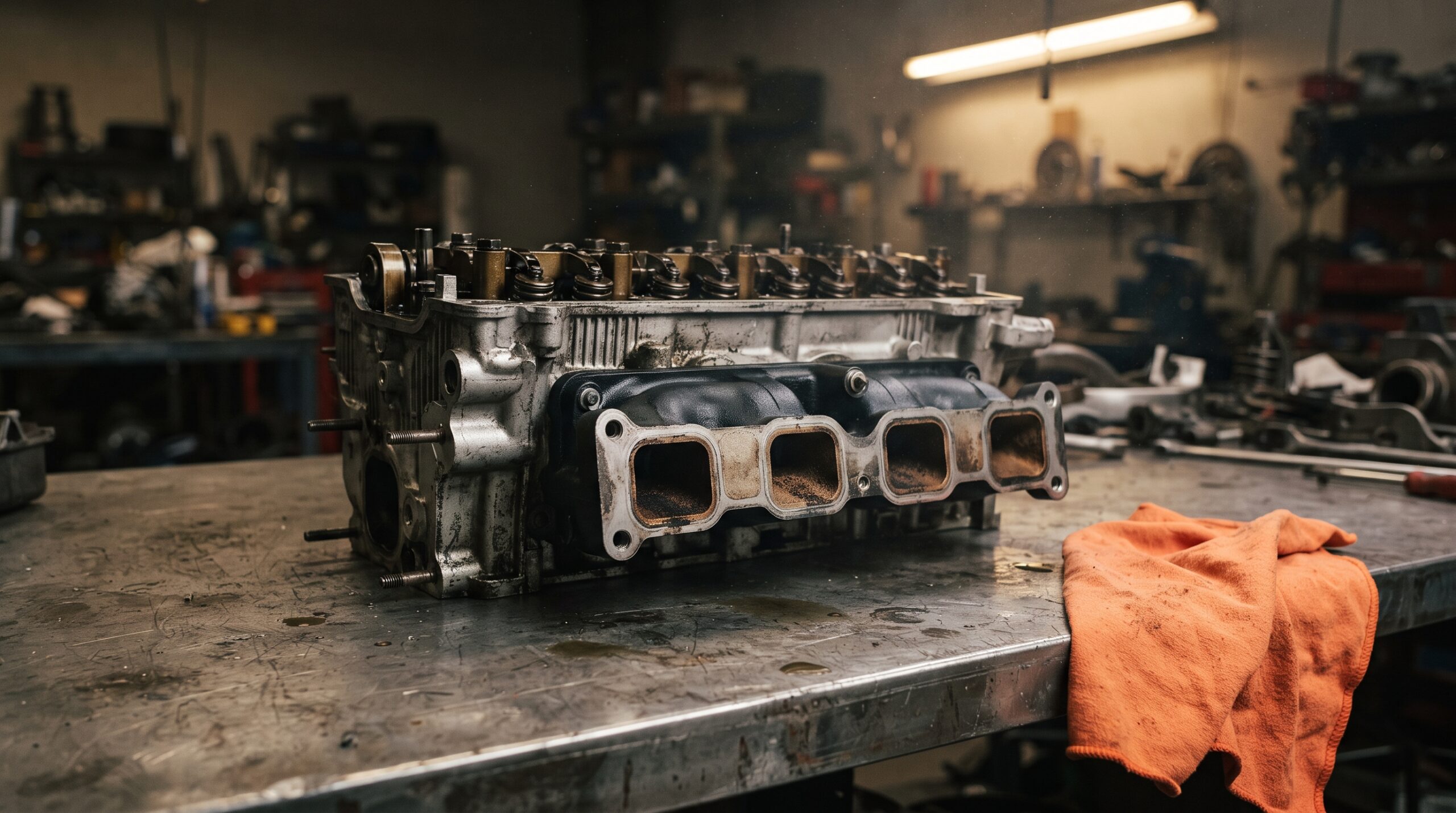
Denise Alvarez’s 2018 Subaru Forester started missing at idle at 82,000 miles, and the first shop’s answer was a $340 set of spark plugs and coils that fixed nothing. Spark plugs wear on a predictable schedule and are the obvious first suspect for a misfire, but hers were fine. A second shop ran a proper misfire-code triage and threaded a borescope down the spark plug hole instead. What it found had nothing to do with plugs: the backs of her intake valves, caked in a black, tar-like crust. Denise’s Forester runs the 2.0-liter engine Subaru’s own service paperwork calls direct injection turbo (DIT), and it had been building this since the day it left the factory.
Why direct injection skips the cleaning port injection used to do for free
Older, port-injected engines spray gasoline at the back of the valve right before it opens, and every tank of gas carries detergents that wash that surface clean on the way past. That is why a port-injected engine can run its whole service life and never see a carbon problem. Gasoline direct injection (GDI) engines inject fuel straight into the combustion chamber instead, part of how they squeeze out more power and fuel economy. According to AA1Car’s technical library, that fuel “completely bypasses the intake valves.” That means “detergents and cleaners that are added to gasoline to prevent intake valve deposits from forming in port fuel injection engines never have a chance to do their job in a GDI engine.” What accumulates instead is oil vapor seeping past the valve seals and blowby gases recirculated from the crankcase, baking onto the hot valve surface every time the engine runs. The deposits choke off airflow, and that shows up as a misfire, a rough idle, or a hesitation no one can pin on ignition or fuel delivery.
Walnut blasting vs. chemical induction cleaning
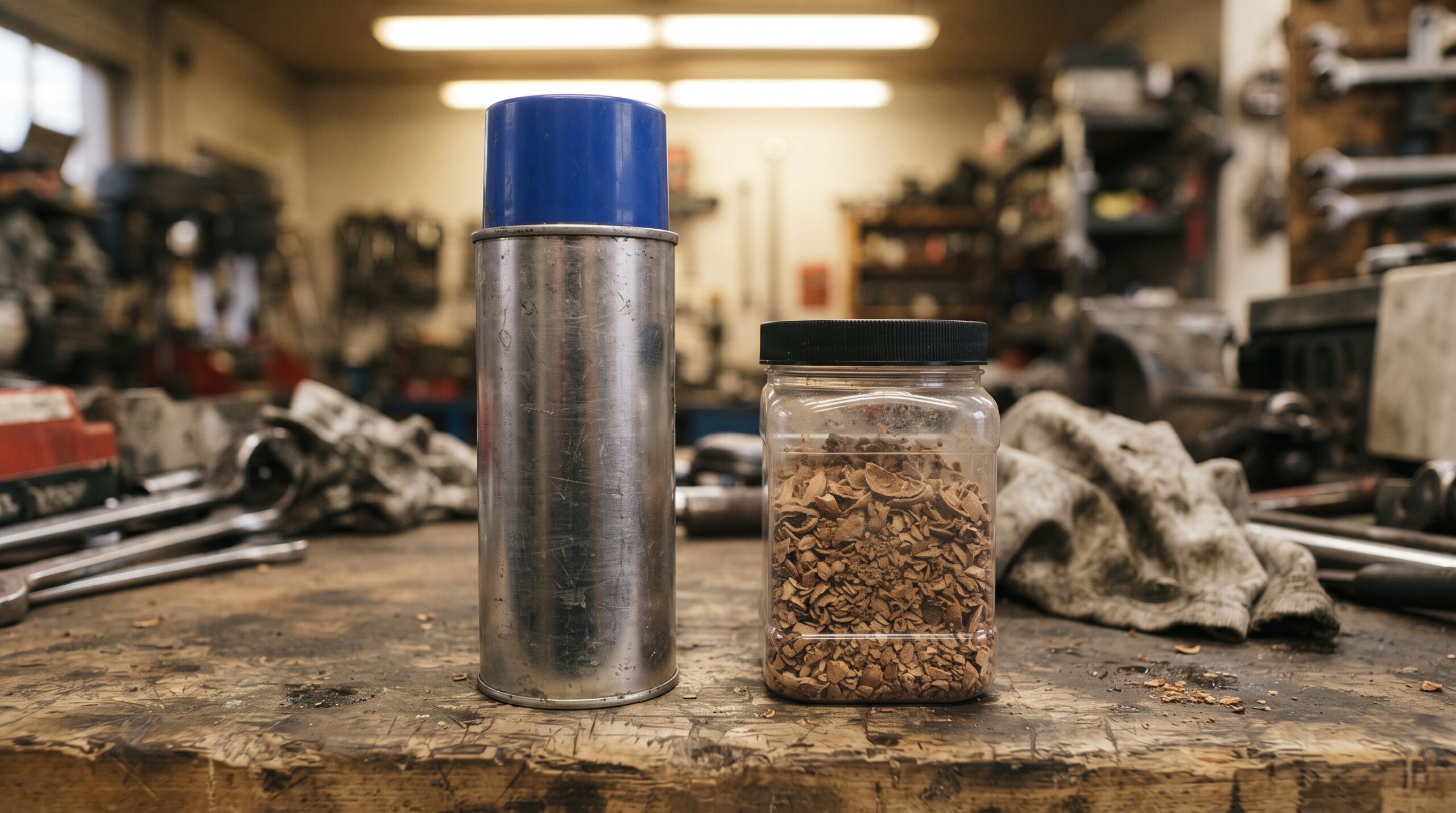
Two real fixes exist, and they are not interchangeable. Walnut blasting removes the intake manifold and blasts crushed walnut shells, soft enough not to scar the metal, onto the valve faces until the crust is gone. Subaru’s own procedure for this, service bulletin 02-193-24R, also has the technician wipe the throttle plate with a dedicated cleaner and add a bottle of polyetheramine (PEA) fuel additive afterward, to slow the next round. Chemical induction cleaning skips the teardown: a solvent goes through the intake tract, not the fuel tank, to soften light deposits before they harden. AA1Car’s guidance is to run this every 25,000 to 30,000 miles as prevention. The catch is timing. Once carbon bakes hard enough to cause a misfire, like Denise’s, a chemical pass generally cannot dissolve it. That is a walnut-blast job at that point, not a maintenance shortcut.
What the repair actually costs, worked out in real numbers
Here is the arithmetic. Subaru’s bulletin allots 3.6 hours of labor for the walnut-blast procedure on a turbo engine like Denise’s (3.0 hours, naturally aspirated). MOTOR Magazine reported a national labor rate of $120 to $159 an hour, from PartsTech’s 2025 survey of 752 shops. That works out to 3.6 times $120, or $432, on the low end, and 3.6 times $159, or $572, on the high end. That is bare labor, before the throttle-plate cleaner and fuel additive the bulletin also calls for. One shop Consumer Reports spoke to quoted closer to $1,000, and the gap is not padding: a borescope inspection, new intake-manifold gaskets, and standard shop overhead sit on top of the bare labor math. Either way, budget $500 to $1,000 for a real walnut-blast job, not the $150 to $200 a quick-lube counter charges for a fuel-injector service. Car Talk notes that service is “almost never called for in any owner’s manual” to begin with, and it does not touch this problem on a GDI engine at all.
Why your maintenance booklet never mentions it
Look at what Subaru’s bulletin is filed as: a fix for diagnostic trouble codes (DTCs) tied to a misfire, not a service due at a set mileage. Its own language reads “engine misfire DTCs, black smoke from the exhaust, lack of power, knocking (ping) and/or rough idle concerns.” Oil changes and spark plugs sit on a schedule because every engine needs them on a predictable curve. Carbon buildup skips that treatment because how fast it accumulates depends on driving style and oil quality, not mileage. That is the same blind spot covered in how a 100,000-mile shop quote compares to the factory book: the schedule is a floor, not the full list. Past 60,000 miles, any rough idle on a direct-injection engine is worth budgeting for before a shop finds it for you.
Frequently asked questions
What’s the real difference between walnut blasting and chemical induction cleaning?
Walnut blasting is mechanical: the intake manifold comes off and crushed walnut shells scrub the valve faces clean under pressure. Chemical induction cleaning runs a solvent through the intake tract without removing anything. Walnut blasting handles hardened carbon; chemical cleaning mostly prevents it from hardening in the first place.
How do I know which one my car needs?
A shop can tell with a borescope threaded through the spark plug hole, which shows the actual condition of the valve surface. Light, even discoloration usually responds well to a chemical induction cleaning. Thick, crusty buildup, especially alongside a misfire like Denise’s, generally needs the more thorough walnut-blasting procedure instead.
Why doesn’t my owner’s manual mention carbon cleaning at all?
Because carbon buildup depends on driving habits and oil quality, not a fixed mileage, automakers write it up as a repair procedure triggered by symptoms rather than a scheduled service. That is why it is missing from the same booklet that lists oil changes and spark plugs on a set interval.
Will a fuel-injector cleaning service fix a misfire from carbon buildup?
No. On a direct-injection engine, the fuel injector sprays fuel inside the combustion chamber, well past the intake valve entirely. Cleaning the injector itself does nothing to the back of the valve, which is exactly where this particular carbon deposit actually forms and hardens.
How often does a direct-injection engine actually need this service?
There is no single mileage number that applies to every car. Chemical induction cleaning every 25,000 to 30,000 miles as prevention is common guidance from technicians. An actual walnut-blast job, by contrast, is usually driven by real symptoms, a misfire, rough idle, or hesitation, rather than the odometer reading.
Leave a Reply