7 min read · Last updated October 2, 2026
- Five repairs most often stack up in this band: struts and an alignment ($500-$2,500), a control arm ($400-$1,000), a wheel bearing ($300-$500), an alternator ($600-$1,500), and a radiator ($700-$2,500).
- AAA (the American Automobile Association) cites a 2025 PartsTech industry report finding that nearly half of U.S. shops charge $120 to $159 an hour, the same rate whether the job is a $350 bearing or a $2,500 radiator.
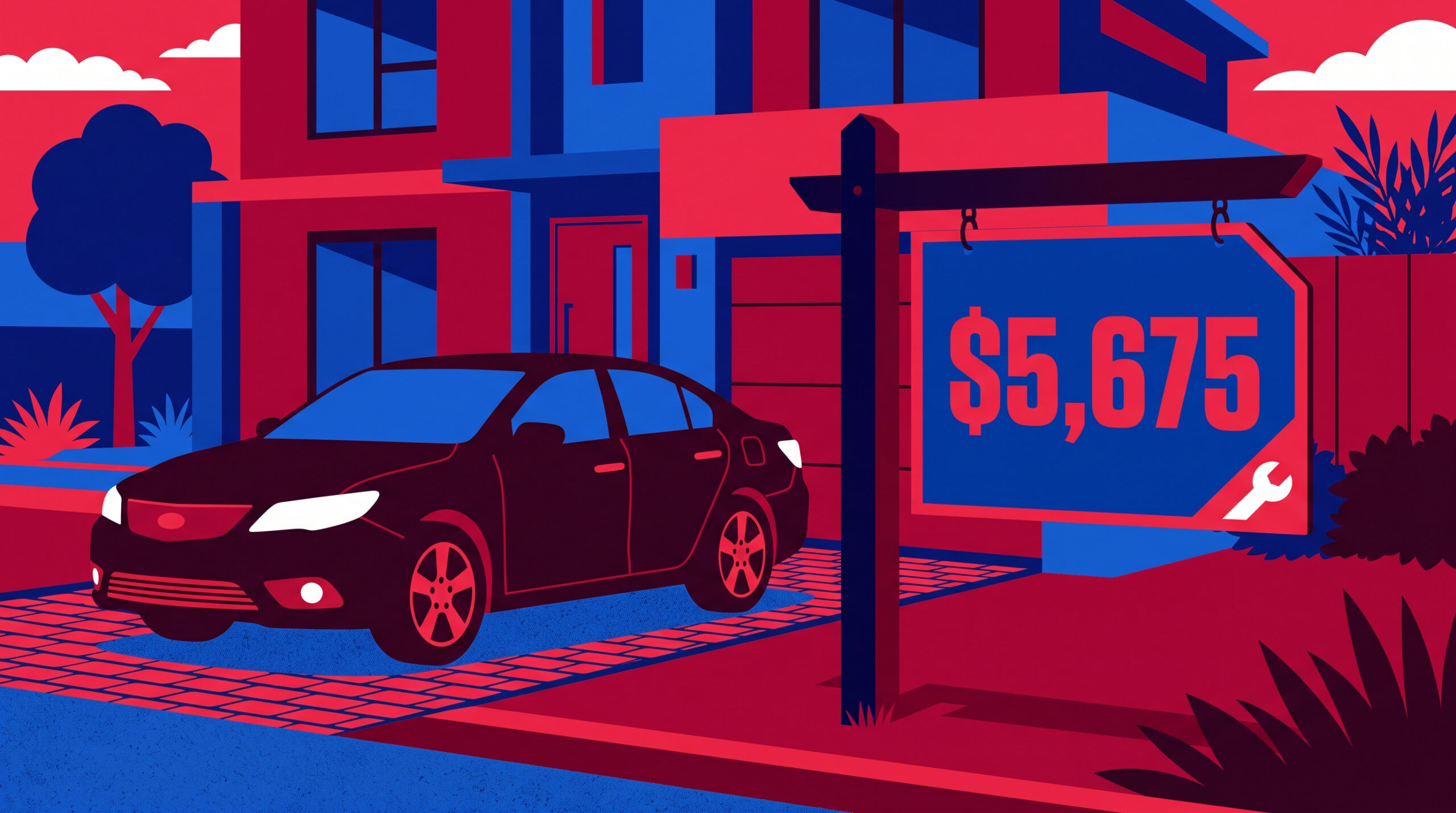
- Kelley Blue Book (KBB) prices a typical-mileage 2012 Honda Accord’s private-party value at $5,675 to $7,050. Compare that kind of number to the year’s repair total before approving the next invoice.
- Chain-driven engines skip the second timing-belt bill that belt-driven cars often face in this exact mileage range.
Between 150,000 and 200,000 miles, the repairs that typically stack up are worn struts or a control arm, a failing wheel bearing, an aging alternator, and a radiator nearing its end. Combined, they commonly run $2,000 to $5,000, which is usually still cheaper than replacing a car that is otherwise sound.
In this article
- What Typically Breaks Between 150,000 and 200,000 Miles
- The Second Timing Belt, If Your Car Still Has One
- Which Cars Get Through This Band Without a Crisis
- Priya’s $3,390 Repair List, Line by Line
- The Repair-Cost-vs-Value Line
- Frequently Asked Questions
Priya’s independent shop called with a four-line estimate and a number that made her sit down: $3,390 to keep her 2012 Honda Accord running past 163,000 miles. Struts, a control arm, a wheel bearing, and an alternator are the repairs that show up, in some combination, on almost every car crossing from 150,000 to 200,000 miles. The real question wasn’t whether the parts were failing. It was whether paying to fix them still made sense.
What Typically Breaks Between 150,000 and 200,000 Miles
Consumer Reports tracks reliability across defined “trouble spot” categories. Three account for most of what shows up in this band: suspension (struts, ball joints, wheel bearings, bushings), electrical (alternator, starter, ignition components), and cooling (radiator, water pump, thermostat). Consumer Reports adjusts its data for mileage. In the organization’s own words, “vehicles with higher mileage will most likely experience more problems than vehicles of the same age with lower mileage.”
A strut job with its required alignment runs $500 to $2,500, commonly near $1,000 on a mainstream car, per Car Talk. A full control arm, bushings included, costs $400 to $1,000 per side, and Car Talk notes a separate alignment charge almost always follows. A wheel bearing runs $300 to $500. An alternator replacement commonly runs $600 to $1,500. None of these are rare, worst-case numbers. They are the routine bill for a car driven long enough.
| System | Typical Repair | Cost Range | Source |
|---|---|---|---|
| Suspension | Struts or shocks, pair, with alignment | $500-$2,500 | Car Talk |
| Suspension | Control arm, per side | $400-$1,000 | Car Talk |
| Wheels | Wheel bearing, each | $300-$500 | Car Talk |
| Electrical | Alternator replacement | $600-$1,500 | Car Talk |
| Cooling | Radiator replacement | $700-$2,500 | Car Talk |
The Second Timing Belt, If Your Car Still Has One
Priya’s Accord runs a timing chain, so this section doesn’t touch her bill at all. It matters for a shrinking number of other cars still on the road with a rubber timing belt instead of a chain. On an interference engine, the pistons and valves share the same space at different points in the rotation, so a belt that snaps can bend valves and crack pistons in the same moment. This mileage band is often when a belt-driven engine’s second service interval lands, not a one-time event left behind at 100,000 miles. Our timing chain vs. belt guide breaks down the interval and cost math for both designs in full.
Which Cars Get Through This Band Without a Crisis
The cars that cross this band without a shock bill tend to share traits. A chain-driven engine, a single serpentine belt instead of several smaller ones, and a simpler cooling system with no separate transmission cooler or extra radiator loop all help. Fewer moving parts means fewer chances to leak or crack. A battery-electric vehicle skips the category, since it has no combustion cooling loop, alternator, or timing hardware, trading it for a different cost center centered on battery health. Our EV vs. gas maintenance cost guide compares the two paths through 100,000 miles. The 100,000-to-150,000-mile band was mostly timing components and first wear parts; this next band is suspension, electrical, and cooling parts reaching the end of their life together.
Priya’s $3,390 Repair List, Line by Line
Here’s what the shop quoted. Front struts, both sides, with the required alignment: $1,080, near the roughly $1,000 mark Car Talk cites for a mainstream car. A control arm on the side with the worn bushing: $460, within Car Talk’s $400-$1,000 window. One wheel bearing, driver’s side front: $350, inside Car Talk’s $300-$500 range. An alternator, replaced after the dashboard lights started flickering: $720, within Car Talk’s $600-$1,500 bracket. A radiator, caught seeping during the same inspection: $780, within Car Talk’s $700 to $2,500 range.

Add the five line items: $1,080 plus $460 plus $350 plus $720 plus $780 comes to $3,390. Every figure sits inside a real, cited range, which is why this bill isn’t unusual at 163,000 miles. It’s the routine version of this band, not the expensive one.
The Repair-Cost-vs-Value Line
Past 150,000 miles, the question isn’t the fair price of a repair. It’s whether the car is worth fixing. Kelley Blue Book (KBB) prices a 2012 Honda Accord’s private-party value at $5,675 to $7,050 for typical mileage at that age, and by 2026 that typical figure sits almost exactly where Priya’s odometer does. A $3,390 bill against a car worth at least $5,675 clears the bar for repair, not sale, as long as nothing larger, like a transmission or head gasket, turns up in the same visit.
The math changes fast once a bigger-ticket item joins the list. The same $3,390 bill against a car worth $2,800 at private-party sale is a different decision, and no single rule covers every make and model. Pull the car’s own private-party value before approving the next invoice, not after.
Frequently Asked Questions
Is a $3,000-plus repair bill normal at 150,000 miles?
Yes. Struts, a control arm, a wheel bearing, an alternator, and a radiator are the five repairs that most commonly land in this exact mileage band, and together they typically run $2,000 to $5,000. A single large bill here usually reflects several routine parts wearing out at once, not one catastrophic failure.
What’s the single biggest repair risk between 150,000 and 200,000 miles?
Cooling-system failure carries the highest downside, because a radiator or water pump that fails while driving can overheat the engine within minutes. A $700-$2,500 radiator replacement is far cheaper than the engine damage that follows ignoring an early leak, so coolant seepage deserves faster attention than a squeaky strut.
Does the timing belt matter if my mileage is already in this range?
Only if your engine still uses a rubber belt instead of a chain. Chain-driven engines, like Priya’s Accord, skip this bill entirely. Belt-driven cars often hit their second service interval in exactly this mileage band, and on an interference engine, a snapped belt causes far more damage than the belt itself costs.
How do I decide between repairing and selling at this mileage?
Pull the car’s current private-party value and compare it to the year’s total repair bill. If the bill is well under the value and nothing major, like a transmission or head gasket, is involved, repairing is usually the better math. If the value has dropped near or below the bill, selling deserves a serious look.
Do electric vehicles avoid this repair wave?
They avoid this specific one. EVs have no alternator, no radiator-dependent combustion cooling loop, and no timing belt or chain, so this exact repair category doesn’t apply to them. They carry their own high-mileage cost center, battery health, which our EV vs. gas maintenance guide covers in detail.
Leave a Reply