6 min read · Last updated August 17, 2026
- National Highway Traffic Safety Administration (NHTSA) recall 16V529000 covered the 2014-2015 Jeep Cherokee, 2015 Chrysler 200, 2015 Jeep Renegade, 2015 Ram ProMaster, and 2016 Fiat 500X for the identical 9-speed automatic transmission defect.
- On the 2014 Jeep Cherokee, 935 of 2,639 NHTSA complaints on file (35%) name POWER TRAIN as the sole component. On the 2015 Chrysler 200 carrying the same transmission, it’s 298 of 1,983 (15%).
- api.nhtsa.gov is free and lets you check your exact make, model, and year for open recalls and the complaint categories other owners have filed.
- Because one part can sit under four badges, the repair-or-sell math should follow NHTSA’s recall and complaint data for that exact part, not a brand-wide reputation survey ranking.
In this article
- The Recall That Named Five Different Nameplates
- Why the Same Part Ends Up Under So Many Badges
- What the Complaint Numbers Actually Show
- How to Check Your Own Car’s Drivetrain, Not Its Badge
- FAQ
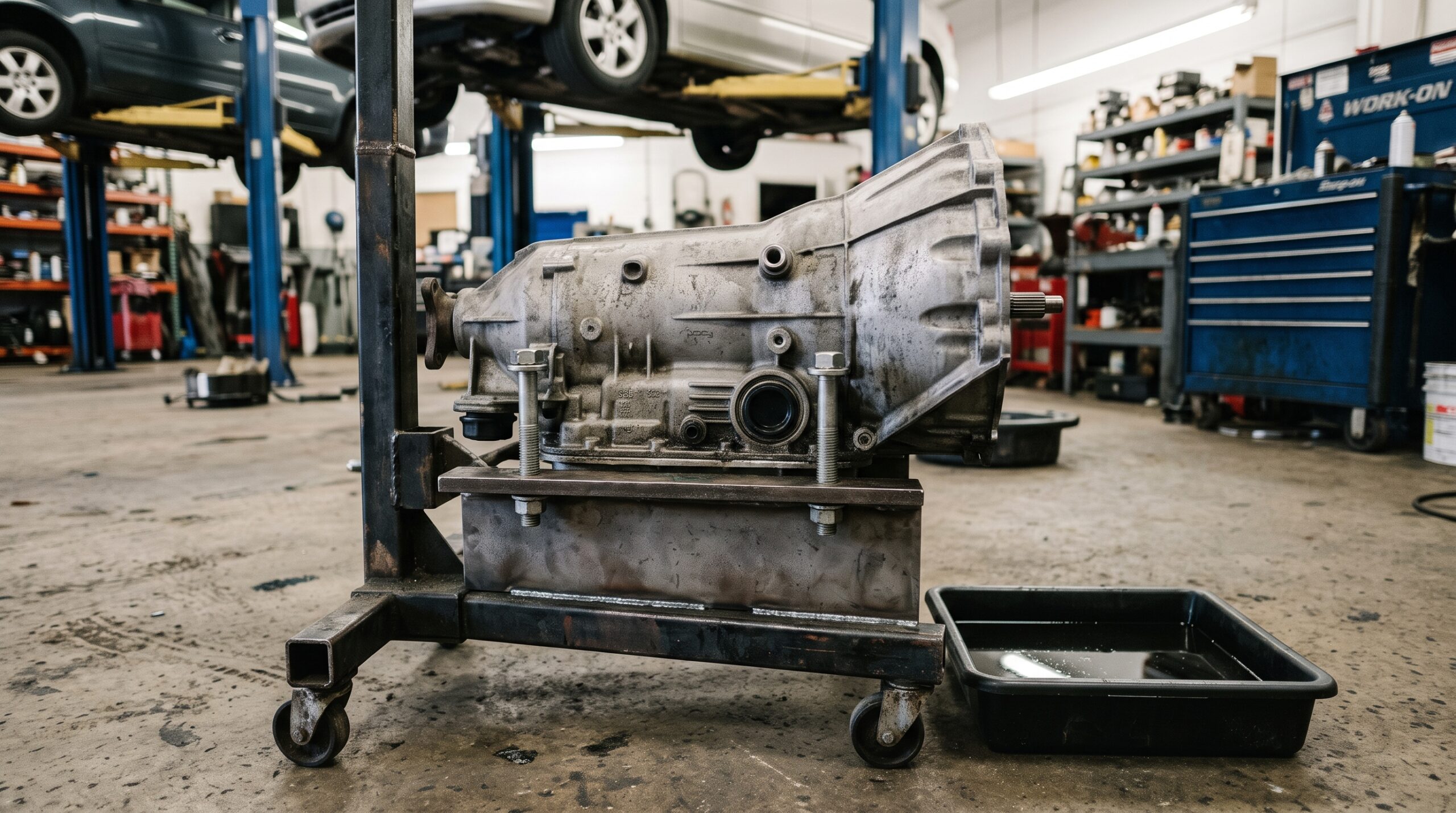
Wei found his 2014 Jeep Cherokee stuck in neutral at 62,000 miles, coasting toward the shoulder with the engine still revving. The dealer’s diagnosis wasn’t a Jeep problem. It was a wiring defect in the 9-speed automatic transmission’s sensor cluster, and that same part had already been recalled under four other names.
The Recall That Named Five Different Nameplates
In 2016, NHTSA recall campaign 16V529000 covered the 2014-2015 Jeep Cherokee, the 2015 Chrysler 200, the 2015 Jeep Renegade, the 2015 Ram ProMaster cargo van, and the 2016 Fiat 500X. Five nameplates, four different brand identities, one defect: the transmission sensor cluster had insufficient crimps in its wire harness, and the transmission could unexpectedly shift itself into neutral while the vehicle was moving.
Every one of those vehicles used the ZF-designed 9-speed automatic transmission that Chrysler’s parent company, then Fiat Chrysler Automobiles, built into its lineup across brands. A Jeep buyer, a Ram fleet manager, and a Fiat crossover owner all bought into the same drivetrain without necessarily knowing it.
Why the Same Part Ends Up Under So Many Badges
Automakers don’t design a new engine or transmission for every model. Developing one from scratch costs hundreds of millions of dollars, so a parent company spreads that cost across as many nameplates as it can fit the part into. That’s why the same 9-speed sits under a Jeep SUV and a cargo van built for delivery routes. It’s also why suppliers like ZF sell the identical transmission architecture to entirely unrelated automakers, so the same defect pattern can turn up on brands with no corporate relationship at all.
None of this shows up on the window sticker. An owner comparing “Jeep reliability” against “Ram reliability” in a brand survey is often comparing the same transmission against itself under two names. The survey never breaks out which specific part is doing the damage.
What the Complaint Numbers Actually Show
NHTSA’s complaint database lets you see how a defect actually landed, model by model. Complaints filed against the 2014 Jeep Cherokee show 935 of 2,639 total complaints, or 35%, that name POWER TRAIN as the sole component. The 2015 Chrysler 200 carrying the identical transmission shows 298 of 1,983, or 15%. The low-volume 2015 Ram ProMaster shows 7 of 60, or 12%.
| Vehicle (recalled together) | Total NHTSA complaints on file | POWER TRAIN as sole component | Share |
|---|---|---|---|
| 2014 Jeep Cherokee | 2,639 | 935 | 35% |
| 2015 Chrysler 200 | 1,983 | 298 | 15% |
| 2015 Ram ProMaster | 60 | 7 | 12% |
| Best for | Showing why complaint share swings by nameplate even when the transmission is identical | ||
That 35-versus-15-versus-12 spread doesn’t mean the Cherokee’s engineering is worse than the 200’s. A complaint share is a proportion, not a failure rate: it tells you what owners of that nameplate reported most often, not how often the part actually broke. The point isn’t that one nameplate is secretly worse. It’s that the transmission’s failure mode traveled with the part, not with whichever brand happened to be printed on the tailgate.
How to Check Your Own Car’s Drivetrain, Not Its Badge

You can run this same check on your own vehicle before you approve a big transmission or engine repair. NHTSA’s public API needs no account and no fee:
- Look up open recalls for your exact make, model, and year at `api.nhtsa.gov/recalls/recallsByVehicle`.
- Read the recall summary for the actual component named, not just the headline. “9-speed automatic transmission” tells you more than “Jeep recall.”
- Check whether other nameplates share that same component description. If they do, search each of those nameplates too. A pattern across unrelated badges is a part-level issue, not a brand-level one.
- Pull complaint counts for your specific model year at `api.nhtsa.gov/complaints/complaintsByVehicle` and read the `components` field on each entry, counting only the ones that read POWER TRAIN and nothing else, which is the basis used above. If you would rather not query the API by hand, the consumer lookup at nhtsa.gov/recalls takes a VIN and returns the open recalls on your specific vehicle. Before you pay for any of it, check whether the repair is already covered by an open recall.
Your symptom might be a delayed shift, a shudder at a specific speed, or an unexpected drop to neutral. If it matches a pattern already recalled or heavily complained-about across several nameplates sharing your drivetrain, that’s a stronger signal than any brand-wide reliability ranking. It also changes the repair-or-sell math on the vehicle in front of you. A known part-level defect with an open recall may be a free fix, not a bill you have to weigh against the car’s value.
This is also why a car that just crossed the 100,000-to-150,000-mile repair window deserves a drivetrain-specific look, not just a glance at the brand’s average reliability ranking. The badge tells you who marketed the car. The recall and complaint data tell you what’s actually inside it.
Frequently asked questions
How do I know if my engine or transmission is shared with other brands? Check your vehicle’s recall history at api.nhtsa.gov by make, model, and year, and read the actual component description in any recall, not just the headline. If the same transmission or engine description turns up under a different automaker’s recall, the part is shared, whether or not the two brands have any obvious connection to each other.
Does one bad model year mean my whole brand is unreliable? Not by itself. A defect tied to one specific engine or transmission can span several nameplates and still leave the rest of that brand’s lineup untouched. Judge the specific drivetrain in your car, not the brand’s overall survey score, before you decide a repair isn’t worth making.
Where can I check recalls and complaints for my exact car? NHTSA’s public API at api.nhtsa.gov covers both, free, with no login. Search recalls by make, model, and year, then search complaints the same way and read the components field on each entry to see what system owners are actually reporting.
If my car shares a transmission with a recalled vehicle, is mine automatically covered? No. Recalls apply to specific makes, models, and model years, sometimes tied to a manufacturing date range. Always search your exact VIN or your exact make, model, and year directly, since a shared part doesn’t guarantee a shared recall campaign.
Does this mean brand reliability rankings are worthless? No, but they’re an average, not a diagnosis. They’re useful for comparing a lineup’s overall track record. They’re the wrong tool for deciding whether the specific transmission or engine in the car you already own is a known problem, which is a drivetrain-level question a ranking can’t answer.
Leave a Reply