6 min read · Last updated September 21, 2026
- Advanced Driver Assistance Systems (ADAS), the camera-based safety features like lane-departure warning and forward-collision alerts, add a real, separate cost line to windshield replacement: $360.00 of the average bill, not just to crash repair.
- A 2023 repair-cost study from the American Automobile Association (AAA) found the average windshield replacement with a forward-facing safety camera costs $1,439.78 total, and $360.00 of that is the camera-specific work, not the glass.
- Camera recalibration comes in two forms, static and dynamic, and the auto glass industry’s own safety standard requires shops to use dedicated equipment and trained technicians for whichever one a vehicle needs.
- The auto glass industry’s own national safety standard requires specialized recalibration equipment and formally trained technicians, which most driveway mobile shops do not carry.
Replacing a windshield on a car with a forward-facing safety camera for lane-keeping or automatic emergency braking costs more than the glass alone. AAA’s 2023 repair-cost study put the national average all-in bill, glass, installation, and mandatory camera recalibration, at $1,439.78, of which $360.00 was the camera-specific work.
In this article
- What the full repair actually costs
- Why the recalibration step exists at all
- Static calibration, dynamic calibration, and why some cars need both
- What to ask before you approve a quote
- Frequently asked questions
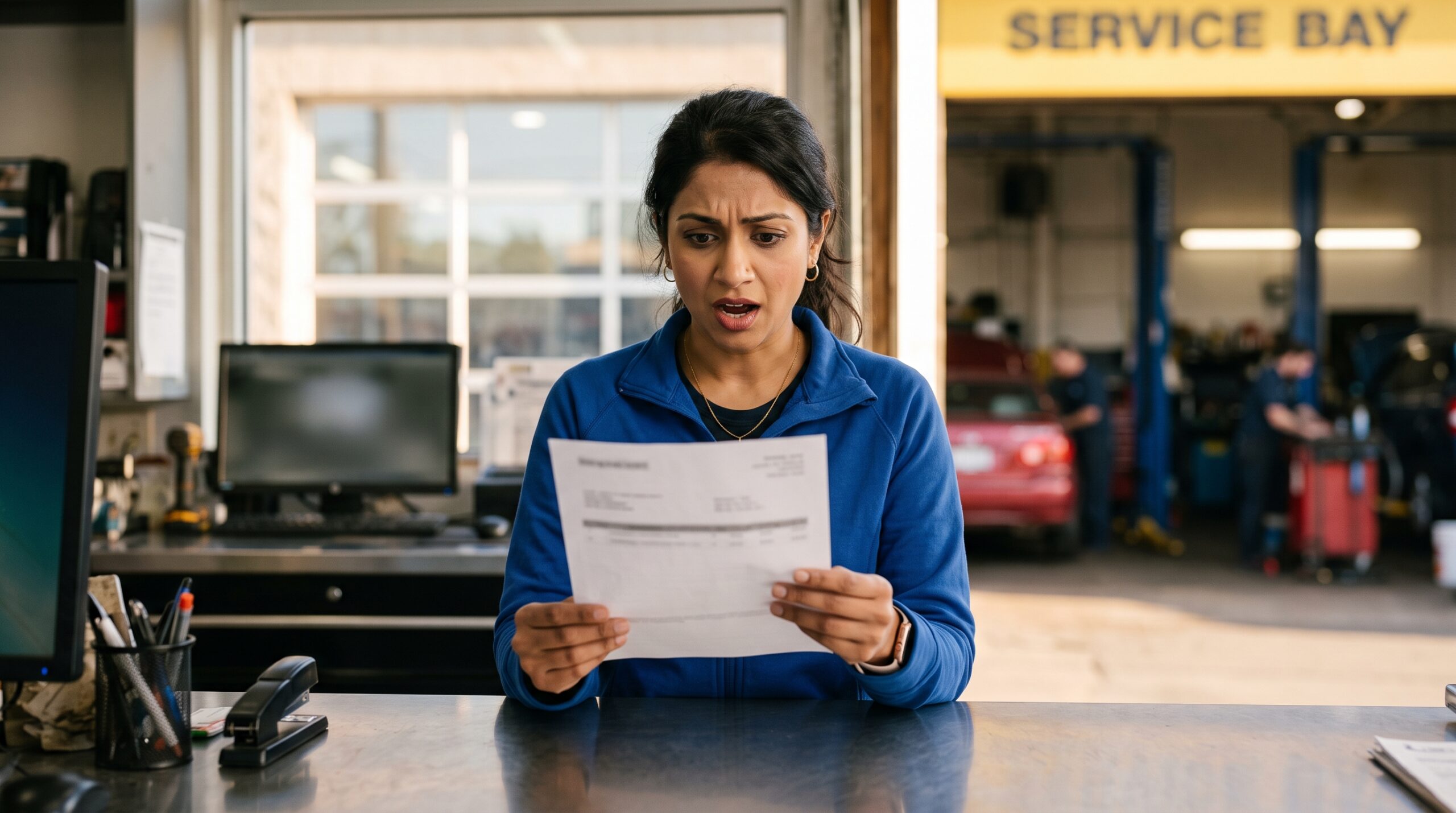
Denise’s 2023 Toyota Camry took a rock through the windshield on I-95 outside Jacksonville this spring. The mobile glass shop that came to her driveway quoted $300, cash, installed in under an hour. The quote never mentioned the small camera bracketed behind her rearview mirror, the one her Camry uses for lane-departure alerts and its forward-collision system. That camera has to be recalibrated every time the windshield comes off, and the mobile shop that swapped her glass had no way to do it.
What the full repair actually costs
AAA tested exactly this scenario in its December 2023 Cost of ADAS Repair update, pricing windshield replacement on three current model-year vehicles, including a Toyota Camry like Denise’s. AAA found the average total repair estimate for this job came to $1,439.78. Of that, $360.00, or 25.4 percent, was the camera-specific work: transferring the sensor to the new glass and running the recalibration. The remaining $1,079.78 covered the windshield itself and its installation, since several automakers require original equipment manufacturer (OEM) glass, because aftermarket panes often don’t meet the clarity and bracket specifications the camera needs. Add the two figures back together and they land exactly where AAA reported: $1,079.78 plus $360.00 equals $1,439.78. A $300 quote covering only glass and installation is missing more than three-quarters of the real bill, and all of the part that keeps the safety systems working. A cracked windshield is one more unplanned line on top of what your car already costs per mile to run.
Why the recalibration step exists at all
A windshield-mounted camera reads lane markings, other vehicles, and pedestrians through the glass. When a technician removes a windshield, the camera comes off and goes back on in a slightly different position, even when the work is careful. A camera off by a fraction of a degree can misjudge distance or reaction timing. That is why AAA’s report states plainly that whenever the windshield is replaced, the camera must be transferred to the new glass and calibrated to function properly. Toyota’s own service documentation, cited directly in AAA’s report, names the specific systems that need that calibration: its forward recognition camera and adaptive cruise system. Ford’s own cited documentation takes a narrower approach, requiring genuine OEM glass rather than naming a separate recalibration step. Nissan’s cited documentation is narrower still: it requires the camera bracket and its cover bracket to be replaced together with the windshield glass as one assembly, again with no separate recalibration step named. The recalibration is not an upsell. It is the step that lets those systems trust what they are seeing again.
Static calibration, dynamic calibration, and why some cars need both
Two different processes cover this work. Static calibration happens indoors, with printed target boards set at exact distances and angles while a scan tool walks the camera through its reference points. Dynamic calibration happens on the road, with the car driven at a set speed and distance while the system relearns lane markings and traffic. Some vehicles need only one method; others need both in sequence before the system counts as calibrated. The Auto Glass Safety Council (AGSC) maintains the auto glass industry’s own Auto Glass Replacement Safety Standard (AGRSS). It updated that standard to require shops to use equipment built for recalibration, not general-purpose tools, whenever the manufacturer calls for calibration. Technicians must also complete a real training program with a final exam. A driveway glass van built to swap a pane of glass in under an hour rarely also carries a target-board rig. Shops typically bill that labor using flat-rate book time rather than the clock, which is why the two jobs show up as separate lines.
What to ask before you approve a quote
Before agreeing to a windshield replacement on any car with a forward-facing camera, ask the shop two direct questions. Does this vehicle need static calibration, dynamic calibration, or both? Is that calibration included in this price or billed separately? A written estimate that lists calibration as its own line item, the way AAA’s own data separates it, is a sign the shop is actually equipped for the work. An estimate that only says “windshield replacement,” with no mention of the camera, is the sign to ask again in writing before the appointment, not after the old glass is gone. Reading the full estimate matters here the same way it does on any other repair invoice: the missing line is the expensive one.
The table below shows how the windshield scenario compares to AAA’s other three tested repair scenarios. It is the smallest dollar amount of the four, but it still represents real, separately billable work that a glass-only quote leaves out.
| Repair scenario | Average total repair estimate | ADAS-specific cost | Share of total |
|---|---|---|---|
| Front-end collision | $11,708.29 | $1,540.92 | 13.2% |
| Side mirror replacement | $1,507.55 | $1,067.42 | 70.8% |
| Rear collision | $1,698.24 | $684.63 | 40.9% |
| Windshield replacement | $1,439.78 | $360.00 | 25.4% |
Frequently asked questions
Does every windshield replacement need a camera recalibration? No. Only cars with a forward-facing camera mounted behind the windshield need it, and only when the vehicle manufacturer requires it for that repair. Check your owner’s manual or ask the shop to confirm whether your specific make and model has that camera before assuming glass alone will fix it.
How do I know if my car needs static, dynamic, or both? The manufacturer sets the requirement, not the glass shop, and it varies by make, model, and sometimes model year. Ask the shop directly which method your vehicle needs, and get the answer in writing before the appointment, not as a surprise on the final invoice.
Will insurance pay for the recalibration too? Often yes, when the claim covers a windshield with an attached safety camera. Comprehensive coverage typically pays for the full repair, camera work included, as long as the recalibration is documented on the estimate before the work is approved, not added afterward.
Can I just skip the recalibration to save money? No. A camera that reads the road incorrectly can misjudge distance or braking timing, which defeats the purpose of the safety system it feeds. Skipping the recalibration does not remove the risk, it just moves the cost of finding out to the worst possible moment.
Why didn’t the mobile shop mention calibration at all? Many mobile and driveway glass operations are not equipped for it. They may sublet the calibration to a specialist, quote it as a separate follow-up appointment, or in some cases simply not offer it at all. That is exactly why the question belongs in the estimate conversation, not after the glass is already installed.
Leave a Reply