7 min read · Last updated November 4, 2026
- A safety data sheet for a widely sold winter washer fluid lists methanol, the ingredient that keeps it from freezing, at 30 percent by weight. A typical summer blend runs just 1 to 5 percent.
- One documented case puts a cracked washer reservoir repair at $250, versus about $8 for a gallon of fluid rated to -20°F.
- The American Automobile Association (AAA) installs National Automotive Parts Association (NAPA) Proformer beam wiper blades through its mobile service at $21.99 per blade. AAA says they keep working past six months while rubber blades fade within a few.
- AAA’s own guidance is to use rubber wiper blades “only in the summer and mild winters,” not through a full cold-climate season.
Summer washer fluid freezes because it has little antifreeze in it. A fluid rated to -20°F runs about 30 percent methanol by weight, versus roughly 1 to 5 percent in a typical summer blend.
In this article
- Why summer washer fluid freezes solid
- What a washer fluid freeze point rating actually means
- The math: an $8 jug versus a $250 reservoir repair
- Beam vs. conventional wiper blades: cost by season
- When to actually make the swap
- Frequently asked questions
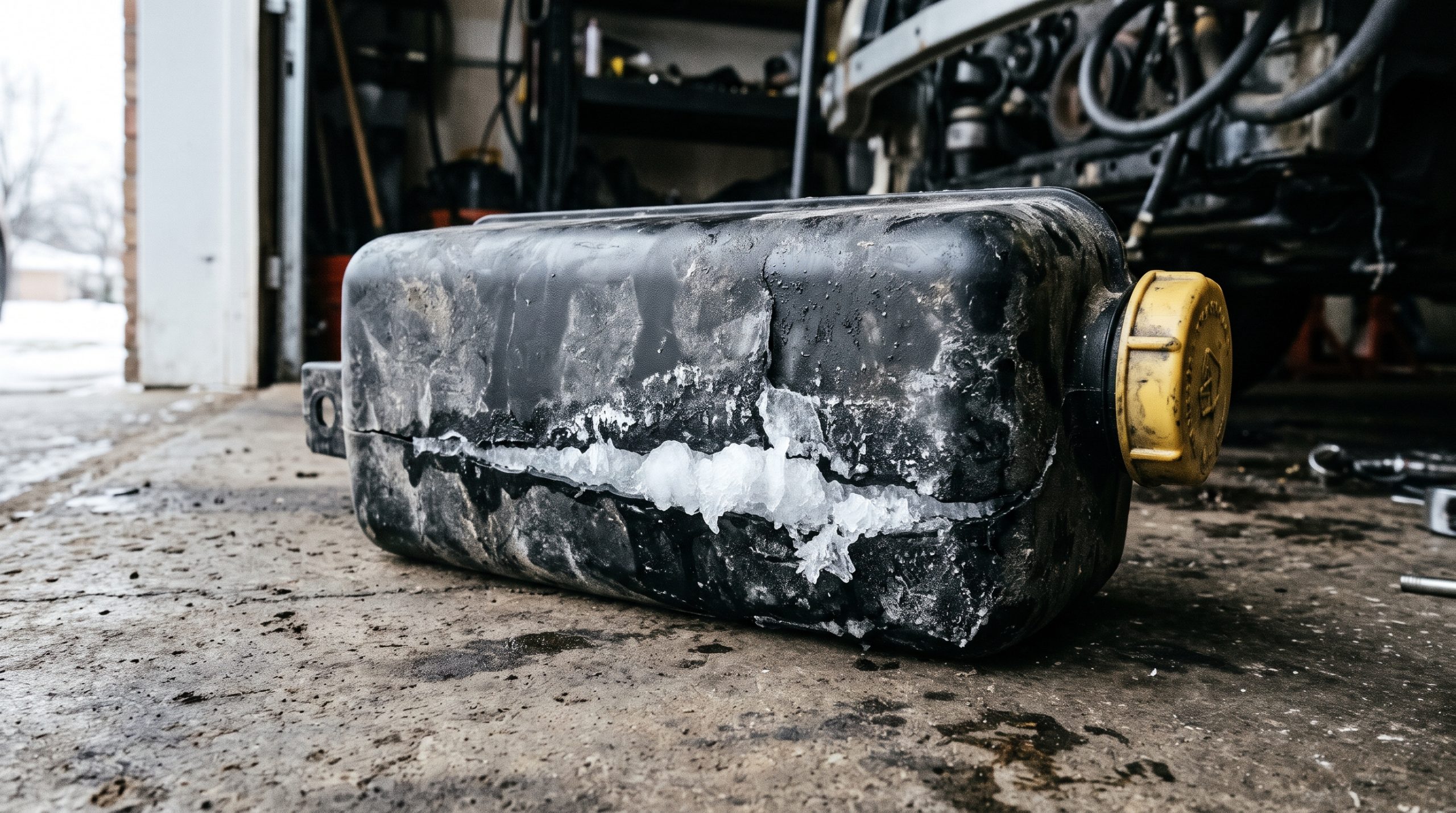
A cracked plastic washer reservoir ran one Honda CR-V owner $250 to fix, logged at 89,000 miles. In plenty of winter breakdowns, the cause is a washer fluid freeze point rating nobody checked. Summer fluid sat in the tank, froze solid, and expanded until the plastic split.
Why summer washer fluid freezes solid
Plain water freezes at 32°F. Washer fluid stays liquid colder than that only because of what’s mixed into it, mainly methanol.
A safety data sheet for Bug Basher, a summer-formula washer fluid sold by Nemco Resources, lists methanol at just 1 to 5 percent of the mixture by weight. The rest is mostly water and a small amount of cleaning surfactant. That is why a jug built for bug season behaves almost like water once the temperature drops.
A separate safety data sheet for a -20°F-rated winter fluid lists methanol at 30 percent by weight, six to thirty times the concentration in the summer blend. More methanol lowers the point at which the liquid turns solid, the same chemistry that keeps antifreeze from freezing in your radiator.
What a washer fluid freeze point rating actually means
The temperature printed on a winter washer fluid jug is the point at which that specific fluid stops being a liquid and becomes ice. It is not a guarantee about your reservoir, your pump, or your lines.
A fluid rated to -20°F should stay pourable at 0°F, at -10°F, and right down to its stated limit. Below that line, it can still freeze. Leftover summer fluid mixed in dilutes the winter fluid’s methanol content, which raises the effective freeze point above what the new jug’s label promises.
That matters most right when the fluid is doing the most work. A hard freeze overnight brings road salt and grime that only a washer system can clear off the glass.
The math: an $8 jug versus a $250 reservoir repair
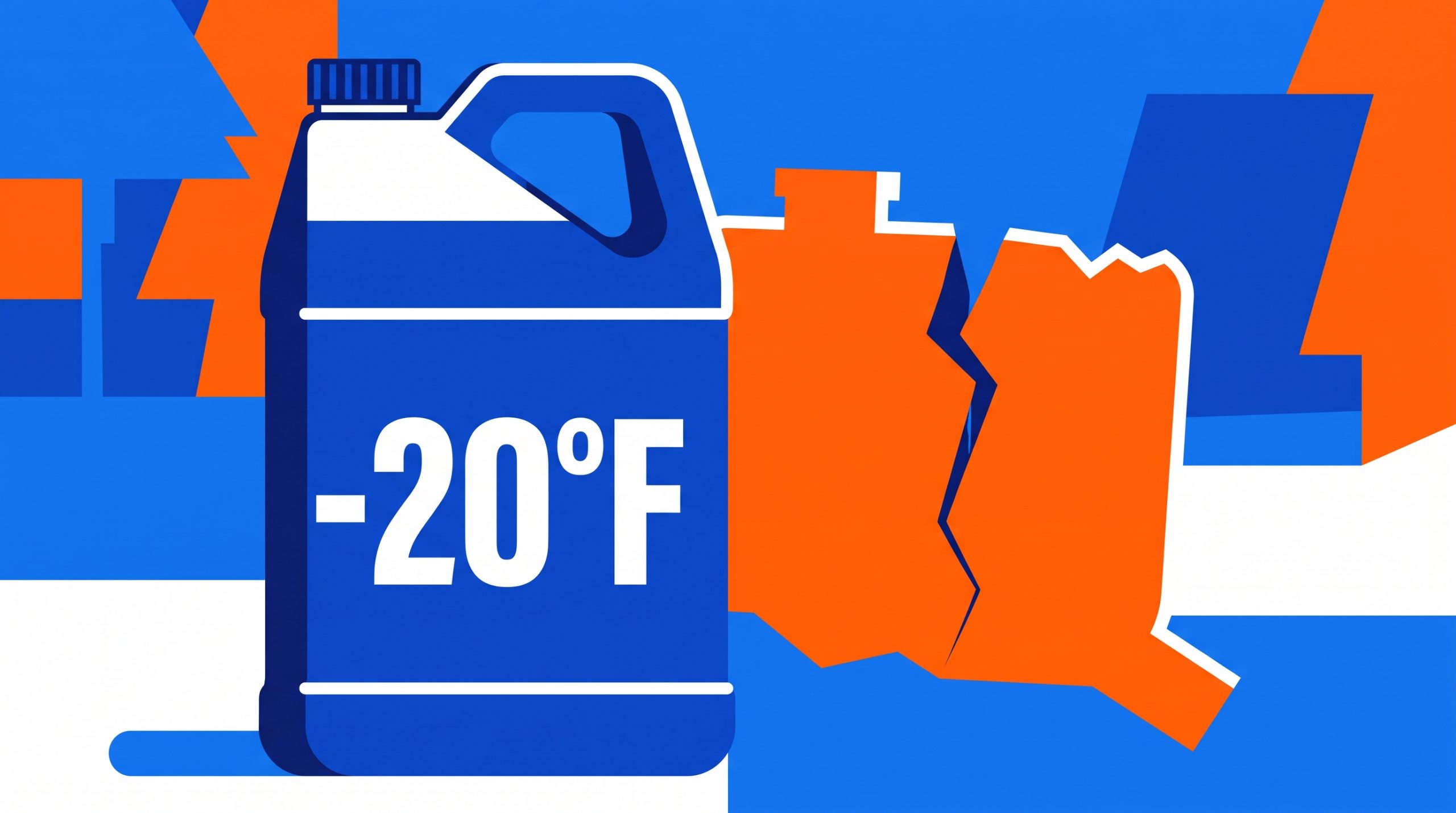
Run the comparison with real numbers. A gallon of -20°F-rated washer fluid runs about $8 at most auto parts stores. The documented repair cost for a cracked reservoir, from the Honda CR-V case above, is $250.
$250 divided by $8 comes out to about 31. That is the price of roughly 31 jugs of winter fluid for the cost of one cracked reservoir and the labor to replace it.
Ice does the damage because water expands as it freezes, pushing outward against whatever is holding it. A plastic reservoir with no room to give is exactly that kind of container. Swap the fluid before the first hard freeze and there is nothing left inside to expand.
Beam vs. conventional wiper blades: cost by season
Washer fluid clears the glass. The blade decides whether it actually leaves a clean sweep behind. AAA sells both styles through its mobile wiper service, and its own guidance draws a clear line between them for winter use.
AAA installs NAPA Proformer beam blades, the kind with a slim spring-steel band instead of a metal frame. The member price is $21.99 per blade through its service, or about $44 for a pair installed. AAA’s own wiper-blade guidance says beam blades keep performing past six months, while rubber and silicone blades fade within just a few.
That gap is the real cost-per-season question. A conventional rubber blade costs less to buy. AAA recommends it “only in the summer and mild winters,” not through a full cold season.
Rain-X, which makes both styles, says beam blades don’t trap water and ice in an exposed frame the way conventional blades can. That trapped ice is exactly the failure mode that shows up first in freezing rain.
| Factor | Beam blades | Conventional blades |
|---|---|---|
| Upfront cost | $21.99/blade installed via AAA’s mobile service | Lower sticker price at any parts store |
| How long they hold up | Keeps wiping clean past 6 months, per AAA | Fades within a few months, per AAA |
| Ice and snow handling | No exposed frame for ice to jam, per Rain-X | Metal frame can trap ice and freeze stiff |
| Rust risk over time | Enclosed design, little exposed metal | Exposed metal frame can rust |
| AAA’s own winter guidance | Suitable through a full cold-climate season | Recommended for summer and mild winters only |
| Best for | Drivers in a real winter climate who want one set to last the season | Mild-climate drivers or a short-term stopgap |
When to actually make the swap
Don’t wait for the first freeze warning to check the reservoir. Check it the week before, while the fluid is still pourable enough to see what’s in there.
If the fluid already looks like slush or the reservoir is weeping fluid you didn’t put there, stop topping it off. Drain what you can, and replace the reservoir before a small crack turns into a cracked pump housing too. For tire pressure that drops with the same cold snap, the fix is just as cheap and just as easy to put off.
Wiper blades follow the same logic as choosing winter tires over all-season rubber. Pay once for a part built for the season you’re driving in, or pay twice for one that wasn’t.
Frequently asked questions
Does washer fluid really freeze inside the reservoir? Yes, if it does not have enough antifreeze in it. A summer-formula fluid runs as little as 1 to 5 percent methanol by weight, close enough to plain water that it freezes at a similar temperature. Ice expanding inside a sealed reservoir is what eventually cracks the plastic.
What does a -20°F rating on a washer fluid jug mean? It means that specific fluid, at full strength, should stay liquid down to -20°F. It is not a rating for your whole washer system, and mixing it with leftover summer fluid raises the effective freeze point above what the label promises. Treat it as a ceiling, not a promise, once old fluid remains.
Will topping off summer fluid with a winter jug fix the problem? Partly, but not fully. Mixing dilutes the winter fluid’s methanol concentration, so the blend protects you to a milder temperature than the new jug’s own rating. Draining the old fluid first, with a turkey baster or a wet/dry vacuum, gets you closer to the label’s real number.
How much does a cracked washer reservoir cost to fix? One documented repair, a 2003 Honda CR-V at 89,000 miles, came in at $250. Costs vary by vehicle, since some reservoirs include the pump and others don’t. Either way, that figure is a real number to weigh against an $8 jug of fluid bought ahead of the first freeze.
Are beam wiper blades worth the extra cost for one winter? If you’re driving through a real winter with repeated freezes, AAA’s guidance says yes: beam blades keep performing past six months while conventional rubber blades fade within a few. In a mild climate, a cheaper conventional blade is a reasonable call. Either way, check the blade before the season starts, not after the first storm.
Leave a Reply