6 min read · Last updated October 21, 2026
- Continental’s own tire-engineering data says a summer tire compound hardens below 45 degrees Fahrenheit. All-season tires are built for winters that stay close to freezing, not for that same sustained cold.
- A dedicated winter tire and wheel set runs about $556 more than replacing all-season tires twice over five winters, roughly $111 a year.
- A fall 2020 Consumer Reports member survey found the median price for a sedan-class tire was $137, plus $24 a tire to mount and balance.
A dedicated winter tire and wheel set costs roughly $556 more over five winters than replacing all-season tires twice, about $111 a year once wheels and swaps are counted.
In this article
- What winter tires vs. all-season tires cost over five winters
- Why all-season tires lose their edge below freezing
- Where a second tire set never pays back
- Frequently asked questions
A dedicated winter tire and wheel set for a typical sedan runs about $556 more over five winters than simply replacing all-season tires twice, roughly $111 a year. Whether that premium is worth paying depends on how cold your driveway actually gets.
What Winter Tires vs. All-Season Tires Cost Over Five Winters
Price out a real example.
A sedan owner buys four all-season tires at $137 each, the median price a fall 2020 Consumer Reports member survey found for sedans, hatchbacks, and wagons. Mounting and balancing adds $24 a tire. The full set costs $548 for tires plus $96 for installation, a total of $644.
Driven year-round at roughly 12,000 miles a year on a tire rated for 50,000 miles of tread life, that set wears out in about four years. Across five winters, the all-season-only driver buys two sets, spending $1,288 total.
That’s the real cost of running one tire type year-round. Summer heat and winter cold both wear on the same four corners, so the clock never stops.
Now add a winter set.
Four winter tires at a representative $126 each, a reasonable budget-tier estimate for a mainstream sedan size, plus $96 to mount and balance, come to $600. A basic set of steel wheels to hold them runs roughly $400. Swapping wheels twice a year for five winters, at about $20 a visit, adds another $200.
Running only 5,000 winter miles a year instead of 12,000 stretches the all-season set’s life well past five years, so it never needs replacing inside this window. Total spend with two sets: $644 for the single all-season set, plus $600, $400, and $200 on the winter side, for $1,844.
That’s $556 more than the all-season-only path over the same five winters. Running the tread-life math per mile makes the real gap clearer: a tire priced lower but worn out twice as fast isn’t actually cheaper.
| Factor | All-Season | Dedicated Winter |
|---|---|---|
| Median price per tire | $137 | $126 |
| Grip in sustained cold | Built for mild winters, softens near freezing | Stays pliable at 45°F and below |
| Typical tread life | ~50,000 miles | ~40,000 miles, seasonal use only |
| Best for | Mild winters, infrequent snow | Sustained cold, regular snow or ice |
Why All-Season Tires Lose Their Edge Below Freezing
Tire compound is the whole story here. Continental’s own tire-engineering pages state that below 45 degrees Fahrenheit, a summer tread compound becomes hard and brittle.
A winter tire’s compound stays pliable at that same temperature because it carries more natural rubber. All-season tires split the difference, built for winters that stay mild. Continental positions them as an alternative for drivers whose lows rarely drop below freezing, not as a substitute for a dedicated winter tire’s cold-weather compound.
Consumer Reports found the same pattern in its own testing. Dedicated winter and all-weather tires show a measurable advantage over regular all-season tires once temperatures drop. The winter tread compound stays pliable in the cold and bites into snow and ice with more sipes.
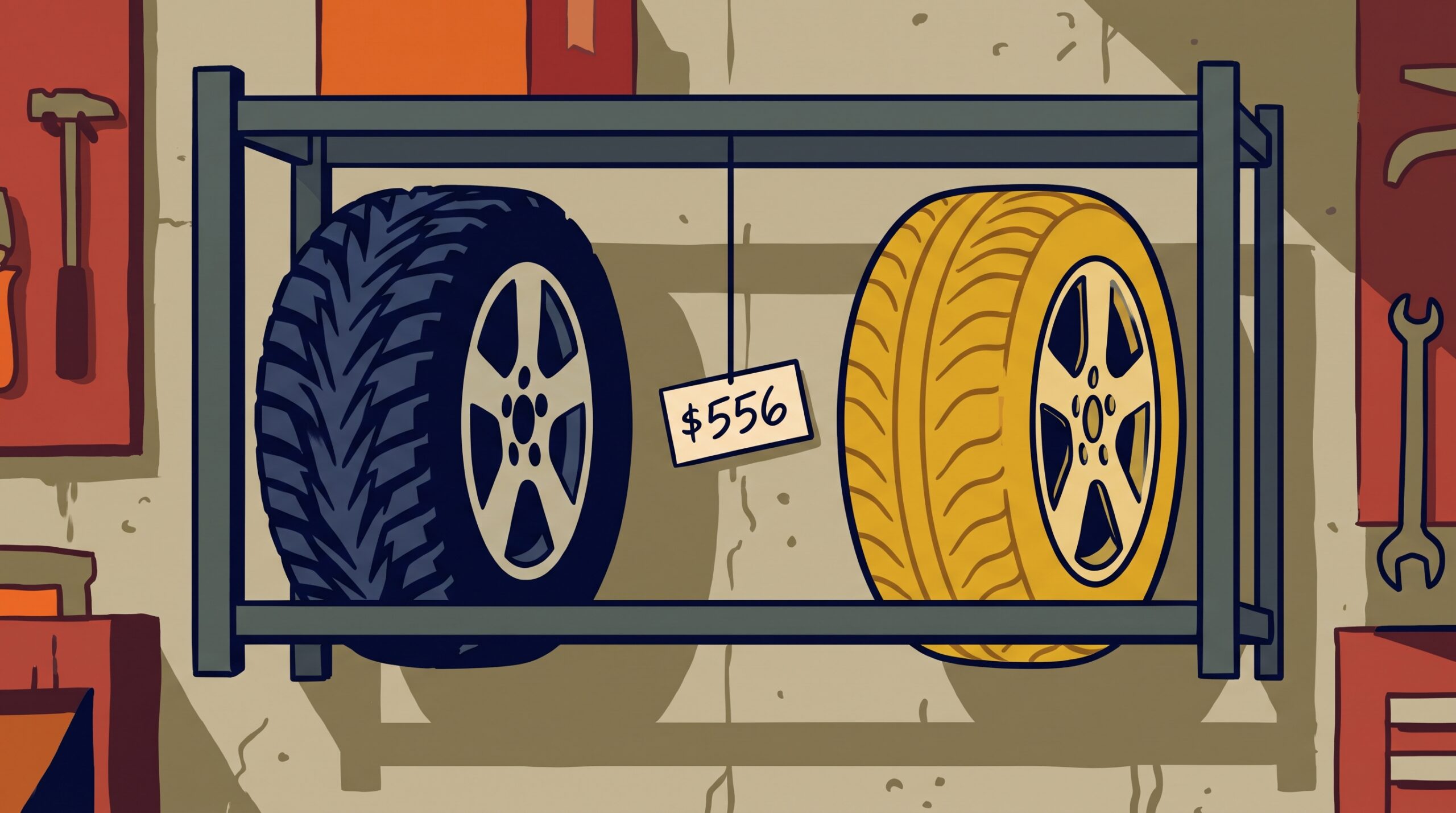
A harder compound means less rubber actually conforms to the road surface. Braking distances stretch, cornering grip drops, and the effect compounds on ice, where a tire needs real flexibility just to generate friction at all.
This is also why a tire worn past its useful tread depth struggles even more once it gets cold. Checking whether your current set has enough tread left for winter matters more as overnight lows start falling.
A tire with plenty of tread but hardened rubber still won’t bite into packed snow. Both factors, tread depth and compound flexibility, determine real cold-weather grip.
Where a Second Tire Set Never Pays Back
The math above assumes a real winter. A driver who sees three or four snow events a season and otherwise stays above freezing is paying $556 for traction they rarely need.
Climates where lows rarely drop below freezing all winter stay within the range Continental calls fine for all-season rubber. Coastal valleys, the Mid-Atlantic, and most of the Southeast fit that pattern, and a second set there rarely earns its cost.
Low-mileage winter drivers lose the math too. Someone who puts 2,000 winter miles a year on a car, working from home or parking it after the first snow, barely wears the all-season set down. Two replacement cycles can then stretch past a decade.
A rough personal rule holds up well: if your driveway seldom sees frost, the all-season-only path usually wins on cost alone.
The flip side holds just as hard. Anywhere nights routinely drop into the 20s and 30s with real snowfall, the traction gap stops being theoretical. Northern states, mountain towns, and anywhere ice forms overnight make the $111-a-year premium look like cheap insurance against a longer stopping distance.
Frequently asked questions
Does all-wheel drive replace the need for winter tires? No, all-wheel drive helps a car accelerate from a stop, but it does nothing for braking or cornering grip. Winter tires improve all three because the tread compound stays pliable below 45 degrees Fahrenheit. A two-wheel-drive car on winter tires out-brakes and out-corners an all-wheel-drive car on all-season tires in snow and ice.
How much does a dedicated winter wheel and tire set cost upfront? Budget $1,000 to $1,100 upfront for a sedan: about $600 for four winter tires mounted and balanced, plus roughly $400 for a basic set of steel wheels. SUVs and trucks run higher because of larger tire sizes. Buying wheels once and reusing them every winter is what makes the long-term math work.
Is 45 degrees Fahrenheit an exact cutoff for switching tires? No, that figure describes summer and winter tire compounds, not all-season tires. All-season tires are rated for winters that stay close to freezing, not for sustained cold below it. Once your area’s overnight lows start dropping toward 32 degrees, an all-season tire is nearing the edge of what it’s built for.
What mileage makes a second tire set worth the cost? Drivers who put at least 5,000 winter miles a year on a car see the clearest payback. That’s especially true in a climate with sustained snow or sub-freezing temperatures, since winter tires there improve both safety and all-season tire longevity. Below that mileage, or in milder climates, the extra wheels and mounting fees usually cost more than the traction is worth.
Leave a Reply