
6 min read · Last updated August 10, 2026
- CarMD’s 2026 Vehicle Health Index, built from 39 million vehicles’ 2025 service records, put the average check-engine repair at $554, up 33% from the year before.
- The single most common fix on that list, a catalytic converter, averages $1,511. The cheapest common one, an EVAP (Evaporative Emission Control System) purge control valve, averages $172.
- A code identifies the circuit that failed a test, not the part that failed it, per the California Air Resources Board (CARB). That’s why the same code can point to a $28 gas cap or a $1,511 converter.
- OBD-II (On-Board Diagnostics, second generation) has been mandatory on every 1996-and-newer gasoline car and truck sold in the U.S., per CARB.
In this article
- What a code tells you, and what it doesn’t
- The real cost spread, by the numbers
- Why the same code can mean $28 or $1,500
- The one warning sign that isn’t optional
- Frequently asked questions
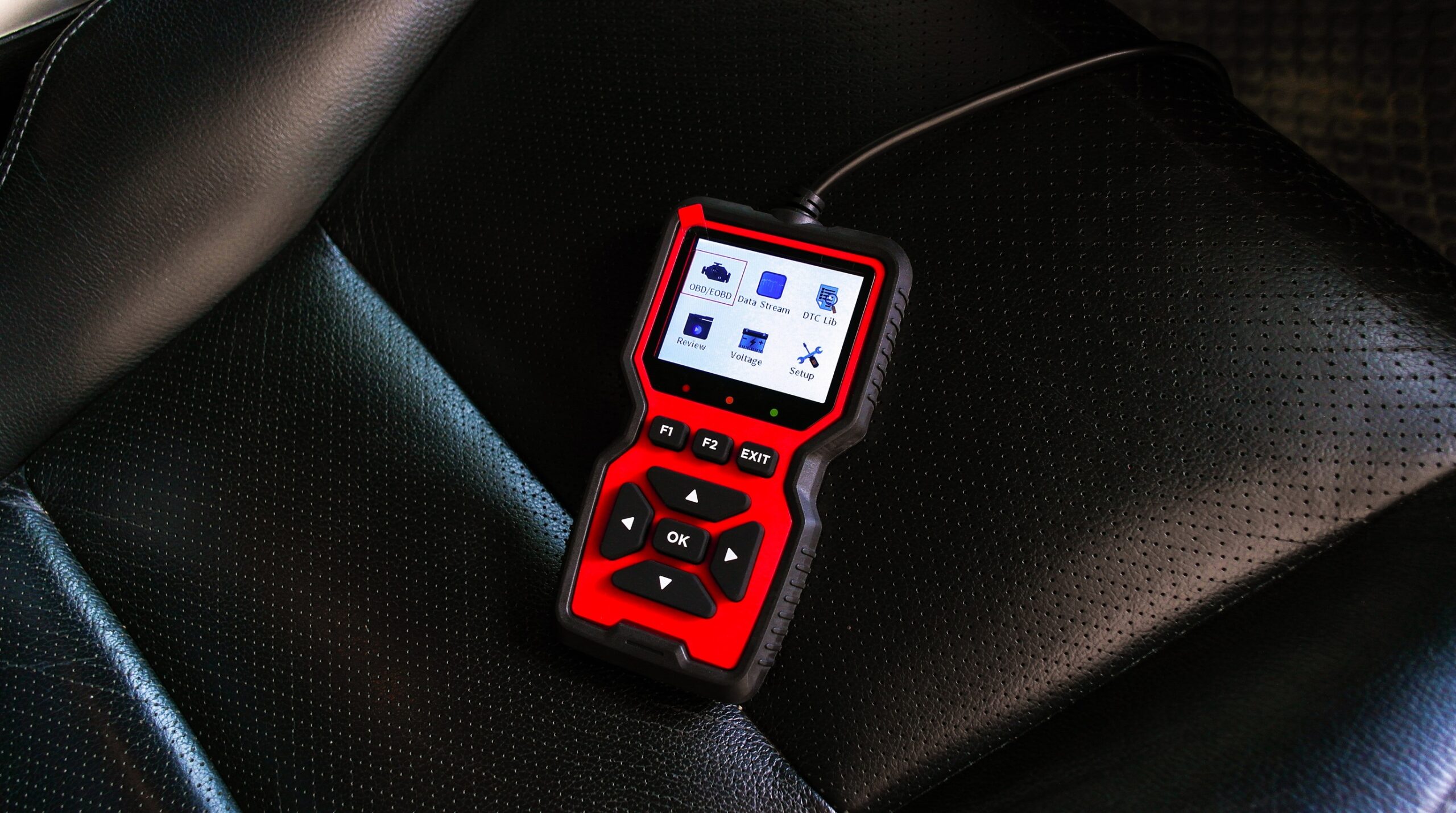
The free code scan at the parts store returns P0420, and the counter clerk says it’s probably your catalytic converter, a repair that averaged $1,511 nationally in 2025, according to CarMD’s 2026 Vehicle Health Index.
What a code tells you, and what it doesn’t
OBD-II, short for On-Board Diagnostics, second generation, has been required on “all 1996 and newer model year gasoline and alternate fuel passenger cars and trucks” sold in the U.S. That’s per the California Air Resources Board (CARB), the state regulator whose standard the Environmental Protection Agency (EPA) later adopted nationwide. The system constantly runs diagnostic routines on emissions-related components. When one fails a test, it lights the malfunction indicator lamp, the “Check Engine” light, and stores a code along with supporting data so a technician can trace the problem.
What it doesn’t do is name the failed part. A code identifies the circuit or system that failed, not the specific component responsible. That distinction is the entire reason a free scan at the parts store, which only reads the code, isn’t the same thing as a diagnosis. It’s the first step, not the answer. Clearing that code with the same scan tool has its own consequence worth knowing: it resets the car’s emissions readiness monitors, and a state inspection can fail on those monitors alone, even with the light off.
The “P” at the start of a code stands for powertrain, covering the engine and transmission. Other letters cover the body, chassis, and network systems, though the check engine light itself is reserved for powertrain and emissions faults. CARB’s fact sheet also notes the system stores supporting “freeze frame” data, a snapshot of the engine conditions present the moment the fault triggered. That snapshot is exactly what a technician needs to narrow down the cause, and it’s exactly what a bare code number on a parts-store printout doesn’t give you. That freeze-frame data matters even more when the fault never sets a code at all: for an intermittent problem that clears before you reach the shop, documenting the exact conditions yourself is often the only way to avoid paying for the same diagnosis twice.
The real cost spread, by the numbers
CarMD’s 2026 Vehicle Health Index analyzed more than 39 million vehicles’ 2025 service records and found the average check-engine repair climbed to $554, up 33% from the year before. The individual repairs behind that average span a wide range:
| Repair | Average Cost (CarMD, 2025 data) | Cost Tier |
|---|---|---|
| Catalytic converter | $1,511 | Premium |
| Fuel injector(s) | $572 | Mid-range |
| Ignition coil and spark plug(s) | $480 | Mid-range |
| Mass air flow sensor | $346 | Mid-range |
| Thermostat | $324 | Mid-range |
| ABS wheel speed sensor | $314 | Mid-range |
| Spark plug(s) alone | $299 | Mid-range |
| Oxygen (O2) sensor | $287 | Mid-range |
| Ignition coil alone | $256 | Mid-range |
| EVAP purge control valve | $172 | Budget |
A catalytic converter costs 8.8 times more than an EVAP purge valve, and both can be behind a similar-looking code on the same scan tool.
Why the same code can mean $28 or $1,500
P0420, “catalyst system efficiency below threshold,” can trace back to more than one cause. Sometimes the converter itself has genuinely worn out, the $1,511 repair above. Other times an upstream oxygen sensor is giving the computer a false reading, and replacing that $287 part fixes the code without touching the converter at all. A misfire code in the P0300 family works the same way. It might mean worn spark plugs and a coil, a $480 fix. Or it might point somewhere more expensive once a technician actually tests the individual components.
Misfire codes follow the same pattern one level deeper. P0300 means a random, unspecified-cylinder misfire, while P0301 through P0308 point to one specific cylinder acting up. A single-cylinder code like P0301 narrows the search toward that cylinder’s own spark plug, coil, or injector, most often the $480 ignition-coil-and-spark-plug fix from the table above. Put the two side by side: CarMD’s data prices a P0420 catalytic-converter repair at $1,511 against a P0301 misfire fix at $480, a $1,031 gap between two codes that look identical on a basic scanner. A random-misfire code spread across multiple cylinders more often points to something feeding all of them at once, like a vacuum leak or bad fuel. Either way, the code narrows where to look. It still doesn’t name the part.
The EVAP family of codes shows the dollar spread most clearly. CarMD’s data lists a loose or cracked gas cap as a fix that runs free to $28, while the EVAP purge control valve itself, a different part in the same evaporative-emissions system, averages $172. Ignoring either isn’t free, either. CarMD notes that a failing oxygen sensor left unaddressed “can negatively impact your car’s fuel economy by as much as 40%,” a cost that shows up at the pump, not on the repair invoice.
The one warning sign that isn’t optional
A single-cylinder misfire code is also worth checking against the fuel system itself before assuming a bad coil or plug. On a direct-injection engine, carbon buildup on the back of the intake valves is a common, schedule-invisible cause of exactly this kind of misfire; walnut blasting or chemical induction cleaning is the fix, and neither shows up in the maintenance booklet.
A steady check engine light means get it looked at soon. A flashing one is different. Many manufacturers’ owner’s manuals treat a flashing light as an active engine misfire severe enough to risk damaging the catalytic converter if you keep driving on it. They recommend reducing speed right away and having the car towed rather than driven in.
The reason is mechanical, not cautious. A misfiring cylinder dumps unburned fuel into the exhaust stream, and the catalytic converter is what has to burn it off. Enough unburned fuel reaching a hot converter can push it past the temperature it’s built to handle, turning what might have been a $480 spark-plug-and-coil fix into the $1,511 repair from the table above. If your light starts flashing, that’s the one situation on this list where the right move is stop-and-tow, not schedule-it-for-next-week. A worn-out spark plug is one of the most common causes of that kind of misfire in the first place, and the replacement interval depends entirely on which metal is in the plug, not the car itself.
Frequently asked questions
Is a free parts-store code scan the same as a real diagnosis? No. The scan reads the stored code, which names the circuit that failed a test. It doesn’t identify which specific part within that circuit is responsible. A proper diagnosis means a technician testing the individual components the code points to before any part gets replaced.
What’s the difference between the check engine light staying on steady vs. flashing? A steady light means a problem was detected and should be checked soon, but it’s generally safe to keep driving to your appointment. A flashing light typically signals an active misfire severe enough to risk catalytic converter damage, and calls for reducing speed and getting the car towed rather than driven further.
How much does a proper diagnostic exam cost if the code alone doesn’t tell you the part? Diagnostic fees vary by shop and region, and many shops waive the fee if you have the repair done there. Ask upfront whether there’s a diagnostic charge and whether it’s credited toward the repair, per the Federal Trade Commission (FTC)’s general guidance on getting a written estimate before any work begins.
Should I just clear the code and see if it comes back? Clearing it without fixing the cause almost always brings it right back, since the underlying fault is still there. Worse, it erases the freeze-frame data that helps a technician diagnose it faster. If the light is steady, get it read properly before clearing anything.
What is the single most common, and most expensive, check-engine repair? A catalytic converter, at an average of $1,511 in CarMD’s 2026 Vehicle Health Index. It’s also one case where the underlying cause matters most, since a failing oxygen sensor sometimes causes converter damage that a $287 sensor swap could have prevented.
Leave a Reply