6 min read · Last updated November 18, 2026
- Fairfax County, Virginia currently taxes personal vehicles at $4.57 for every $100 of assessed value.
- Connecticut assesses vehicles at 70% of market value and caps the motor-vehicle mill rate at 32.46 mills statewide.
- Missouri assesses vehicles at 33⅓% of true value every January 1, then applies each county’s own local levy on top.
- A second car assessed at the same $9,000 owes the identical $411 in Fairfax County whether it’s driven daily or parked all year, because the bill tracks value, not mileage.
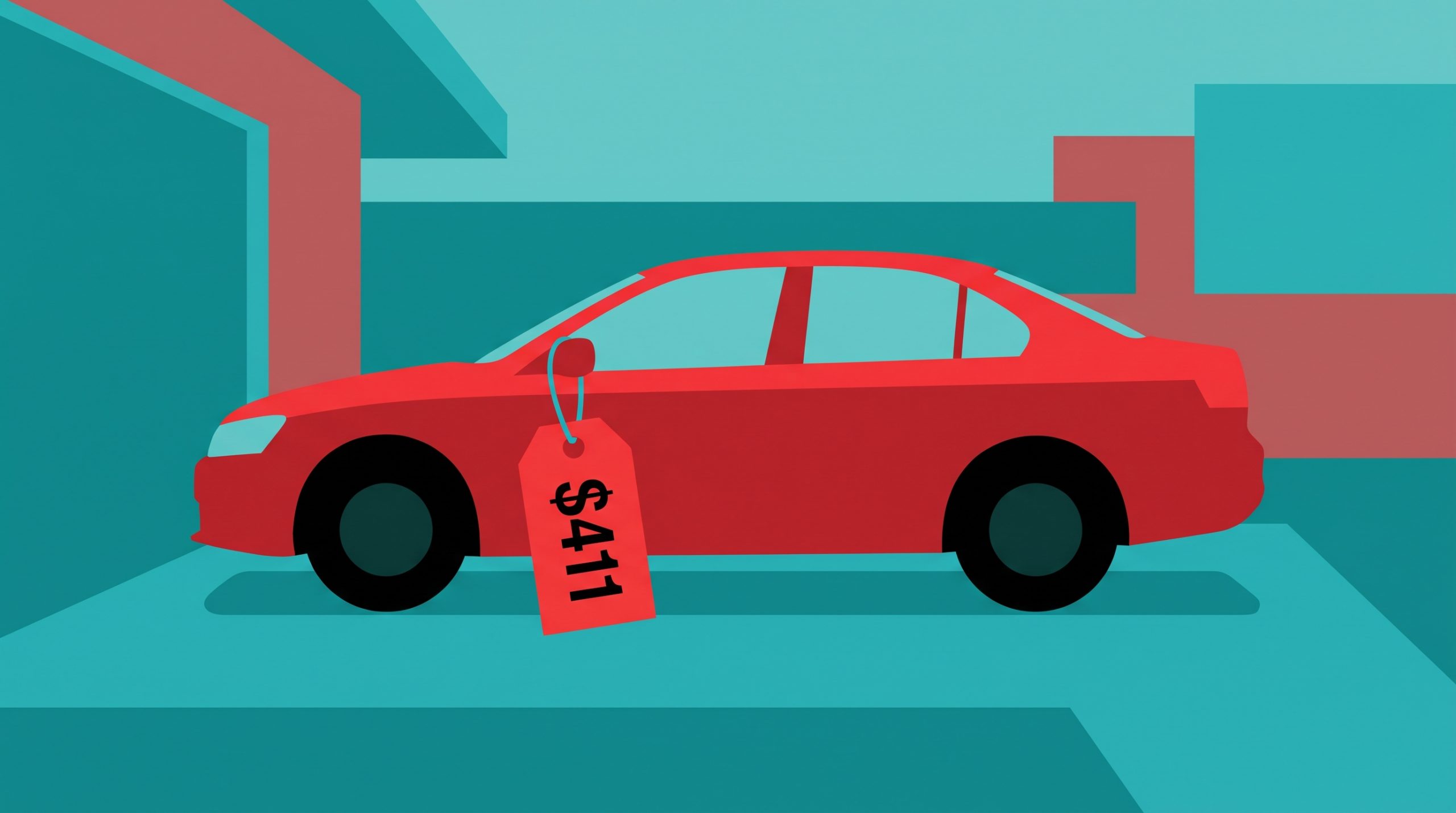
Virginia, Connecticut, Missouri and several other states bill car owners a yearly personal property tax, calculated by multiplying your car’s assessed value by a locally set rate. A $9,000 car registered in Fairfax County, Virginia, for example, owes $411 a year at the county’s current $4.57-per-$100 rate.
In this article
- How the tax on your car is actually calculated
- The worked example
- Why an older or rarely-driven car still owes money
- How Virginia, Connecticut and Missouri compare
- Frequently asked questions
Most car owners budget for registration fees and insurance and never think about a tax bill. In the roughly two dozen states that levy an annual vehicle property tax, that assumption is wrong. The number can catch a household by surprise the first November or December it arrives in the mail.
How personal property tax on your car is actually calculated
The mechanism is the same everywhere: a local or state authority sets the car’s assessed value, then a tax rate is applied to that value. Neither number comes from the sticker price you paid.
Virginia counties and cities assess cars individually. Fairfax County, the state’s largest locality, uses J.D. Power Valuation Services as its guide and currently taxes personal property at $4.57 per $100 of assessed value.
Connecticut takes a statewide approach to the ratio and lets towns set the rate. State law requires all property, vehicles included, to be assessed at 70% of its actual value. The same statute caps the motor-vehicle mill rate any town can charge at 32.46 mills, or $32.46 per $1,000 of assessed value, even where the town’s real-estate rate runs higher.
Missouri’s assessment ratio is set in state statute: the county assessor values personal property, including cars, at 33⅓% of its true value every January 1. A local levy is then applied to that assessed value. The county and districts that overlap it each set a piece of that levy, so the total varies by address.
The worked example: what a $9,000 car owes in Fairfax County
Say your car’s trade-in-style book value prices it at $9,000 this year, in the range Fairfax County would pull from its J.D. Power guide for a mid-size sedan a few years old. The math is one multiplication, run on the assessed value, not the price you paid for the car:
$9,000 assessed value ÷ 100 = 90. 90 × $4.57 = $411.30, which the county bills as $411.
Drop the same car’s assessed value to $2,000 a few years later and the bill falls with it. $2,000 ÷ 100 = 20, and 20 × $4.57 = $91.40, billed as $91. The rate doesn’t change, but the number it’s multiplied against does, declining every year as the car’s book value drops.
Why an older or rarely-driven car still owes money
The tax shrinks as the car depreciates, but it tracks value, not use. A car that sits in the garage all year and one that’s driven 15,000 miles owe the identical bill if an appraisal guide lists them at the same value. Mileage and condition only enter the picture through whatever discount the valuation guide already builds in for an older model year.
That matters most for a second car kept mostly parked. Registration and insurance already cost money whether or not the car leaves the driveway. The yearly tax bill is a third fixed cost on top of those two, and it’s taxed the same whether the car sits all year or drives every day.
How Virginia, Connecticut and Missouri compare
| State | How the car’s value is set | Who sets the rate |
|---|---|---|
| Virginia | Each county or city picks a pricing guide (Fairfax County uses J.D. Power) | The local county or city board, currently $4.57 per $100 in Fairfax County |
| Connecticut | Assessed statewide at 70% of market value | Each town, capped at 32.46 mills statewide |
| Missouri | Assessed statewide at 33⅓% of true value as of January 1 | The county and overlapping taxing districts set their own local levy |
The pattern across all three: the state or county controls how the car is valued, and a separate local body controls the rate. A car owner can’t do anything about the valuation method, but the rate is public record and worth checking before assuming last year’s bill will repeat.
Frequently asked questions
Which states charge an annual personal property tax on cars? Virginia, Connecticut and Missouri are three of the states that bill vehicle owners a yearly property tax, along with several others that tax personal property locally. The rate and how the car’s value is set vary by state and often by county or town. The same car can owe very different amounts depending on where it’s registered.
How is my car’s assessed value determined? Localities use a market-value guide rather than your purchase price. Fairfax County, Virginia, for example, uses J.D. Power Valuation Services for cars and SUVs. Connecticut assesses at 70% of the vehicle’s actual value, and Missouri assesses at 33⅓% of true value every January 1.
Does an older car still owe this tax? Yes, as long as it’s still worth something. The bill shrinks as the car’s assessed value depreciates, but it doesn’t disappear until the value does. A car assessed at $2,000 instead of $9,000 in Fairfax County still owes about $91 a year at the county’s $4.57-per-$100 rate.
Does a rarely driven second car cost less in property tax? No, not because of mileage. The tax is based on the car’s assessed value, not how many miles you put on it in a year. A second car that sits in the driveway most of the year owes the same property tax as an identical car driven daily. That’s one more cost to weigh before keeping a car you rarely use.
Who actually sets the tax rate? Local governments do, not the state. In Virginia, each county or city board sets its own rate, currently $4.57 per $100 in Fairfax County. Connecticut caps the motor-vehicle mill rate at 32.46 mills but lets each town set its own rate at or below that cap. Missouri’s assessment ratio comes from state law, but each county and taxing district sets its own levy on top of it.
Leave a Reply