7 min read · Last updated October 30, 2026
- Kelley Blue Book’s (KBB) own Sell My Car checklist lists “maintenance and service records” as a document to bring, right alongside your title and photo ID.
- KBB bases its online value on “your car’s condition, mileage, and optional features” as you report them. The company states the offer “may be adjusted” if the in-person inspection finds something different.
- Carfax and AutoCheck reports only include data from shops, auctions, and agencies that choose to report, so a clean report can still miss real maintenance you actually did.
- If you never kept paper copies, dealers and chain shops can often reprint years of invoice history by vehicle identification number (VIN) or phone number.
Service records will not add a flat dollar bonus to your car’s value. But they are on Kelley Blue Book’s (KBB) own document checklist for a sale. Missing them raises the odds that the condition you reported online gets marked down once someone actually inspects the car.
In this article
- Why Service Records Affect Your Car’s Resale Value at Kelley Blue Book
- Which Records Actually Count to Buyers and Dealers
- Rebuilding a Service Record Trail When You Did Not Keep Paper Copies
- Trade-In vs. Private-Party: Where the Paper Trail Matters Most
- Frequently asked questions
This is not about earning a bonus. It is about whether the number a tool already quoted you online survives an in-person look. A private buyer gets no inspection process at all and has to take your word, or your paperwork, instead.
Why Service Records Affect Your Car’s Resale Value at Kelley Blue Book
Kelley Blue Book’s (KBB) own Sell My Car checklist lists “maintenance and service records” as a document to have ready, on the same list as your title and photo ID. For an Instant Cash Offer drop-off, KBB specifically tells sellers to bring “any available service records.”
That is not a formality. KBB states that its valuation factors in “your car’s condition, mileage, and optional features,” based on how you describe the car online before anyone looks at it in person. The company is direct about what happens next: if the car’s actual condition at inspection does not match what you reported, “the offer may be adjusted.”
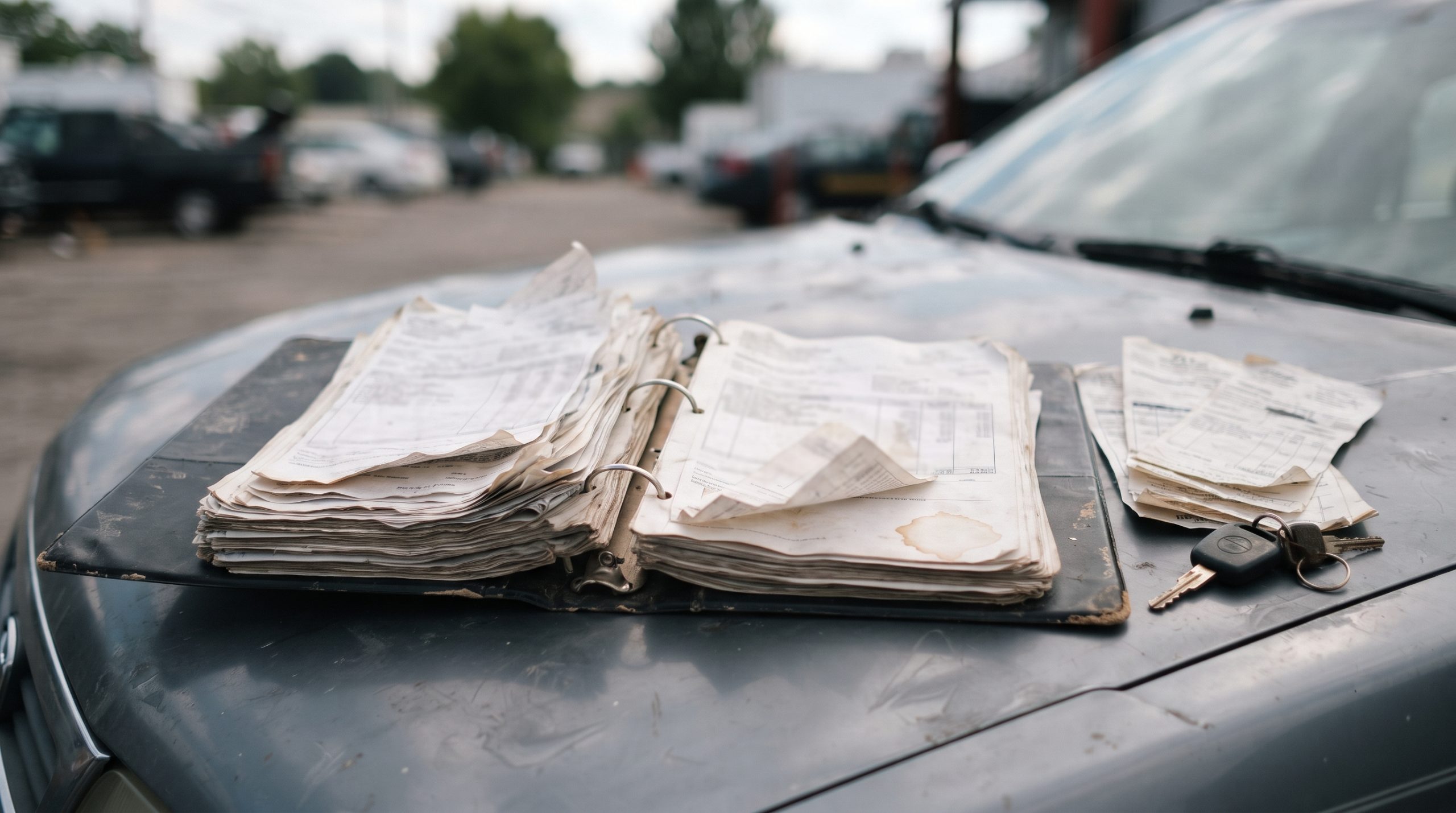
A folder of dated, mileage-stamped service records is the clearest way to back up the condition you claimed. Without it, the inspector has only their own eyes and your word to go on, and an adjustment at that point works against the seller, not for them.
The dollar size of any adjustment varies by year, make, and mileage, so there is no single flat number that applies to every car. What is consistent is the mechanism: records support the condition claim that set your price in the first place.
Which Records Actually Count to Buyers and Dealers
Not every piece of paper carries equal weight. Dealer service departments keep the most detailed digital history. Every visit ties back to your vehicle identification number (VIN) in their system.
A service advisor can often reprint years of work orders on request. Independent-shop invoices matter almost as much, as long as they show the date, mileage, and the actual work performed, not just a total charge. A handwritten receipt reading “service, $85” with no mileage carries less weight.
A printed invoice listing an oil and filter change at 62,400 miles carries more. Oil-change-chain stickers and app logs round out the trail. Chains log visits to an account tied to your phone number or email.
You can often pull that history even after tossing the sticker. Check our guide on how often an oil change actually needs to happen if your intervals need a second look.
Rebuilding a Service Record Trail When You Did Not Keep Paper Copies
If you never kept a folder, start with a Carfax or AutoCheck report pulled on your own vehicle identification number (VIN). Both companies compile records from shops, auctions, and state agencies that choose to report to them. A report can surface maintenance you forgot you had done.
Carfax’s own site states that its reports “are based only on information supplied to CARFAX” and that the company “does not have the complete history of every vehicle.” Treat a clean-looking report as a starting point, not the whole story.
Next, call every dealer service department and chain shop you have used. Most can look up your visit history by VIN or the phone number on file. Many will reprint invoices going back several years.
Between a pulled history report and reprinted shop invoices, most owners can rebuild a usable record set within a day or two of phone calls.
Trade-In vs. Private-Party: Where the Paper Trail Matters Most
A documented history carries more weight in a private sale than at a dealer trade-in counter. A private buyer is comparing your asking price against strangers’ listings. They have no independent way to verify your claims besides your paperwork, and no inspection process standing behind them the way KBB’s own process does.
Records become your main leverage in that negotiation. A dealer’s appraiser already has access to a Carfax or AutoCheck pull and will run the car through KBB or a similar tool regardless of what you bring.
Your invoices can still support the condition you reported and head off a downward adjustment at inspection. But the appraiser depends on your folder less than a private buyer would.
If you are weighing which route to take, our comparison of trading in versus selling privately covers the time, hassle, and price gap beyond paperwork.
| Record type | How much weight it carries | How to get it if you do not have it |
|---|---|---|
| Dealer service-department printout | Highest. Each entry is tied to your VIN and a specific date. | Call the dealer’s service advisor and ask for a VIN history printout. |
| Independent-shop invoice with date and mileage | High. Mileage listed makes it hard to dispute. | Ask the shop to reprint from their records by name or phone number. |
| Oil-change-chain sticker or app log | Moderate to high. Chains keep digital account history. | Pull your visit history from the chain’s app or website account. |
| Handwritten receipt with no mileage | Low. Hard to verify on its own. | Pair it with a Carfax or AutoCheck pull to add credibility. |
| Carfax or AutoCheck report alone | Moderate. Fills gaps but admits it is incomplete. | Order a report using your VIN. |
| Best for maximizing resale value | Combine dealer printouts, shop invoices, and a current history report. | Start with phone calls to shops, then order a report to confirm. |
Frequently asked questions
Does a full service-record history add a specific dollar amount to my car’s resale value? No single dollar figure applies across every car. Kelley Blue Book’s (KBB) own Sell My Car checklist asks for “maintenance and service records.” The company says an inspected condition that differs from what you reported can get the offer adjusted, so records protect the number you were already quoted.
What counts as a service record when I am selling my car? Dealer service-department printouts, independent-shop invoices showing date and mileage, and oil-change-chain app or account logs all count. A vague handwritten receipt without mileage carries less weight. The more clearly a record ties a specific date and odometer reading to a specific repair, the more a buyer or dealer trusts it.
How do I rebuild my maintenance history if I never kept the paperwork? Order a Carfax or AutoCheck report using your vehicle identification number (VIN), then call every dealer and chain shop you have used. Most can reprint invoice history from your account on file. Combining a pulled report with reprinted invoices usually rebuilds a usable record set within a day or two of phone calls.
Does documented history matter more for a trade-in or a private sale? It matters more in a private sale. A private buyer has no independent way to verify your car’s upkeep besides your paperwork and no inspection process behind them. A dealer appraiser already pulls a Carfax or AutoCheck report and runs Kelley Blue Book (KBB) numbers regardless of what you hand over.
Can a Carfax or AutoCheck report replace my own service records? Not fully. Carfax states its reports are based only on information supplied to the company and do not cover every vehicle’s complete history. A report can confirm some maintenance, but invoices from shops that never reported to Carfax or AutoCheck will not show up unless you keep your own copies.
Leave a Reply