
6 min read · Last updated August 21, 2026
- A Technical Service Bulletin (TSB) is a manufacturer’s own written diagnosis of a known defect, and the National Highway Traffic Safety Administration (NHTSA) hosts real ones for free at api.nhtsa.gov and static.nhtsa.gov/odi/tsbs.
- Customer satisfaction campaigns and warranty enhancement programs are not recalls. Toyota’s own ZE7 program notice states plainly, “Is this a recall? No,” even though it added years of coverage for a documented engine defect.
- A complete, dealer-stamped service history with mileage on every visit is the single biggest factor in whether a service manager will even submit a goodwill request upward.
In this article
- What a goodwill repair actually is
- The TSB that changed the odds
- Who actually has to say yes
- The evidence that decides your case
- The math: a $3,150 repair split three ways
- Frequently asked questions
Maria Delgado’s 2019 Honda CR-V turned 54,000 miles two months after her 5-year, 60,000-mile powertrain warranty had already expired by the calendar. The transmission started slipping on the highway, and her dealer quoted $3,150 to replace it. She almost paid it in full.
What a goodwill repair actually is
A goodwill repair, sometimes called a policy adjustment, is a manufacturer paying for some or all of an out-of-warranty repair even though it has no contractual obligation to do so. Consumer Reports describes the process plainly: call the manufacturer’s customer service line, describe the problem, and some companies will “offer discounted repairs or a new product as an expression of goodwill.” It is discretionary, which is exactly why the case you bring matters more than the fact that you’re asking.
Goodwill sits in a different category from a safety recall. A recall addresses a defect that creates a safety risk and is free by law. The NHTSA recalls database shows this distinction in practice: a fuel pump recall issued in 2020 covering 2018-2019 Honda Accord and related models was remedied “free of charge” because the pump could stall the engine while driving. Goodwill and customer satisfaction campaigns cover everything that doesn’t rise to that bar.
| Type | Who pays | Mandatory? |
|---|---|---|
| Safety recall | Manufacturer, in full | Yes, by federal law |
| Customer satisfaction campaign | Manufacturer, in full or by formula | No, but manufacturer-initiated |
| Goodwill repair | Split or full, case by case | No, fully discretionary |
The TSB that changed the odds
A Technical Service Bulletin (TSB) is a manufacturer’s internal repair guidance sent to dealers once enough vehicles show the same defect. NHTSA collects and publishes them, and the database is real and searchable through its public API. A documented TSB is the difference between “my car is just old” and “the manufacturer already admitted this is a known defect.”
Toyota’s T-SB-0158-14, filed with NHTSA and dated December 12, 2014, is a real example. It’s an oil consumption inspection procedure for 2AZ-FE and 2AZ-FXE engines in the 2007-2009 Camry, 2007-2011 Camry HV, 2009 Corolla, 2009 Matrix, 2006-2008 RAV4, and 2007-2008 Camry Solara, and it points back to the original defect bulletin, T-SB-0094-11. Toyota didn’t stop at the TSB. It rolled the same 2AZ engine population into Warranty Enhancement Program ZE7, extending coverage to 10 years or 150,000 miles for the exact part the TSB described, covering roughly 1.7 million vehicles. That program notice is explicit that it is not a recall, just a manufacturer choosing to stand behind a documented pattern.
Who actually has to say yes
The technician diagnosing your car cannot approve goodwill. Toyota’s own ZE7 program bulletin was addressed to “All Toyota Dealer Principals, Service Managers, Parts Managers,” and reimbursement claims routed through the Toyota Customer Experience Center, not the shop floor. In practice, a service manager builds the case and escalates it to the manufacturer’s customer service or warranty group, because that’s the only level with authority to approve payment outside the written warranty terms.
That escalation only happens if the service manager believes the case is worth submitting. A vague complaint with no paperwork behind it rarely clears that bar.
The evidence that decides your case
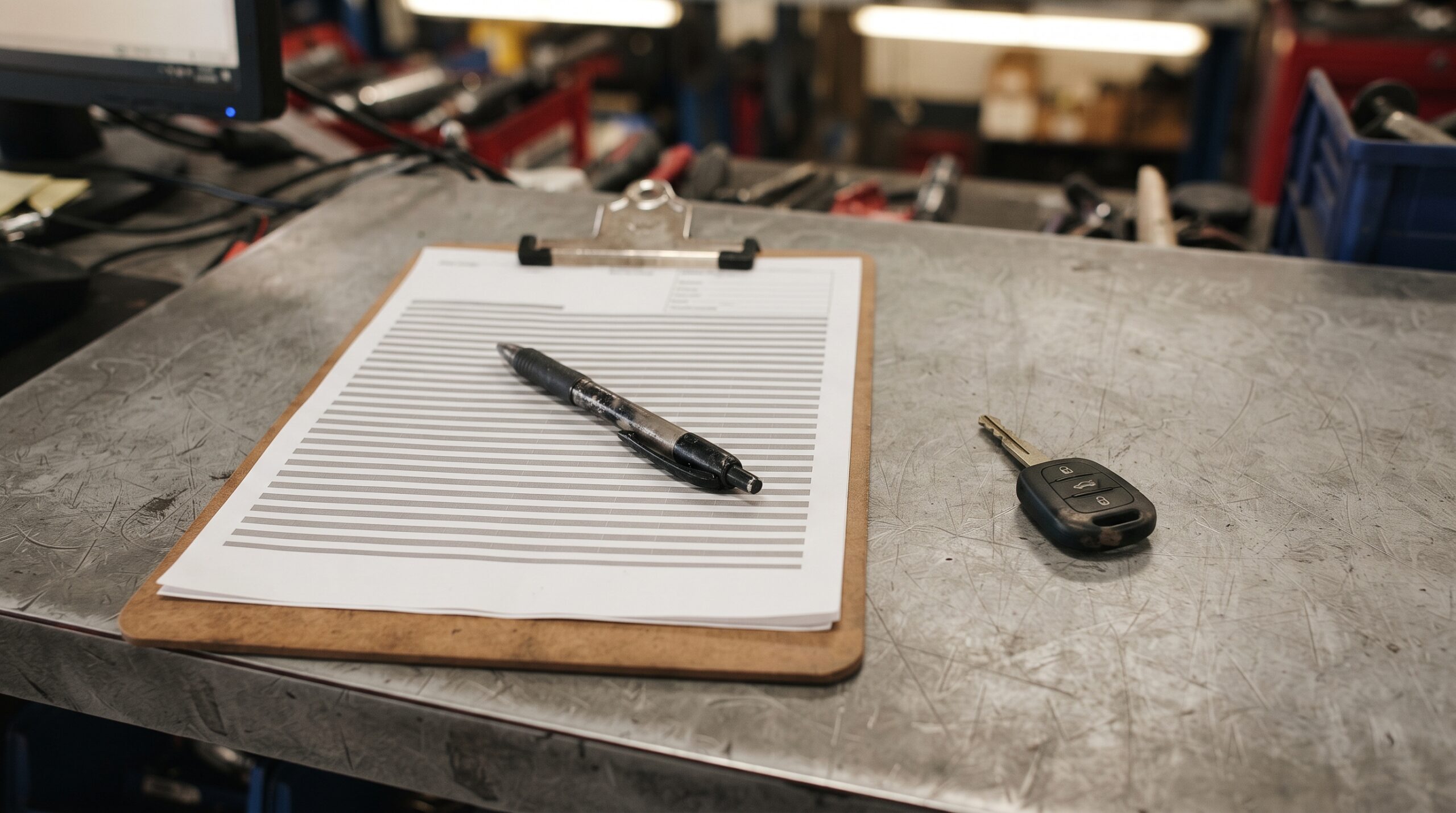
The Federal Trade Commission’s (FTC) Auto Repair Basics guide spells out what a complete repair record needs: each service performed, the parts used, labor charges, and the odometer reading at drop-off and pickup. That’s not busywork. It’s the exact packet a manufacturer asks for. Toyota’s own ZE7 reimbursement checklist required a repair order showing mileage, an itemized labor breakdown, a diagnosis statement, and proof of both payment and ownership before it would even consider a claim.
Full dealer service history beats a folder of receipts from three different independent shops, because it proves the car was maintained on schedule and any related complaints are already in the manufacturer’s own system. If you’ve deferred maintenance and skipped dealer visits, read how deferred repairs compound before you build a goodwill case around a car with gaps in its file.
The math: a $3,150 repair split three ways
Manufacturers that offer a percentage-based goodwill adjustment typically scale it to how far the vehicle has drifted past its coverage window, not to a fixed number everyone gets. Here’s how that math plays out using Maria’s numbers as an illustration, not a quoted manufacturer policy.
- Repair cost: $3,150
- Warranty expired: 2 months and 6,000 miles ago (by calendar date, not mileage)
- Hypothetical goodwill offer at that stage: 50 percent manufacturer, 50 percent owner
- Manufacturer share: $3,150 × 0.50 = $1,575
- Maria’s share: $3,150 − $1,575 = $1,575
Maria’s documented dealer service history and low mileage relative to time were the reasons the dealer escalated her case at all. A car with the same failure at 95,000 miles and gaps in its service record is a much harder sell, regardless of how the manufacturer’s formula works.
Frequently asked questions
Does a Technical Service Bulletin (TSB) mean my repair is automatically free? No. A TSB only confirms the manufacturer has already documented the defect. It doesn’t obligate payment once the warranty has expired. It does make a goodwill request far more credible, since you’re pointing to the manufacturer’s own paperwork instead of asking for a favor with no evidence behind it.
How do I find a TSB for my specific vehicle? NHTSA hosts TSBs filed by manufacturers as public PDFs, searchable by make, model, and year through its complaints and recalls tools at api.nhtsa.gov. Bring the bulletin number to your dealer visit so the service manager can reference it directly in any request they escalate.
What if my car was serviced at an independent shop, not the dealer? You can still ask, but expect a harder case. Manufacturers weigh dealer-documented history heavily because it’s already in their own system. Keep every repair order with mileage, parts, and labor listed, per the FTC’s guidance, and bring the full file when you ask.
Should I get anything in writing during a goodwill request? Yes, your own side of it. Consumer Reports recommends emailing the manufacturer’s customer service line instead of only calling, so you have a written record of every claim and promise. That record is also what a credit card company will ask for if you ever need to dispute a charge over the same repair.
Leave a Reply