7 min read · Last updated August 21, 2026
- Bundling a water pump into a timing belt job saved a Honda Odyssey owner $210 in labor compared to two separate visits, because the two jobs share the same teardown.
- Close to half of United States auto shops charge between $120 and $159 an hour, according to the 2025 PartsTech report cited by the American Automobile Association (AAA).
- California’s Bureau of Automotive Repair regulation, 16 CCR (California Code of Regulations) Section 3353, requires a written estimate authorized before work starts. A separate law, Business and Professions Code Section 9884.9, requires new customer consent before a shop can charge for anything beyond that estimate.
In this article
- What flat-rate book time actually bills for
- Which pairings genuinely share labor
- The $210 test: what bundling actually saves
- How to make the shop prove the overlap
- Frequently asked questions
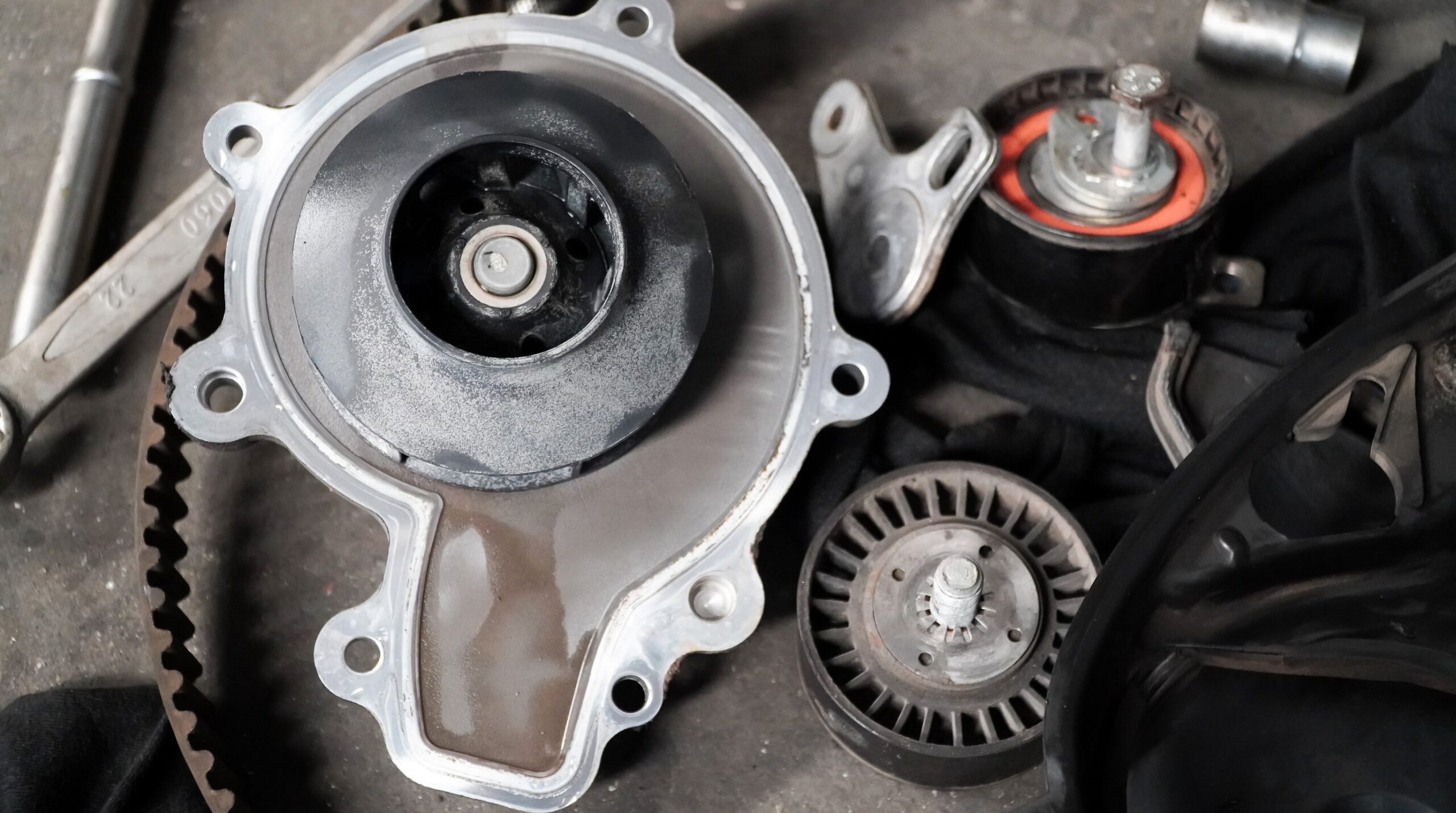
Dana Whitfield’s 2016 Honda Odyssey needed a timing belt at 105,000 miles, and bundling the water pump into the same job saved her $210 over doing the two repairs on separate visits. Her shop quoted $630 in labor for the belt alone and $770 in labor to add the pump while the engine was already torn down. A different shop, treating the pump as a stand-alone job weeks later, wanted $350 in labor for that part by itself. The $210 gap wasn’t a discount. It was a labor guide crediting the pump for teardown steps the belt job had already paid for. That distinction, shared teardown versus a separate job riding on a shared invoice, is the whole question behind “while we’re in there.”
What flat-rate book time actually bills for
Most repair shops don’t bill by the clock. They bill by a labor guide such as Mitchell 1’s ProDemand, which assigns a fixed number of hours to a defined job based on time studies across thousands of vehicles. The Federal Trade Commission’s consumer guidance on auto repair confirms the basic mechanism. Shops that charge a flat rate use a published rate “based on an independent or manufacturer’s estimate of the time required to complete repairs,” not the actual minutes a technician spends. A guide entry for “replace timing belt” includes every step needed to reach the belt: draining coolant, and removing covers, pulleys, and brackets. If the water pump sits behind that same cover, the guide’s stand-alone water-pump entry assumes the technician is starting from a bare engine, not one that is already torn down. When a shop bundles the two jobs, it should only bill the pump’s incremental steps, not its full stand-alone entry. That is the mechanical reason bundling can be cheaper, and it’s explained in more depth in our breakdown of how shops actually bill flat-rate labor time.
Which pairings genuinely share labor
Three pairings show up again and again because the overlap is mechanical, not marketing. A timing belt and water pump share labor whenever the pump mounts behind the timing cover, since removing that cover is already paid for by the belt job. Front brake pads and rotors share labor because pulling the wheel and caliper is identical for both parts, and only the swap itself differs. A serpentine belt and its tensioner or idler pulley share labor because releasing belt tension exposes the pulley anyway. A wiper blade swap or a cabin air filter shares zero teardown steps with a brake caliper or a timing cover, so bundling either into an unrelated job saves nothing. It just moves a routine maintenance item onto today’s invoice.
| Pairing | Shared teardown? | Why | Best for |
|---|---|---|---|
| Timing belt + water pump | Genuine overlap | Pump sits behind the same cover the belt job already removes | Engines where the pump mounts behind the timing cover |
| Front brake pads + rotors | Genuine overlap | Wheel and caliper removal is identical for both parts | Any front-brake job where rotors are near minimum thickness |
| Serpentine belt + tensioner/idler pulley | Genuine overlap | Releasing belt tension already exposes the pulley | Belt jobs on engines with plastic tensioner or idler pulleys |
| Wiper blades or cabin air filter added to a brake or engine job | No overlap | Access points share zero teardown steps with the primary repair | Nothing; price it as its own separate line item |
The $210 test: what bundling actually saves

Here is the arithmetic behind Dana’s invoice. Mitchell 1-style guides commonly list this Odyssey’s timing belt job around 4.5 book hours. A stand-alone water pump job, with its own separate teardown, runs about 2.5 book hours. Bundled into the belt job, the pump adds only about 1.0 additional book hour, for 5.5 hours combined, because the belt job already paid for removing the covers and brackets the pump sits behind. The American Automobile Association cites the 2025 PartsTech report showing close to half of United States shops charge between $120 and $159 an hour; this example uses $140, the midpoint.
Two separate visits: 4.5 hours plus 2.5 hours equals 7.0 hours, times $140, equals $980 in labor. One bundled visit: 5.5 hours times $140 equals $770 in labor. Savings: $980 minus $770 equals $210.
That $210 is the value of the shared teardown, not a coupon. It only shows up when the second job’s guide time actually overlaps the first job’s, which is why asking for the breakdown matters more than asking for a discount.
How to make the shop prove the overlap
The only way to know whether a bundle is a genuine overlap or two jobs wearing one invoice is to ask for the math, not the total. California’s Bureau of Automotive Repair regulation, 16 CCR Section 3353, requires a written estimate authorized by the customer before work begins. California Business and Professions Code Section 9884.9 goes a step further: no charge is allowed for work or parts beyond that estimate without the customer’s oral or written consent, given after the shop realizes the estimate is short and before the extra work is done. Use both rules: ask the shop to quote the second repair two ways, alone and bundled, in writing, before you authorize either. If the combined number is close to the sum of the two stand-alone numbers, there is no real overlap and you are paying for two jobs. If it is meaningfully lower, the shared teardown is real, and the gap is the actual dollar figure worth confirming. Our guide on how to read a car repair estimate walks through that process line by line.
Frequently asked questions
What does “while we’re in there” mean at an auto shop? It’s shop shorthand for adding a second repair during a job that already has your vehicle apart. Some pairings, like a water pump behind a timing belt cover, share real teardown labor and cost less combined. Others, like wiper blades added to a brake job, share zero labor and are just a second line item.
How can I tell if a bundled repair is a genuine overlap? Ask the shop to quote the second repair two ways: as its own stand-alone job and as an add-on to the primary repair. If the combined price is close to the sum of both stand-alone prices, there’s no real labor overlap. A meaningfully lower combined price means the teardown is genuinely shared.
Is a shop required to give me a written estimate before extra repairs? Yes. California’s Bureau of Automotive Repair regulation, 16 CCR Section 3353, requires a written estimate authorized by the customer before work begins. Business and Professions Code Section 9884.9 also requires the shop to get your consent again before charging for anything beyond that estimate. The Federal Trade Commission recommends the same practice nationally, in writing, before work begins.
Which repair pairings usually share real labor? A timing belt and water pump share labor when the pump sits behind the timing cover. Front brake pads and rotors share labor because the wheel and caliper removal is identical for both. A serpentine belt and its tensioner or idler pulley share labor because releasing tension exposes the pulley anyway.
Leave a Reply