7 min read · Last updated October 2, 2026
- A serpentine belt replacement typically runs about $200 installed, with the belt itself costing $35 to $150, according to Car Talk’s cost breakdown.
- AAA (the American Automobile Association) says professional technicians recommend replacing the belt every 50,000 to 60,000 miles, and swapping the tensioner at the same time if your car uses an automatic one.
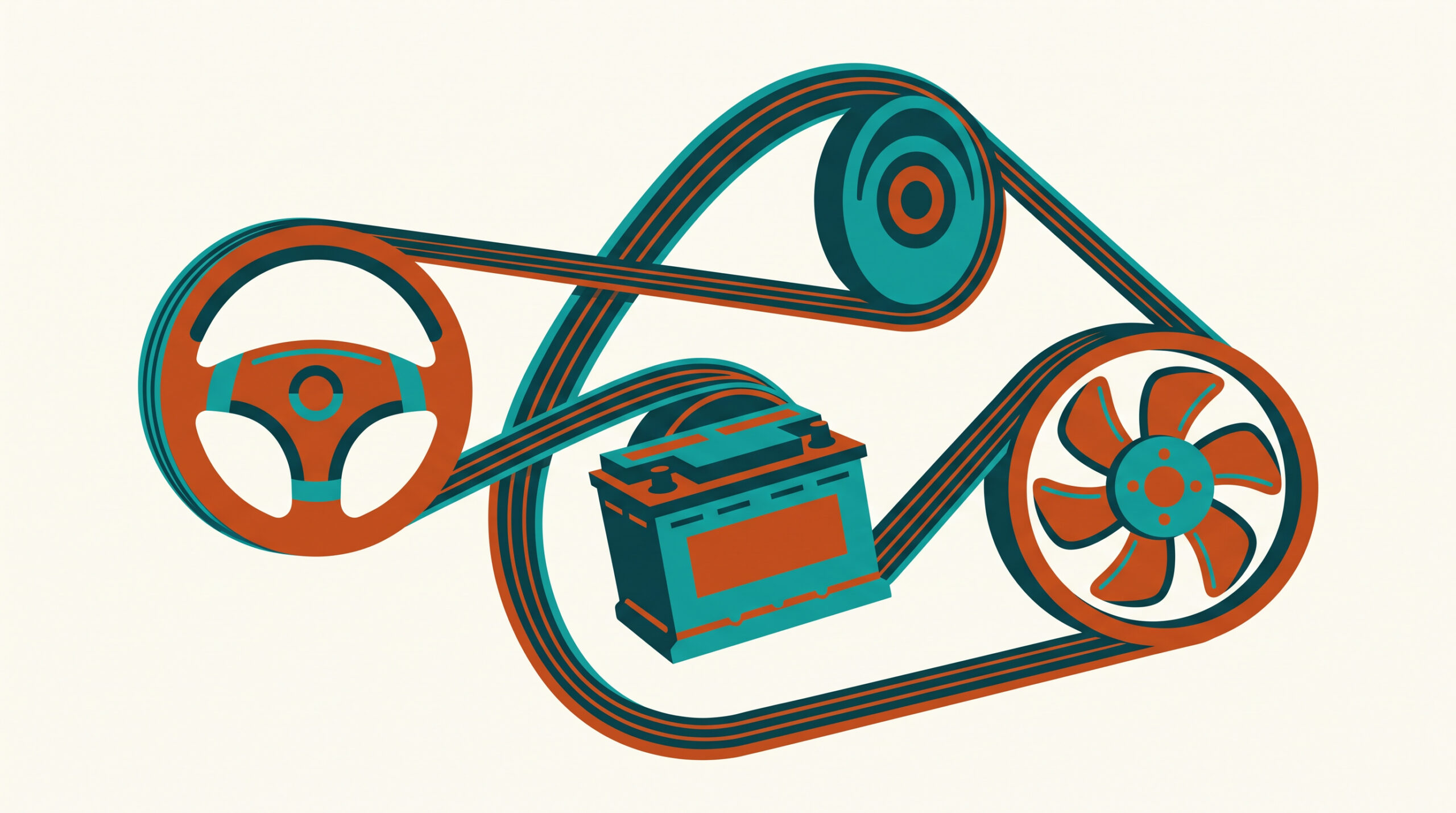
- One belt commonly drives the air conditioning compressor, alternator, water pump, and power steering pump, so a single failure can cut power steering assist and battery charging in the same moment, per AAA.
- Modern rubber belts rarely crack the way older ones did, so a belt that looks fine on a quick glance is not proof it has mileage left.
A serpentine belt replacement costs about $200 installed on a mainstream car, and AAA recommends replacing it every 50,000 to 60,000 miles, because modern belts rarely crack the way older ones did, so a clean-looking belt is not proof it still has life left.
In this article
- What one belt actually runs in your engine
- The $200 job and the mileage clock behind it
- Why the old crack-check advice fails on modern belts
- What happens when the belt snaps while driving
- When to replace now vs. when it can wait
- Frequently asked questions
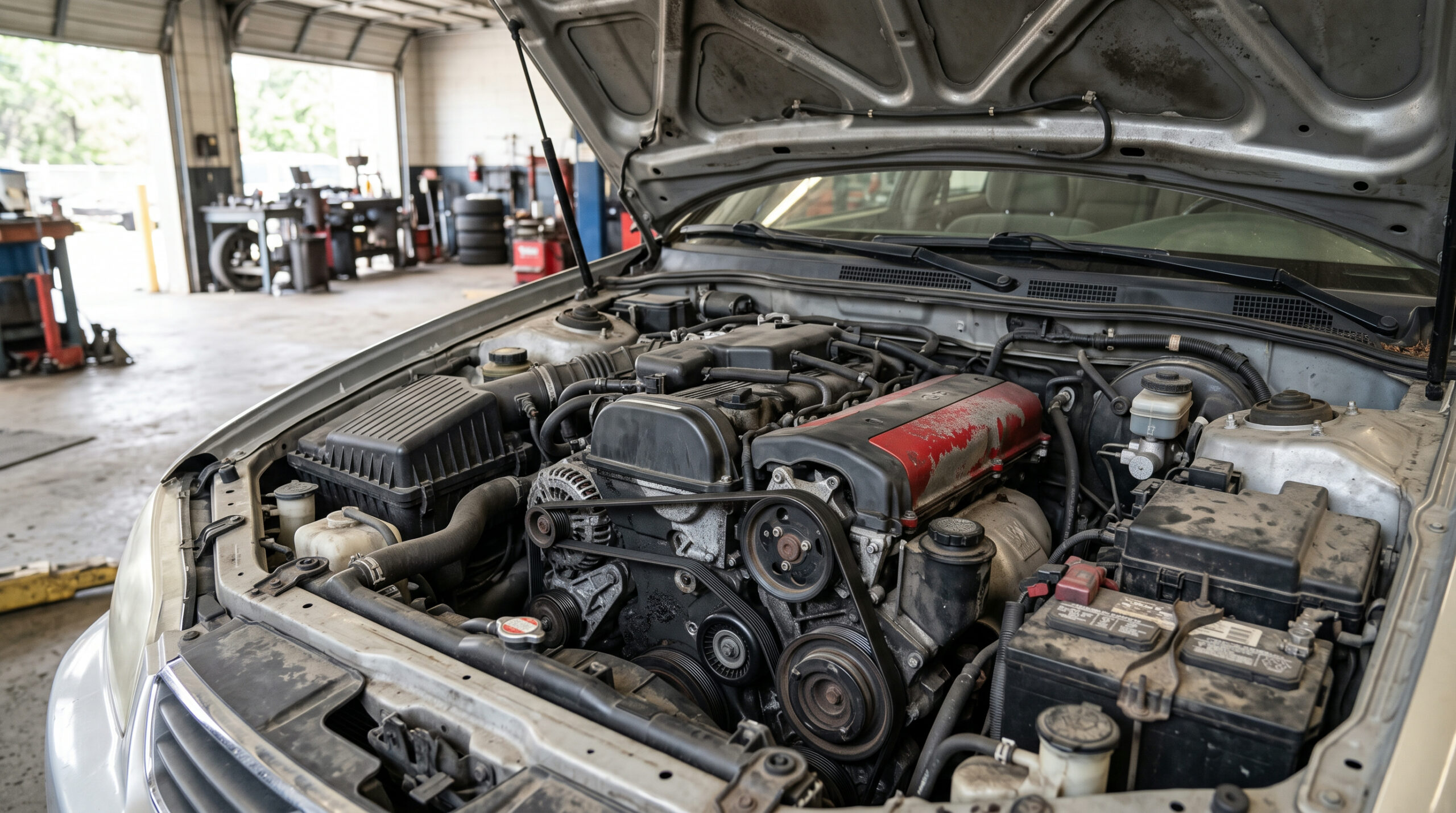
Marcus’s 2019 Honda Accord rolls into an independent shop at 94,000 miles for an oil change, and the technician flags the serpentine belt, quoting $210 to replace it before he drives home. The belt looks fine. No cracks, no fraying, nothing an untrained eye would catch. Marcus has to decide on the spot whether $210 is worth it, or whether the shop is just padding the invoice.
What one belt actually runs in your engine
Most cars use one long rubber belt, routed around several pulleys, to run almost everything bolted to the front of the engine. AAA lists what a serpentine belt commonly powers: the air conditioning compressor, the alternator, the water pump, and the power steering pump. That single belt is, as AAA puts it, to your engine’s accessories what electricity is to your house. Cut the power and every appliance stops at once, not one at a time.
This is what makes the belt different from most other items on a maintenance sticker. A worn brake pad fails one system. A worn serpentine belt can fail four systems in the same instant, because all four share the same belt.
The $200 job and the mileage clock behind it
Car Talk’s cost breakdown puts a serpentine belt at $35 to $150 for the part, with a half hour to an hour of labor on top, landing most mainstream cars around $200 total. AAA recommends replacing the belt every 50,000 to 60,000 miles, and swapping an automatic tensioner at the same visit, since the belt is already off the car and the extra labor barely moves the bill, the same bundling logic that applies any time a job is already apart.
That interval matters more than it looks like it should. A driver putting 12,000 miles a year on a car hits the low end of that window in a little over four years. A highway commuter can blow through 50,000 miles in three years. The belt sends no dashboard warning when it crosses that line. It just keeps running until it doesn’t.
Why the old crack-check advice fails on modern belts
Older neoprene belts cracked visibly as they aged, so “look for cracks” used to be a real driveway test. AAA explains why that advice no longer works: modern belts use a tougher rubber that rarely shows cracks at all. A belt can be most of the way through its service life and still look smooth.
Real wear now shows up as thinning on the small ribs that grip the pulleys, which AAA says is only identifiable with a wear gauge or a smartphone app, not a visual once-over. That is the real reason a shop flags a belt that “looks fine,” and also why the explanation gets mistaken for an upsell. The flag rests on a measurement the owner can’t see, not a crack that was never going to appear.
What happens when the belt snaps while driving
A broken serpentine belt does not stop a car immediately. Car Talk is direct about what follows: the alternator stops charging the battery, so the car runs a while on stored charge before electrical systems fail. The air conditioning goes with it. AAA names the two more serious failure paths: losing power steering assist, and, on engines where the same belt drives the water pump, losing coolant circulation entirely. AAA’s own description of that outcome is blunt: it can lead to engine overheating and expensive damage.
None of those failures comes with a warning light. The belt does its job until the moment it doesn’t, and every system it was running goes quiet at once.
When to replace now vs. when it can wait
Replace it now if the car is at or past the 50,000 to 60,000 mile mark AAA cites, or if a technician has actually measured rib wear rather than glancing at the belt. The same goes if any symptom has shown up: a squeal on startup, heavy or inconsistent power steering, or a battery warning light. It can reasonably wait if the car is well under that mileage window and a real wear check comes back clean.
The $200 version of this decision is routine maintenance. The version where it fails on the highway is a tow, a lost power steering assist at low speed, or a cooling system that quit with no warning. The mileage window is the one piece of information that tells you which side of that choice you’re on.
| System the belt drives | What happens if the belt fails | How it shows up |
|---|---|---|
| Air conditioning compressor | AC stops working | Warm air only, no dashboard warning |
| Alternator | Battery stops charging | Battery warning light, then a dead battery as stored charge runs out |
| Power steering pump | Steering assist is lost or becomes intermittent | Heavy, stiff steering, worst at low speed and in parking lots |
| Water pump (on engines where the belt drives it) | Coolant stops circulating | Rising temperature gauge, risk of overheating and expensive engine damage |
Frequently asked questions
How do I know if my serpentine belt actually needs replacing?
Mileage is the most reliable signal: AAA recommends replacement every 50,000 to 60,000 miles regardless of appearance, since modern belts rarely crack the way older ones did. A technician checking rib wear with a gauge or smartphone app is a real measurement, not a guess, so ask what method they used before assuming it’s an upsell.
Can I keep driving once I hear a squeal or notice heavier steering?
You can usually keep driving a short distance, but those symptoms, squealing, a battery warning light, stiff or intermittent power steering, and engine overheating, mean the belt is already failing. Get it replaced before a longer trip rather than waiting for it to snap entirely.
Does adding the tensioner to the job cost a lot more than the belt alone?
Not dramatically. AAA recommends replacing an automatic tensioner at the same time as the belt, and since the belt already has to come off the car for either job, the extra labor is minimal. The added cost is mostly just the tensioner part itself.
Is a serpentine belt the same thing as a timing belt?
No, and the difference matters. The serpentine belt sits on the outside of the engine and drives accessories like the alternator, AC compressor, and power steering pump. The timing belt is sealed inside the engine and keeps the valves and pistons synced, a separate, usually pricier job on its own replacement schedule.
Will a routine oil change catch a worn serpentine belt?
Usually. AAA notes that serpentine belts are typically checked during regular service appointments, which often includes an oil change, but a glance isn’t the same as a real wear check on a modern crack-resistant belt. If your shop never mentions the belt at a service visit, it’s worth asking directly whether it was actually checked.
Leave a Reply