6 min read · Last updated October 5, 2026
- Tire makers recommend replacing a tire once it hits 6 years old. Ten years is the hard outside limit regardless of remaining tread, according to a National Highway Traffic Safety Administration (NHTSA) report to Congress.
- New tires start with roughly 10/32 to 11/32 inch of tread. The legal minimum is 2/32 inch, per U.S. Tire Manufacturers Association (USTMA) guidance.
- NHTSA testing found tire damage rates rose significantly after 4 years in hot states like Arizona, compared to cooler states.
- The last four digits of a tire’s Department of Transportation (DOT) code show the exact week and year it was built, the only reliable way to check age.
A tire with 8/32 inch of tread can still be unsafe to drive on if it’s old enough. Tread depth measures rubber left on the road. Age measures how much that rubber has broken down from heat, oxygen, and ultraviolet (UV) exposure, and the two numbers answer different questions entirely.
In this article
- Tire age vs tread depth: the two numbers that matter
- How to read the Department of Transportation (DOT) code on your sidewall
- The 6-year replacement guideline, 10-year hard limit
- Why heat speeds up the clock
- Frequently asked questions
Tire age vs tread depth: the two numbers that matter
Tread depth is the easy one. Stick a gauge or a quarter in the groove and read the number. Compare it against the 2/32 inch legal minimum that U.S. Tire Manufacturers Association (USTMA) guidance sets as the replace-now line.
Tread and age are two of several checks worth running before any long trip: a 10-point pre-trip inspection covers both, along with the other failure points that strand drivers 300 miles from home.
Age is harder to see and easier to ignore. Rubber compounds oxidize and stiffen over years in service, independent of mileage, which is why a low-mileage tire in a garage can still fail.
The same logic applies when one tire on an all-wheel-drive vehicle wears differently than the rest. See our breakdown of tread mismatch and transfer case risk for how tread numbers alone can hide a bigger problem.
Picture a sedan’s spare tire, built in week 10 of 2019. By 2026 that spare is 7 years old. It has 7/32 inch of tread left and would pass any tread check instantly, but it’s already past the age tire makers recommend replacing it, purely on age.
That gap between “looks fine” and “is fine” is the whole point of checking both numbers instead of just one. A tread gauge takes ten seconds. Reading the sidewall for the manufacture date takes the same ten seconds, and it’s the step most drivers skip entirely.
How to read the Department of Transportation (DOT) code on your sidewall
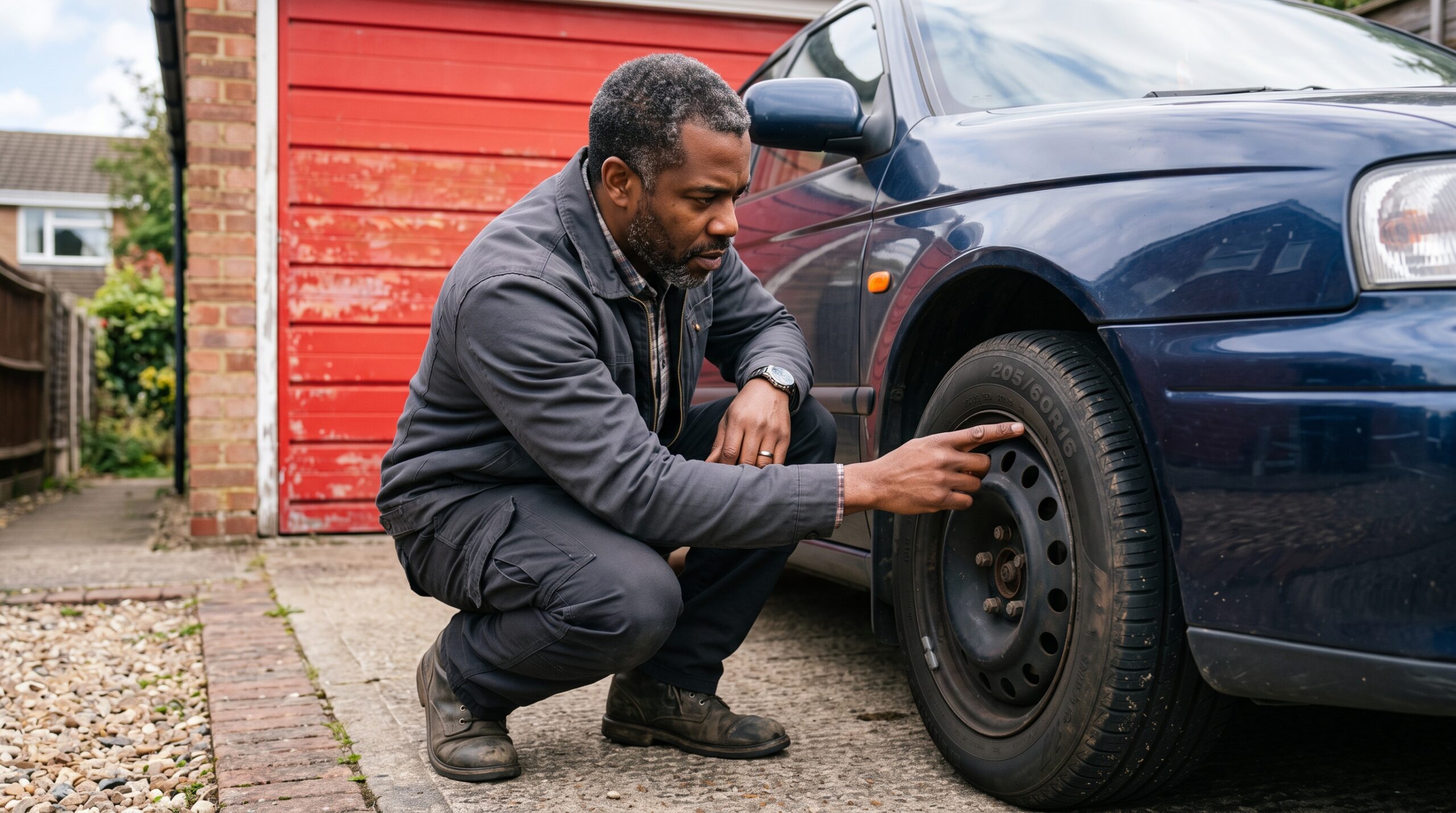
Every U.S. tire carries a Department of Transportation (DOT) code molded into the sidewall. The final four digits are what matter for age: the first two give the week, the last two give the year. Continental confirms this exact format on its own tire date-code reference.
A code ending in “3118” means the tire was built in week 31 of 2018, for example. No guesswork, no estimating from the tread or the color of the sidewall.
| DOT code (last 4 digits) | Week of manufacture | Year of manufacture | Age as of October 2026 |
|---|---|---|---|
| 3118 | Week 31 | 2018 | 8 years |
| 1019 | Week 10 | 2019 | 7 years |
| 0922 | Week 09 | 2022 | 4 years |
The 6-year replacement guideline, 10-year hard limit
A 2007 NHTSA report found that some vehicle manufacturers recommend replacing tires every six years, and a number recommend 10 years as the maximum service life. Aging affects performance even with adequate tread. Continental’s own checklist states the same two numbers: tire makers typically recommend replacement once a tire passes 6 years old, with 10 years as the hard limit regardless of tread.
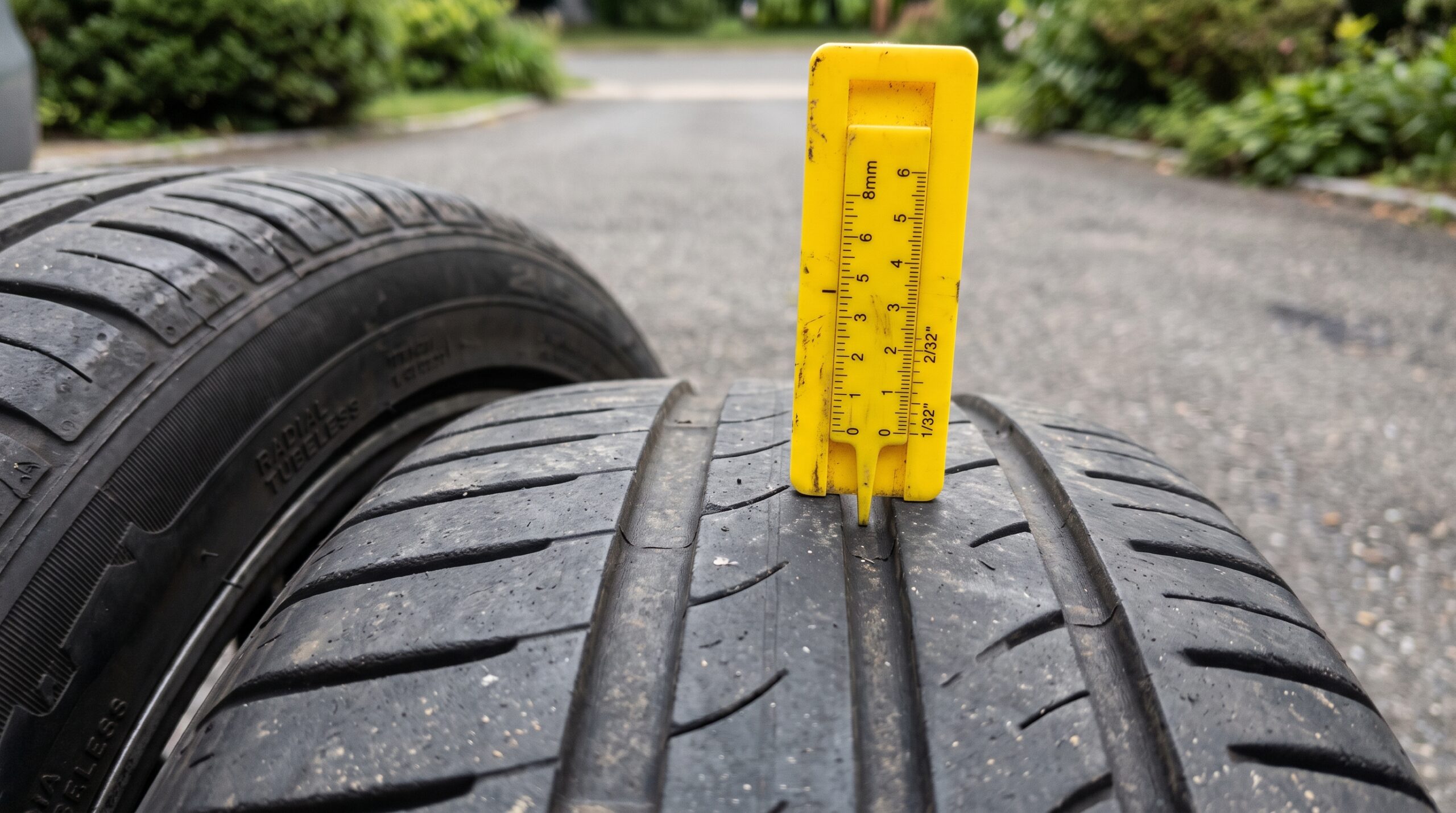
Run the math on the sedan’s spare from the DOT code example: built week 10 of 2019, so it turns 7 years old in early 2026. It has 7/32 inch of tread left out of a 10/32 inch starting depth, just 3/32 inch of wear in 7 years. That tread number passes easily.
The age number does not. At 7 years, it’s already past the age tire makers recommend replacing it and four years from the hard outside limit. Tread depth doesn’t change that math at all.
If that same sedan also needs a new set soon, alignment matters just as much. Skipping it wastes tread fast; see our breakdown of what skipping an alignment after new tires costs in lost tread.
Uneven wear concentrated on one tire, rather than even wear across all four, often points back to a skipped rotation rather than age. The rotation vs. alignment decision rule explains how to tell which one is actually the problem.
Why heat speeds up the clock
Climate changes how fast the age clock runs. The same NHTSA report found that tire damage rates rose significantly after four years in Arizona compared to other states. States with higher average temperatures consistently showed higher damage rates than cooler ones.
A tire baking in a driveway in Phoenix or Houston is aging faster than the same tire garaged in Minneapolis, even with identical mileage. Drivers in hot states should treat the 6-year replacement guideline as a hard appointment, not a someday item. Ask the shop to check sidewalls for cracking at every visit once a tire passes that age.
That one checkup costs nothing beyond the visit itself. A sidewall that’s already cracking or a tire pushing past 8 years in a hot climate is worth replacing before it fails on the highway, not after.
Frequently asked questions
What does the DOT code on a tire sidewall mean? It’s a Department of Transportation (DOT) serial number molded into the sidewall. The last four digits are the manufacture date: the first two digits are the week, the last two are the year. A tire ending in “3118” was built in week 31 of 2018, not some unrelated part number.
How old is too old for a tire, even with good tread? Most tire manufacturers recommend replacing a tire once it hits 6 years old. They treat 10 years from the manufacture date as the hard outside limit regardless of remaining tread, per an NHTSA report to Congress and Continental’s own checklist. Tread depth doesn’t override that age limit.
Can a tire with 8/32 inch of tread still be unsafe? Yes, if it’s old enough. New tires start around 10/32 to 11/32 inch, so 8/32 inch sounds generous. But tread depth only measures rubber left, not how brittle or oxidized that rubber has become after years of heat and UV exposure.
Do spare tires age the same way as the tires in use? Yes. A spare ages on the same calendar clock as a tire in daily use, even with zero miles on it. Oxidation and UV exposure happen whether the tire rolls or sits. Check its DOT code on the same schedule as the rest of the set.
Does climate affect how fast a tire ages? Yes. NHTSA testing found tire damage rates climbed significantly after just 4 years in hot states like Arizona compared to cooler states. Heat accelerates the chemical breakdown of the rubber compound. Hot-climate drivers should inspect sooner than the standard 6-year mark.
Leave a Reply