6 min read · Last updated November 2, 2026
- Idling burns about 0.4 gallons an hour, near the top of fueleconomy.gov’s quarter-to-half-gallon range. A 10-minute warm-up costs roughly 28 cents at the $4.17-a-gallon national average AAA (the American Automobile Association) reported in November 2026.
- A remote starter typically runs $200 to $330 installed, Consumer Reports reports, and as much as $800 on cars with European transponder-key systems.
- Idling 10 minutes on 100 cold mornings adds up to about $28 in gas for an engine that was already safe to drive within seconds.
- Fueleconomy.gov states the quickest way to warm a modern engine is to drive it, not idle it in the driveway.
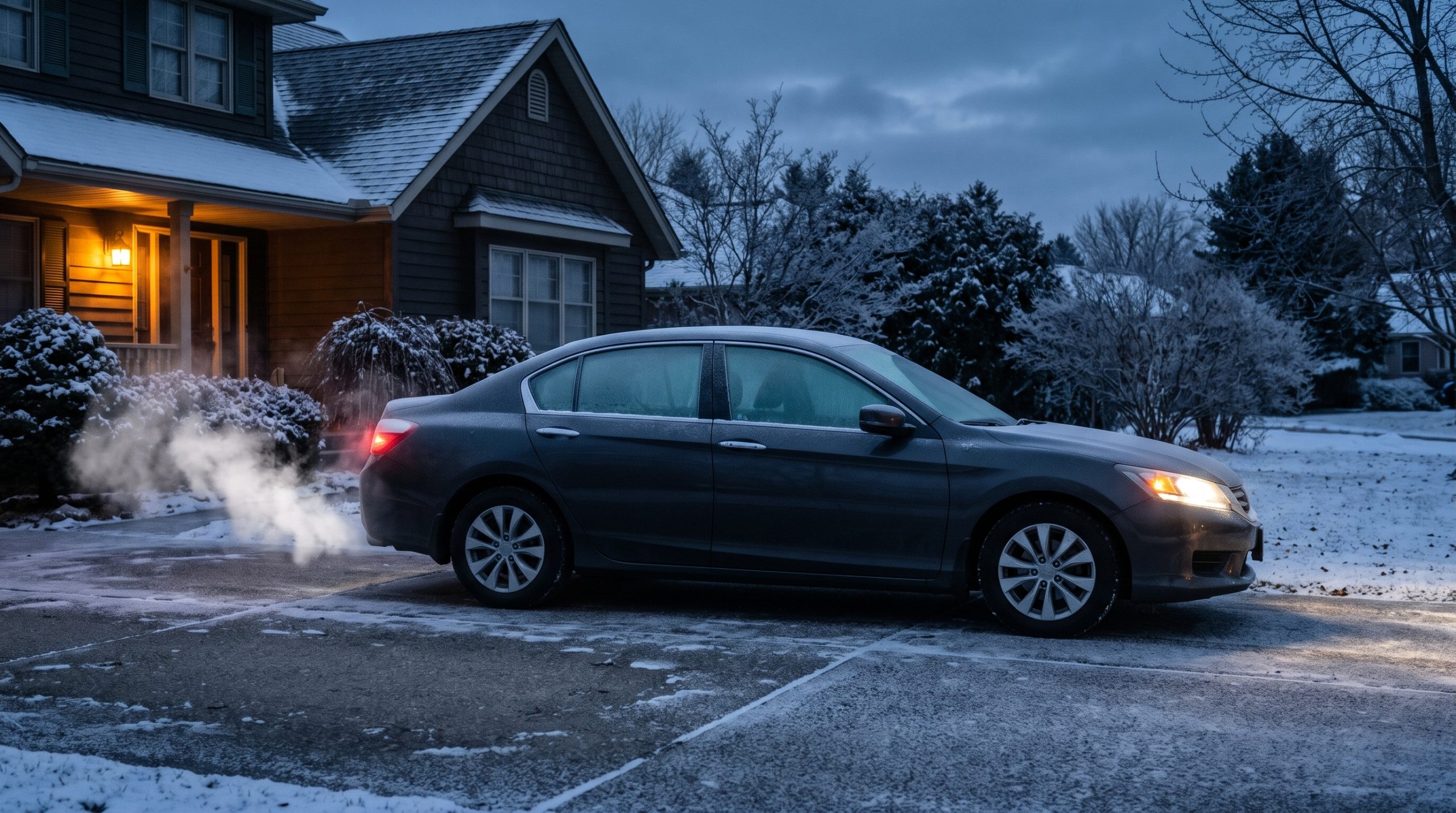
Idling a modern, fuel-injected car for 10 minutes to warm it up costs roughly 28 cents in gas at today’s prices. Fueleconomy.gov confirms the engine actually warms up faster once you start driving than it does sitting in the driveway.
In this article
- What a Cold Engine Actually Needs
- The Real Cost of Idling to Warm Up Your Car
- What a Remote Starter Adds to the Math
- The Better Habit: Warm It Up by Driving
- Frequently asked questions
Idling a four-cylinder engine for 10 minutes to defrost the windshield burns roughly 28 cents of gas and does nothing a short drive wouldn’t do faster. Say a driver named Priya installs a $265 remote starter so she never has to stand outside scraping ice. By the end of one cold winter, that habit has cost her $293, and her engine never needed a single one of those minutes to warm up safely.
What a Cold Engine Actually Needs
The old advice to let a car idle for five or ten minutes dates back to carbureted engines, which really did run rough and stall if you drove them cold. Fuel-injected engines, standard on nearly every vehicle built since the 1990s, don’t have that problem.
Fueleconomy.gov, the government’s official fuel economy site, settles this directly. Modern vehicles “can be driven within seconds of being started,” and “the quickest way to warm up a vehicle’s engine is to drive it.”
The one caveat the source gives: don’t gun the engine or load it hard until it reaches normal operating temperature. That means starting the car, giving it a few seconds, and then driving off at a gentle pace instead of flooring it from a cold start. The engine, transmission, tires, and suspension all warm up faster moving than sitting still in a driveway.
The Real Cost of Idling to Warm Up Your Car
Fueleconomy.gov’s own numbers support this math: idling burns a quarter to a half gallon of fuel an hour, depending on engine size. We’ll use 0.4 gallons an hour here, near the top of that range, since a cold engine idles faster until it warms up. Ten minutes is one-sixth of an hour, so that one warm-up burns about 0.4 divided by 6, or 0.067 gallons.
AAA put the national average at $4.17 a gallon on November 2, 2026. At that price, 0.067 gallons costs about 28 cents. Run that same 10-minute idle every cold morning for a typical four-month winter, call it 100 mornings.
A hundred mornings at 28 cents each comes to about $28 spent on gas that bought nothing but idle time. That’s the real price of a habit the engine never needed in the first place.
| Idle time | Fuel burned | Cost per warm-up | Cost over 100 cold mornings |
|---|---|---|---|
| 5 minutes | 0.033 gallons | $0.14 | $14 |
| 10 minutes | 0.067 gallons | $0.28 | $28 |
| 15 minutes | 0.100 gallons | $0.42 | $42 |
| 20 minutes | 0.133 gallons | $0.56 | $56 |
What a Remote Starter Adds to the Math
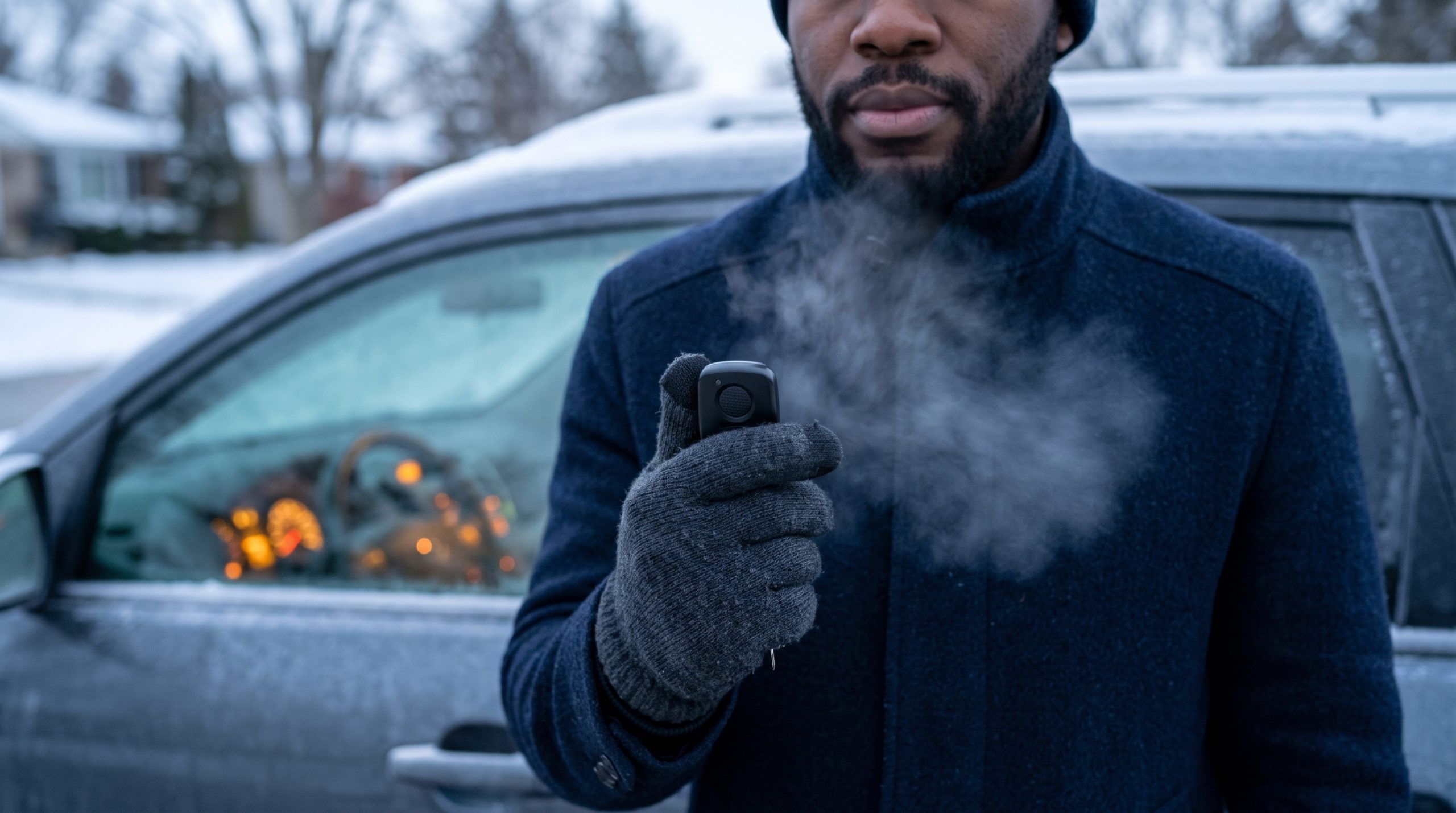
Consumer Reports puts a typical aftermarket remote-start system at $200 to $330 installed, including parts and labor. Cars with European transponder-key systems can run as high as $800 because of the extra electronics involved. We’ll use $265, the middle of that mainstream range, for the math here.
That installed cost buys convenience, not a different engine. It doesn’t change how long the car needs to idle, and it doesn’t make the idling fuel cost disappear.
For Priya, the $265 install plus $28 in wasted idle fuel comes to $293 in that first winter. After that, the habit costs about $28 a winter for as long as the 10-minute idle continues.
The Better Habit: Warm It Up by Driving
If a remote starter is already installed, use it to clear the windshield and take the chill off the seat, not to run a full 10-minute warm-up. Start the car, give it long enough to scrape the glass and buckle a seatbelt, then pull out and drive gently for the first mile or two. Fueleconomy.gov’s own guidance is to avoid hard acceleration until the engine reaches normal operating temperature, but otherwise drive as soon as the car starts.
If winter driving already has you pricing out other cold-weather costs, the worked math on winter tires versus all-seasons runs the same way: name the inputs, then do the arithmetic. A hard freeze can also drop tire pressure enough to trip a dashboard warning light, and that one’s a five-minute fix, not a sign anything is wrong with the car.
Frequently asked questions
How much fuel does idling a car for 10 minutes actually burn? Fueleconomy.gov puts idle fuel use at a quarter to a half gallon an hour, depending on engine size. At 0.4 gallons an hour, a 10-minute warm-up burns about 0.067 gallons. At AAA’s November 2026 national average of $4.17 a gallon, that comes to roughly 28 cents, repeated every time you idle that long.
Is it true that modern cars don’t need to warm up before driving? Yes. Fueleconomy.gov states that modern, fuel-injected vehicles can be driven within seconds of starting and that driving is actually the fastest way to warm the engine. The only caution is to avoid hard acceleration or heavy loads until the engine reaches its normal operating temperature, which happens faster on the road than in a driveway.
How much does a remote starter cost installed? Consumer Reports puts a typical aftermarket remote-start system at $200 to $330 installed, covering parts and labor. Cars with European transponder-key systems can run as high as $800 because the electronics are more complex. A remote starter buys convenience, not a different fuel cost once the engine is running.
Does a remote starter waste more gas than starting the car by key? No. The fuel cost is the same either way, since the engine burns fuel at the same idle rate no matter how it was started. What changes is behavior: a remote starter makes longer idling easier because you never have to stand outside to start it, and that longer idle burns the extra gas.
What’s the best way to warm up a car in cold weather? Start the engine, give it only as long as it takes to scrape the windshield and buckle a seatbelt, then drive off gently. Avoid hard acceleration for the first mile or two until the engine reaches normal operating temperature. This warms the engine, transmission, and cabin faster than idling in the driveway ever will.
Leave a Reply