5 min read · Last updated November 11, 2026
- A pair of worn struts or shocks costs $500 to $1,000 to replace on a mainstream vehicle, and up to $2,500 on luxury or off-road models (Car Talk).
- Shops replace struts and shocks in axle pairs, left and right together, because mismatched damping causes odd handling and uneven tire wear (Mavis).
- A four-wheel alignment afterward runs $100 to $200, with a $183 national average at dealerships (Kelley Blue Book).
- Waiting past a failed bounce test can tack on roughly $128 to $240 in early front-tire wear within a year.
A pair of worn struts or shocks costs $500 to $1,000 to replace on a mainstream vehicle, according to Car Talk. The signs of worn struts and shocks rarely show up as a dashboard warning light first.
They show up as uneven tread wear on your tires, long before anyone blames the suspension. By the time a shop points at the tires, the struts have usually been failing for a while, and that repair price does not drop the longer you wait.
Signs of Worn Struts and Shocks
A worn strut or shock rarely announces itself with a warning light. Car Talk lists several symptoms: noticeable bouncing over bumps, banging from one corner, and sloppy handling. Add nose-diving under braking, swaying in turns, steering wheel vibration, and uneven tire wear to that list.
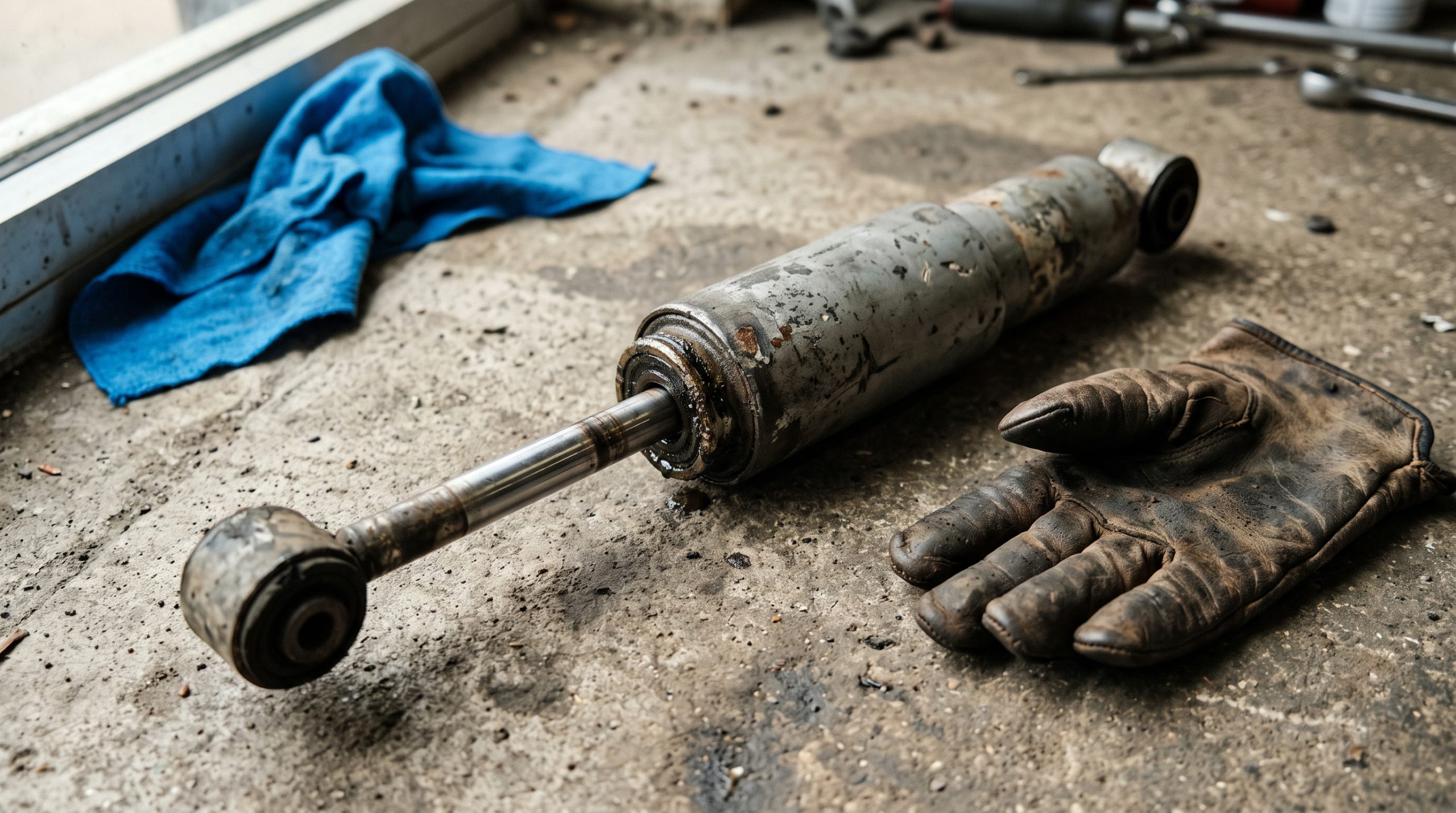
Mavis adds detail on where that wear lands: cupped or scalloped tread, and uneven shoulder wear tied to front geometry drift. It also flags oil misting on the damper body from a failing internal seal. A visible wet streak on the strut housing means the unit is already compromised.
The Bounce Test and Other Checks
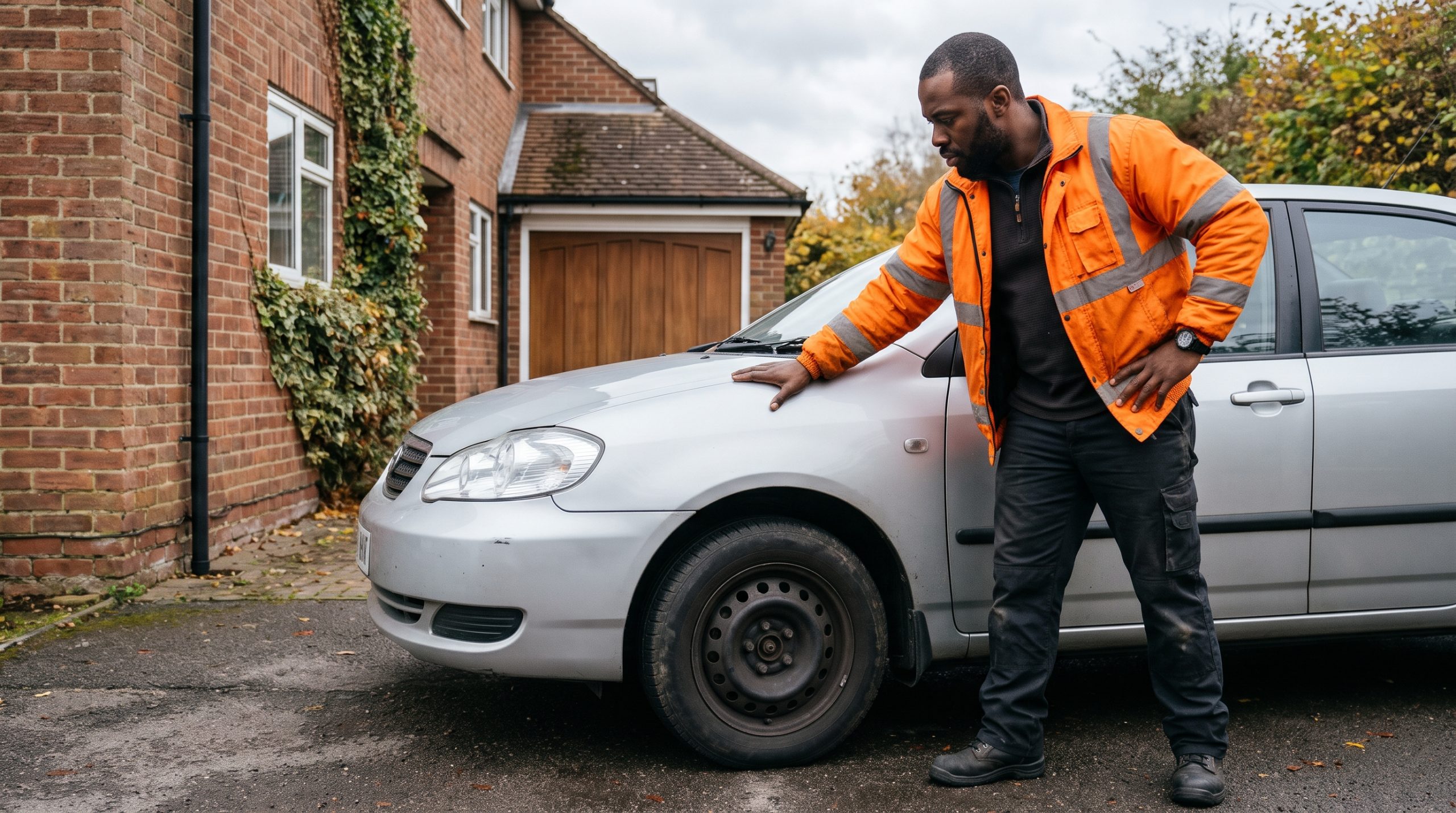
The bounce test is the fastest free diagnostic in the garage. Car Talk describes it as pushing down hard on one corner of the car at a time and watching what happens next.
- Push down as hard as you can on one corner of the bumper, then let go.
- A healthy shock or strut lets the car settle back down and stop within a bounce or two.
- More than one or two bounces signals a worn shock or strut at that corner.
- Repeat at all four corners. A clunk or a visible oil streak on the strut body confirms the diagnosis without a lift.
Pair the bounce test with a short drive. Nose-diving hard under braking, a tippy feeling in turns, or a steering wheel that vibrates at speed all point to the same worn components.
Why Pairs Matter and What Alignment Adds
Mechanics replace struts and shocks on the same axle together, not one at a time. Mavis is direct about why: “Replace in pairs on the same axle so damping is balanced left to right. Mixing new and old on one end can cause odd handling and uneven tire wear.”
That pairing is baked into the cost. Car Talk puts a mainstream pair at $500 to $1,000, with the full range reaching $2,500 on luxury or off-road vehicles.
A dealer using Original Equipment Manufacturer (OEM) parts can charge roughly 50% more than a local shop running aftermarket parts. Front struts with the alignment included can land over $1,000.
The alignment is not optional add-on upselling. Replacing struts changes ride height and steering geometry, so Car Talk says you will still need an alignment afterward. Kelley Blue Book prices a four-wheel alignment at $100 to $200, with a $183 national average at dealerships.
What Waiting Actually Costs
The following worked, hypothetical scenario uses the sourced figures above. Assume a front-wheel-drive sedan fails the bounce test at 70,000 miles, squarely inside Car Talk’s 50,000-to-100,000-mile replacement window, with visible nose-dive and a steering vibration.
Start with the sourced ranges. A $750 strut pair, the midpoint of Car Talk’s $500-$1,000 band, plus a $150 alignment, Kelley Blue Book’s midpoint, totals $900. That bill does not change whether the owner pays it now or in a year.
What changes is the tires. Cupped front-tire wear from worn struts, per Mavis, concentrates on the front axle.
Deferring the repair for about a year can force the front pair to be replaced 15,000 miles early, meaning two tires sooner than planned. Consumer Reports’ own purchased prices run $64 to $120 per tire, or $128 to $240 for the pair before installation.
Add that to the $900 repair the owner was always going to pay. A year of deferral turns a $900 job into a $1,028-$1,140 job, with nothing to show for the wait except an earlier trip to the tire shop. For how that fits into the bigger picture, see our five-year maintenance cost comparison.
Frequently asked questions
How much does it cost to replace struts and shocks? Car Talk prices a pair of struts or shocks at $500 to $1,000 on a mainstream vehicle, with luxury and off-road models running up to $2,500. A dealer using OEM parts can charge about 50% more than a local shop using aftermarket components. Add $100 to $200 for the alignment most shops recommend afterward.
How do I know if my struts or shocks are worn? Watch for bouncing over bumps, nose-diving under braking, sloppy or swaying handling, steering wheel vibration, and uneven or cupped tire wear, per Car Talk and Mavis. A visible oil streak on the strut housing confirms a failed seal. The free bounce test at each corner narrows it down in under a minute.
Why are struts and shocks replaced in pairs? Shops replace struts and shocks on the same axle together because new damping on one side and worn damping on the other unbalances the car left to right. Mavis warns this mismatch causes odd handling and uneven tire wear. Replacing both sides keeps braking and cornering response symmetrical.
Do I need an alignment after replacing struts? Yes. New struts change ride height and steering geometry, so Car Talk says an alignment is still required afterward, and skipping it leaves the new struts wearing the new tires unevenly. Kelley Blue Book prices a four-wheel alignment at $100 to $200, with a $183 national average at dealerships.
How long do struts and shocks typically last? Car Talk puts the typical replacement window at 50,000 to 100,000 miles, though some vehicles are designed to last the car’s lifetime. Driving habits, road conditions, and climate all shift that range. A failed bounce test or new uneven tire wear is a better signal than mileage alone.
Leave a Reply