
6 min read · Last updated October 19, 2026
- Tire rotation is mileage-based: commonly every 5,000 to 7,500 miles, 8,000 miles under Kia’s 2026 normal-use schedule.
- Wheel alignment is event-based, not mileage-based: it is triggered by curb or pothole impacts, a pull or vibration, or a new tire installation.
- Skipped rotation can cut a tire’s rated life roughly in half, turning an 80,000-mile tire into one that needs replacing around 40,000 miles on the faster-wearing axle.
- Typical shop pricing: rotation alone averages $60 to $72, rotation with balance $112 to $132. A four-wheel alignment runs $100 to $200, with a $183 dealership average.
Tire rotation follows a mileage interval, typically every 5,000 to 7,500 miles. Wheel alignment follows an event, like a curb strike, a pothole hit, or a new tire installation, not an odometer number.
In this article
- The real interval for each
- What actually triggers an alignment
- The break-even math on skipped rotation
- The decision rule
- Frequently asked questions
Tire rotation runs on mileage, commonly every 5,000 to 7,500 miles, and every 8,000 miles under Kia’s 2026 factory schedule. Wheel alignment runs on an event, a curb strike, a pothole hit, or a new set of tires, not an odometer number.
The Real Interval for Tire Rotation vs. Wheel Alignment
Rotation moves tires to a different corner of the car. That keeps front and rear positions wearing at closer to the same rate. Front tires do more steering and braking work, so they wear faster if they never move.
Most owner’s manuals set the interval at 5,000 to 7,500 miles, often lined up with an oil change. Kia’s 2026 maintenance schedule lists rotation every 8,000 miles on its normal-use table. The severe-usage table adds more frequent checks on other parts, but not a separate rotation mileage for that model.
Alignment has no equivalent table. It adjusts camber, caster, and toe, the angles that keep all four tires pointed the same way and carrying weight evenly. Those angles shift only when an impact moves a suspension or steering part, which is why alignment is a repair, not a scheduled service.
What Actually Triggers an Alignment
Four things send a car in for an alignment, and none of them are tied to an odometer reading:
- A curb strike
- A pothole impact
- A persistent pull or vibration
- A new set of tires
Kelley Blue Book (KBB) notes that even a brand-new vehicle can fall out of alignment instantly after hitting a curb or pothole. In other cases, the angles degrade gradually as suspension components wear with age.
New tires are the fourth trigger, and the easiest to skip. A shop can mount and balance a new set without ever touching alignment.
If the car was already pulling before the install, the new tires inherit the same uneven wear pattern the old ones had. What an alignment actually costs after a new tire purchase walks through when that add-on is worth paying for.
None of this is mileage-based. A car with 3,000 miles can need an alignment after one bad pothole. A car with 60,000 clean miles might not need one between tire purchases.
| Dimension | Tire Rotation | Wheel Alignment |
|---|---|---|
| What triggers it | A mileage interval, per the owner’s manual | A curb or pothole impact, a pull or vibration, or new tires |
| Tied to mileage? | Yes, 5,000–8,000 miles depending on the manual | No, it’s event-based regardless of odometer reading |
| Typical shop cost | $60–$72 alone; $112–$132 with a balance | $100–$200 ($183 average at dealerships) |
| Cost if skipped or delayed | Uneven wear can force an early tire replacement | Misalignment keeps wearing new tires the same bad way |
| Can one substitute for the other? | No, rotation doesn’t correct suspension angles | No, alignment doesn’t even out tread wear between corners |
| Best for | Every car, on a fixed schedule, regardless of symptoms | A car with a pull, vibration, uneven edge wear, a recent impact, or a new set of tires going on |
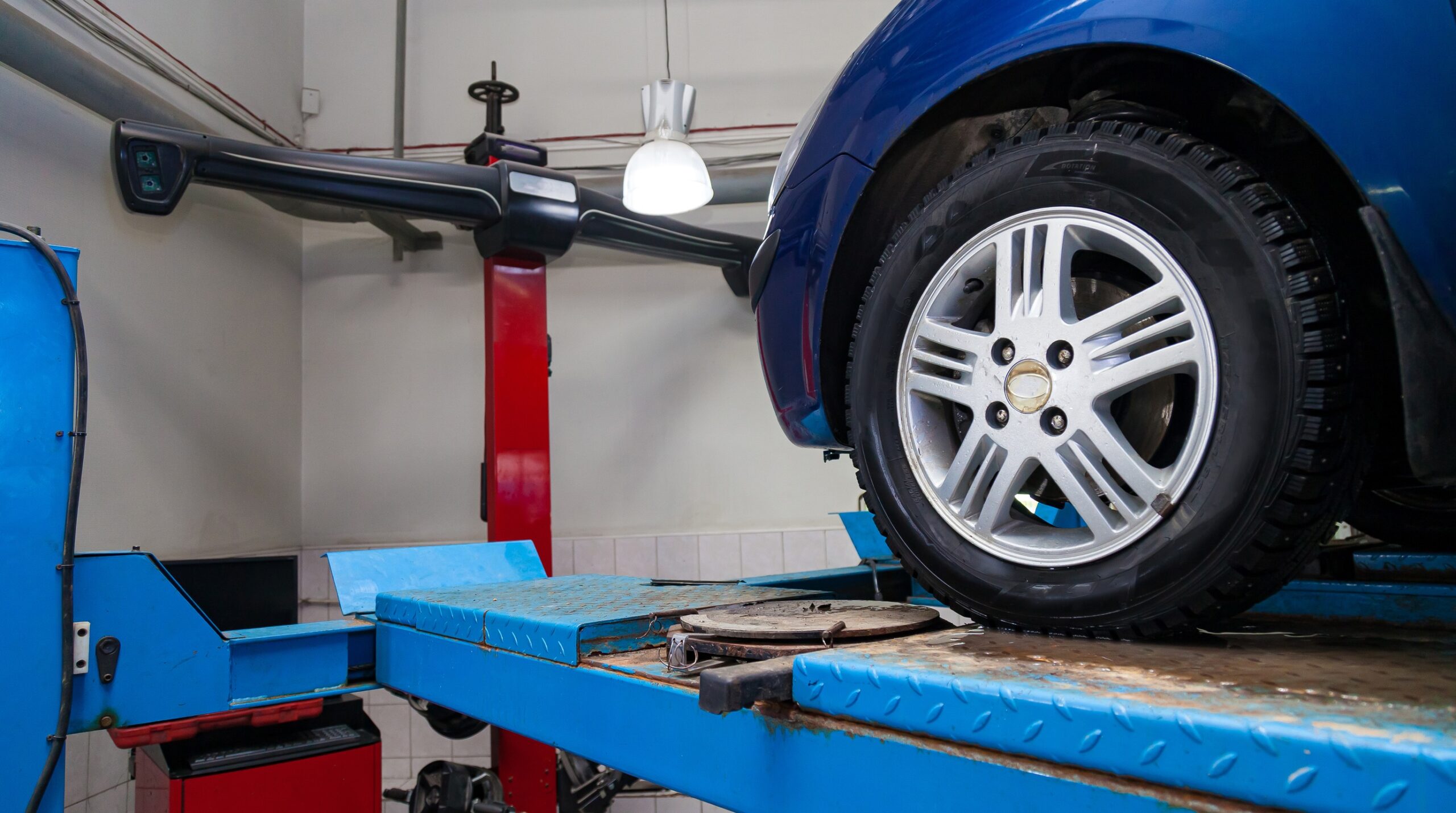
The Break-Even Math on Skipped Rotation
Skipped rotation shows up first as uneven wear, usually the front tires going bald faster than the rear. The dollar impact runs like this.
A set of four Michelin Defender T+H tires (195/65R15) runs $751.96 at current retail, $187.99 each, carrying an 80,000-mile treadwear warranty with regular rotation. Skip rotation, and the front pair, which carries more steering and braking load, can wear out around half that mileage, closer to 40,000 miles.
The rear pair, moved less often, still has tread left when the fronts are done.
On a front-wheel-drive car, that means an unplanned $375.98 for two replacement tires years before the tread warranty runs out. It also means a second mount-and-balance bill instead of one.
On an all-wheel-drive (AWD) vehicle it is worse. Most AWD drivetrains need tread depth matched within a few 32nds across all four tires. Uneven front wear can force a full four-tire replacement at 40,000 miles instead of 80,000, doubling how often you buy a full set.
Tread depth, not tire age, is what actually determines when a tire needs replacing. Rotation is the cheapest lever for slowing how fast that number drops on any one tire.
The Decision Rule
Use the wear pattern, not the calendar, to decide which service to pay for. Even wear across all four tires, with no pulling or vibration, means rotation is doing its job: keep it on the mileage schedule and skip the alignment.
Uneven wear concentrated on one tire’s inside or outside edge, a pull to one side, or vibration through the steering wheel means alignment, not just rotation. The same goes for any car that recently hit a curb or pothole hard enough to notice. It also applies to one about to get a new set of tires.
KBB’s service-cost guide puts a rotation at $60 to $72 on average and rotation with balance at $112 to $132. A four-wheel alignment runs $100 to $200, with a $183 national average at dealerships. Paying for an alignment that was not needed wastes money, and skipping one that was needed wastes tires.
Frequently asked questions
How often should I rotate my tires? Most owner’s manuals call for every 5,000 to 7,500 miles, often paired with an oil change. Kia’s 2026 schedule lists 8,000 miles for normal use. Check your own manual’s table, since the figure varies by manufacturer and whether your driving qualifies for the severe-service schedule.
How do I know if I need an alignment instead of just a rotation? Even wear with no pulling or vibration means rotation is enough. A pull to one side, steering wheel vibration, or uneven edge wear on one tire means you need an alignment. The same goes for any recent curb or pothole hit.
Does installing new tires always require an alignment? Not always, but it is worth checking first. If the car was already pulling or showed uneven wear before the new tires went on, skipping the alignment is a mistake. The new set simply wears into the same bad pattern the old one had.
What happens if I skip tire rotations for too long? One axle, usually the front, wears faster and can need replacement years before the tire’s rated mileage. On a front-wheel-drive car, that means an early, unplanned tire bill. On an all-wheel-drive vehicle, mismatched tread depth across axles can force a full four-tire replacement instead of just the worn pair.
Is it cheaper to do rotation and alignment together? They are billed separately because they solve different problems. Many shops perform rotation at every oil change and alignment only when symptoms or an impact call for it. Bundling only makes sense when both are actually needed, not as a default.
Leave a Reply