6 min read · Last updated November 13, 2026
- A 2013 iSeeCars analysis of 30 million used-car listings found 1 in 5 cars got a price cut before selling, averaging nearly 7% off. The underlying pattern of asking-versus-sold gaps still holds today.
- Cars listed above their computed market value get cut harder, 7.7% on average, versus 5.8% for cars already priced near or below value.
- The first price drop typically lands around day 15 of a listing, averaging just over 5%, per the same analysis.
- Kelley Blue Book’s Private Party Value is built as a negotiation starting point between two private people, not a copy of other sellers’ asking prices.
Private-sale buyers rarely pay full asking price. A 2013 iSeeCars study found 1 in 5 used-car listings get cut nearly 7% before they sell, so price off sold comps, not other sellers’ hopes.
In this article
- Why Asking Prices Don’t Tell You What Your Car Will Actually Sell For
- Where to Find Real Sold Comps Instead of Guesswork
- When a Stale Listing Needs a Price Drop
- The Worked Example: Setting Your Floor Before the First Message
- Frequently Asked Questions
Your neighbor’s $15,000 asking price is not a sold price. It is a number nobody has agreed to pay yet, and the gap between the two can run into four figures.
Why Asking Prices Don’t Tell You What Your Car Will Actually Sell For
Every classifieds site is full of sellers’ hopes, not completed transactions. A 2013 iSeeCars analysis of more than 30 million used-car listings found that 1 in 5 cars had their price cut before they sold, by nearly 7% on average. On an $18,000 car, that works out to over $1,200 of daylight between the first number and the final one.
Classifieds sites work the same way today, so the gap that study measured still holds.
The gap gets worse for sellers who guess high. Cars listed above their computed market value saw average cuts of 7.7%, versus 5.8% for cars already priced near or below value, per the same research. Comparing your asking price only to other listings means comparing it to other people’s optimism, not to what buyers actually paid.
That matters because classifieds sites, by design, only show you the asking side of the market. A page full of similar cars at similar prices can look like confirmation, when it is really just a crowd of sellers making the same untested guess.
| Factor | Asking Price | Sold Price |
|---|---|---|
| What it represents | What a seller is requesting | What a buyer actually agreed to pay |
| Where you find it | Classifieds and marketplace listings | Private-party valuation tools like Kelley Blue Book (KBB), completed-transaction data |
| Reliability as a pricing signal | Reflects seller hope, not a completed deal | Reflects what the market has actually paid |
| Typical gap from final sale | Runs roughly 5% to 8% above the eventual sale price, per 2013 iSeeCars data | Matches the final transaction by definition |
| Best for | Setting an opening number with room to negotiate down | Setting your floor and judging whether your asking price is realistic |
Where to Find Real Sold Comps Instead of Guesswork
Kelley Blue Book (KBB)’s Private Party Value is built specifically as a negotiation anchor between two private individuals, not a copy of classifieds asking prices. KBB describes it as the starting point for negotiating a used-car sale, priced “as is” with no warranty included.
Enter your exact year, make, model, trim, mileage, and condition. The tool returns a value tied to your ZIP code for the current week, since private-party values shift with local supply and season. Run the same vehicle through a second private-party tool too, since no single source sees every transaction in your area.
If your car has aftermarket parts, pricing works differently than a stock comp. See our guide on modified car trade-in value and private-sale pricing for that adjustment. And if you are still weighing a trade-in or instant offer against selling it yourself, see dealer trade-in vs. instant offer vs. private sale for that comparison.
When a Stale Listing Needs a Price Drop
Waiting too long to adjust a stale price tends to cost more than cutting it early. The 2013 iSeeCars data found the first price drop typically lands around day 15 of a listing, averaging just over 5%. After that first cut, 38% of listings needed a second reduction, averaging almost 6% more.
If your car has been live for two weeks with no serious inquiries, matching that pattern beats clinging to the original number. Zero serious messages, not counting lowball spam, by day 10 to 15 means your price probably does not match the comps buyers are actually seeing.
The Worked Example: Setting Your Floor Before the First Message
Say you are selling a 2019 Toyota Camry LE with 68,000 miles in good condition. For illustration only, a KBB Private Party Value search for that configuration in a typical ZIP code might return a value near $14,200. Your real number depends on your own location, mileage, and condition grade.
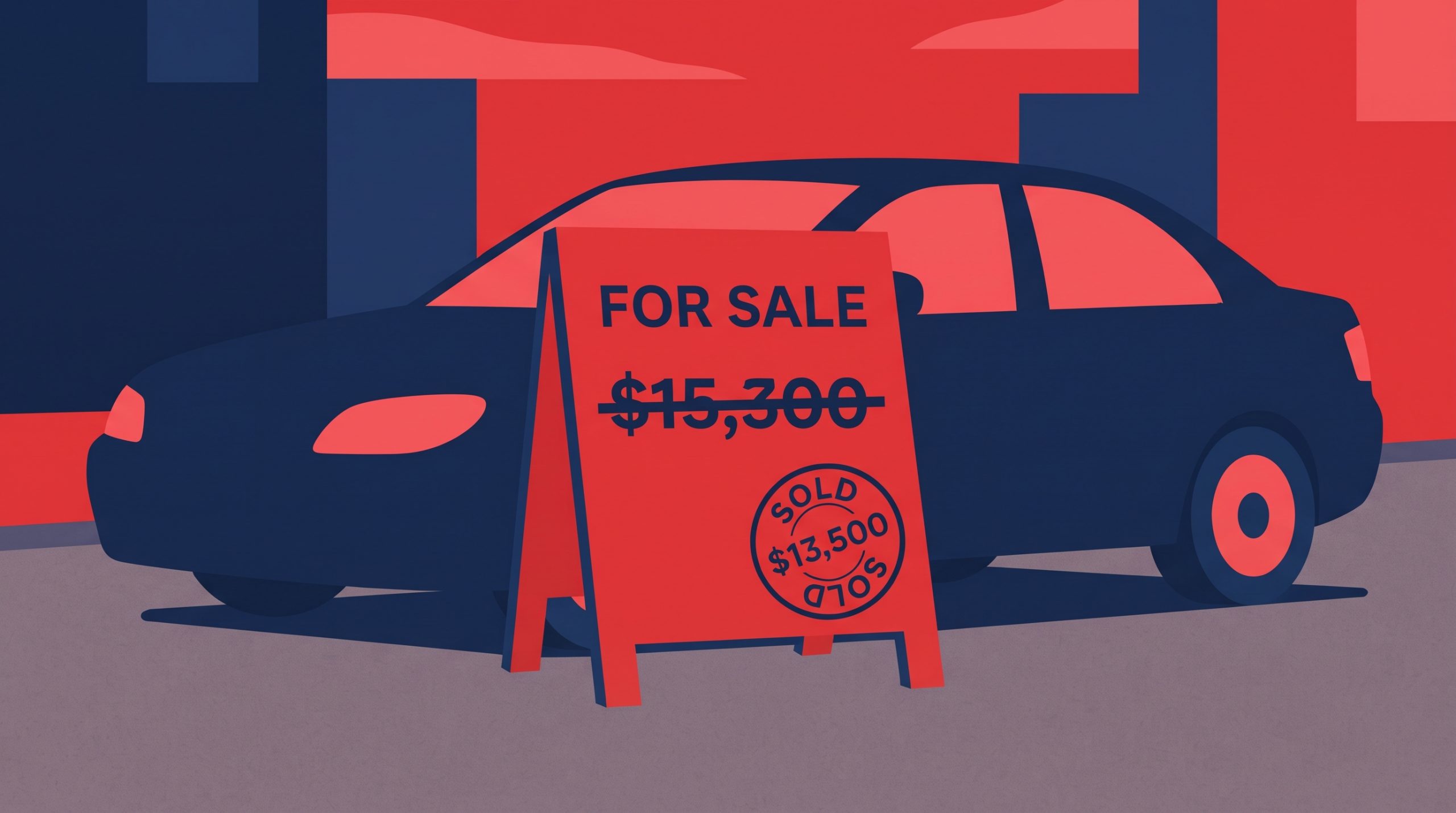
List around 8% above that figure, at roughly $15,300, to leave room for negotiation without scaring off buyers comparing against the same comp data you used. Set your floor before you post the ad, not mid-negotiation: around $13,500, about 5% under the comp value, covers one round of haggling plus a cushion.
That leaves about $1,800 of total room between list price and floor, roughly 12% of the asking number. If you reach day 15 with no serious offers, the data above suggests a cut near 5%. That lands around $14,535, still above your floor and in line with what sold comps actually support.
Write the floor number down before you post the listing, not after a buyer texts you a lowball offer. A number decided under pressure tends to drift lower than one decided against real comp data in a quiet moment.
Frequently asked questions
What is the difference between an asking price and a sold price for a used car? An asking price is what a seller requests. A sold price is what a buyer actually paid. A 2013 iSeeCars analysis of 30 million listings found 1 in 5 used-car listings get a price cut, averaging nearly 7%, before they sell.
How do I find sold comps for a private car sale instead of asking prices? Use a private-party valuation tool like Kelley Blue Book’s, which generates a value from your exact year, make, model, mileage, and condition rather than copying other sellers’ listed prices. Cross-check the same vehicle on a second valuation tool before setting your number, since no single source captures every local transaction.
How long should I wait before dropping my car’s asking price? Data from a 2013 iSeeCars analysis of 30 million listings shows the first price cut typically happens around day 15, averaging just over 5%. If you have no serious inquiries by then, treat that as a signal your price sits above what comparable sold cars support.
What is a negotiation floor and why set it before listing? A negotiation floor is the lowest price you will accept, decided before any buyer messages you. Setting it in advance, based on sold comp values rather than emotion, keeps you from accepting a lowball offer under pressure once a real buyer starts negotiating.
Leave a Reply