6 min read · Last updated October 12, 2026
- Priya’s 2020 Toyota Camry drew three real offers in one week: a $15,800 dealer trade-in, a $16,400 CarMax online offer, and a $17,900 private-sale buyer.
- CarMax’s written offer and Carvana’s online offer are both advertised as firm, no-haggle pricing once issued, with no in-person negotiating.
- California sellers must file a Notice of Transfer and Release of Liability within 5 calendar days of a private sale. Texas requires the vehicle titled in the buyer’s name within 30 days.
- A dealer trade-in or an instant online offer pays quickly, with the buyer handling the paperwork either way. A private sale can take days to weeks and leaves every Department of Motor Vehicles (DMV) filing to the seller.
A dealer trade-in pays the least of the three but closes the same day with no paperwork. An instant online offer from CarMax or Carvana lands in the middle and can still be cut at pickup. A private sale usually pays the most, but leaves every DMV filing to the seller.
In this article
- What a dealer trade-in actually pays
- What CarMax or Carvana pay, and the catch
- Dealer trade-in vs. instant offer vs. private sale: what you actually net
- The paperwork each path leaves on your desk
- Frequently asked questions
A dealer trade-in, an instant online offer from CarMax or Carvana, and a private sale on the same car typically rank in that order, lowest price to highest. The spread is often $2,000 or more on the same vehicle. The private-sale number only holds up after paperwork, time, and reinspection risk get weighed against it.
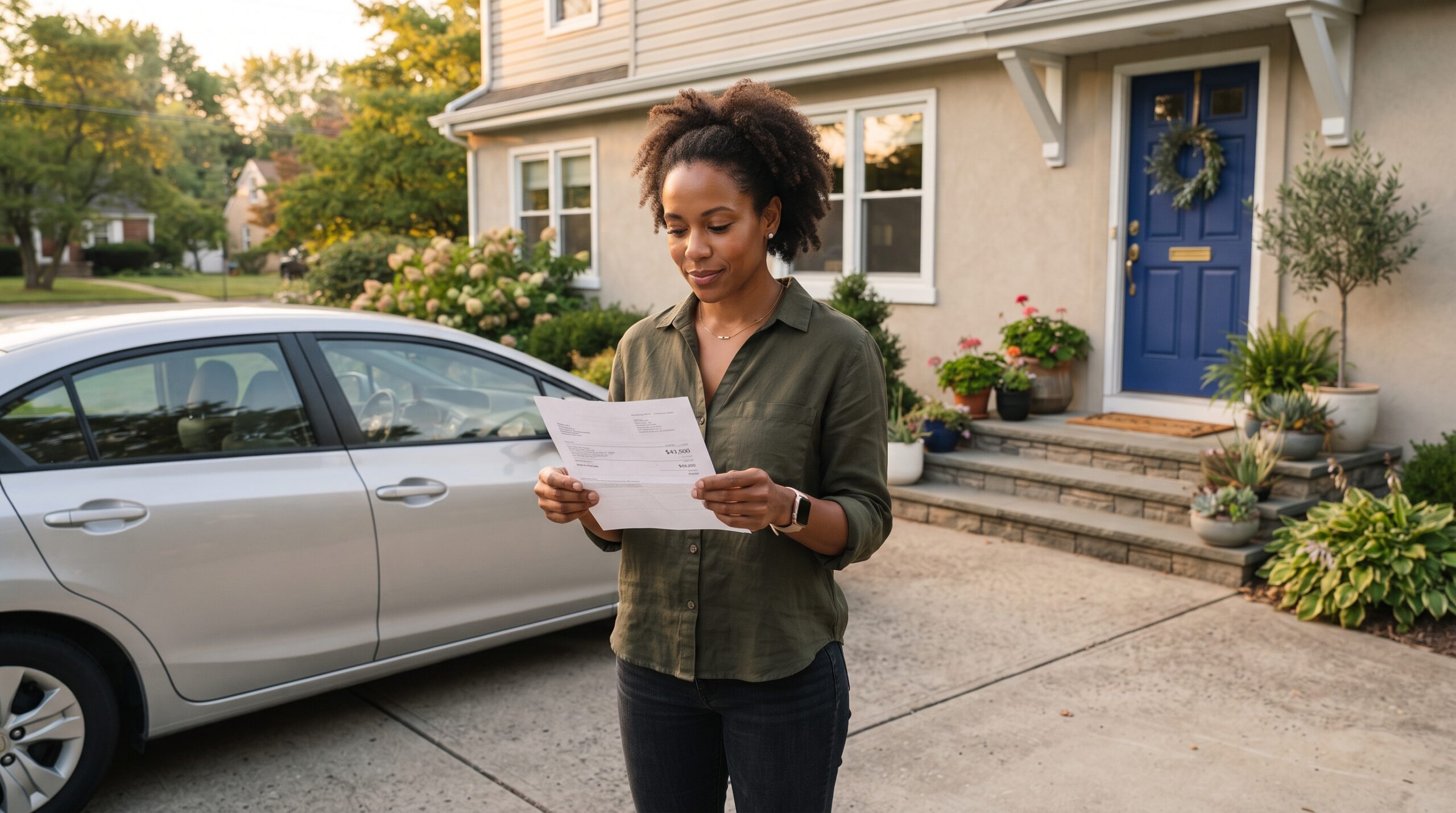
Take Priya, who priced her 2020 Toyota Camry three ways in one week: a $15,800 dealer trade-in, a $16,400 CarMax offer, and a $17,900 private-sale buyer. That’s a $2,100 gap between her lowest and highest offer. The highest number was also the only one she had to work for.
What a dealer trade-in actually pays
A dealer trade-in folds reconditioning cost and resale margin into one number, and that number is usually final within minutes of the appraisal. Priya’s dealer looked at the Camry, ran a market comparison, and offered $15,800 on the spot. The dealer then handles the title paperwork and any loan payoff directly, so a trade-in requires nothing further from the seller.
Dealers price trade-ins below retail because they’re buying at wholesale risk. The car still needs reconditioning, a full inspection, and a profit margin before it goes back on the lot. That built-in cushion is why the trade-in number is consistently the lowest of the three, even on a clean, well-maintained car like Priya’s.
What CarMax or Carvana pay, and the catch
CarMax’s written offer is typically valid for about seven days and does not move once accepted; the company advertises the price as firm and non-negotiable. Carvana advertises the same no-haggle policy for its online number, with payment released once a pickup-day checklist confirms the car matches what was entered.
The real risk sits earlier, at the online estimate itself. An online quote is built entirely on self-reported answers, and that gap is why an in-person appraisal exists at all. A separate breakdown of one CarMax seller’s online quote getting cut by $2,500 once an appraiser saw the car walks through exactly what an appraiser looks for.
Sellers can cut that risk down by answering every condition question honestly and photographing the car the day they get the quote, so the two numbers match.
Dealer trade-in vs. instant offer vs. private sale: what you actually net
Priya’s three numbers line up with the pattern most sellers see on the same car.
| Factor | Dealer trade-in | Instant online offer | Private sale |
|---|---|---|---|
| Typical payout | Lowest of the three | Middle, firm once accepted | Highest, but only once a buyer agrees to your asking price |
| Price certainty | Locked in minutes at appraisal | Both locked once issued: about 7 days for CarMax, final before pickup for Carvana | Negotiable; a buyer can walk or lowball |
| Who files the paperwork | Dealer handles title and any loan payoff | Buying company handles the title transfer | Seller files every DMV document |
| Reinspection or condition risk | None; offer is final at the in-person appraisal | A pickup-day checklist confirms the car matches what was entered online | Buyer may demand an independent mechanic check first |
| Typical time to cash | Same day | Paid once pickup and reinspection clear | Days to weeks, depending on buyer interest |
| Best for | Fastest exit, zero effort | Fast, firm cash without negotiating | Sellers who can wait and handle the DMV steps themselves |
The paperwork each path leaves on your desk
A dealer or an instant online buyer closes the title loop as part of the transaction, and the seller signs and walks away. A private sale does not work that way. The seller has to notify the state directly, and the deadline is not a suggestion.
California requires the seller to file a Notice of Transfer and Release of Liability within 5 calendar days of the sale, per the state’s own DMV site. Texas requires the vehicle titled in the buyer’s name within 30 days, and lets a seller file a Vehicle Transfer Notification in the meantime to get the sale on record.
Skip that step and the car can still show up under the seller’s name months later. A separate look at what happens when that filing gets missed walks through a seller who found out the hard way.
None of this paperwork disappears just because the sale happens privately instead of through a business. It simply moves from the buyer’s team to the seller’s own kitchen table.
Frequently asked questions
Does a private sale always pay more than a dealer trade-in? Usually, but not always. A car that’s hard to sell privately, such as one with high mileage or an unpopular color, can net closer to the dealer’s price after weeks on the market. Compare the actual offers in hand rather than assuming the channel with the most effort automatically wins.
Can CarMax or Carvana lower their offer after I accept it online? CarMax’s written offer and Carvana’s online offer are both advertised as final once issued, with no haggling. The real place a number can move is earlier: one CarMax seller’s $17,000 online quote became a $14,500 written offer once an appraiser saw the car in person.
How much faster is a dealer trade-in or instant offer than a private sale? A dealer trade-in typically pays the same day as the appraisal. An instant online offer pays once the car is picked up and reinspected, which can add a few days. A private sale can take anywhere from a few days to several weeks, depending on how quickly a buyer who can actually pay shows up and passes their own inspection.
What happens if I sell my car privately and never file the DMV paperwork? The car can stay on record under the seller’s name, which means tickets, tolls, or worse can still trace back to them. California requires a release of liability within 5 calendar days; Texas requires the title transferred within 30 days.
Is a dealer trade-in ever the better choice even though it pays less? Yes, when speed and zero effort matter more than squeezing out the highest price. A trade-in closes the same day with no advertising, no buyer screening, and no DMV follow-up, which some sellers decide is worth the gap.
Leave a Reply