7 min read · Last updated August 4, 2026
- The 100,000-150,000 mile window commonly brings a timing belt ($367-$585), a water pump ($400-$800), a wheel bearing (about $350), and a set of struts ($500-$1,000) – a possible $1,617-$2,735 stretch if several land in the same year.
- Front-wheel-drive cars carry 4 constant velocity (CV) joints across their 2 front axles, each one a boot-or-axle risk in this window; rear-wheel-drive cars carry a driveshaft with U-joints instead, a different repair list.
- A worn CV boot caught early costs $150 to $600 to fix. Ignored, the joint fails and the full axle runs $400 to $1,000 or more.
- Reliability rankings are built from thousands of cars in a model line, not your one vehicle. Weigh your own $1,617-$2,735 repair window against your car’s current trade value before you decide anything.
In this article
- What Actually Fails Between 100,000 and 150,000 Miles
- Does Your Drivetrain Change the List?
- The 100,000-Mile Bill: A Worked Example
- Repair Bill vs. Trade Value: How to Weigh It
- Frequently asked questions
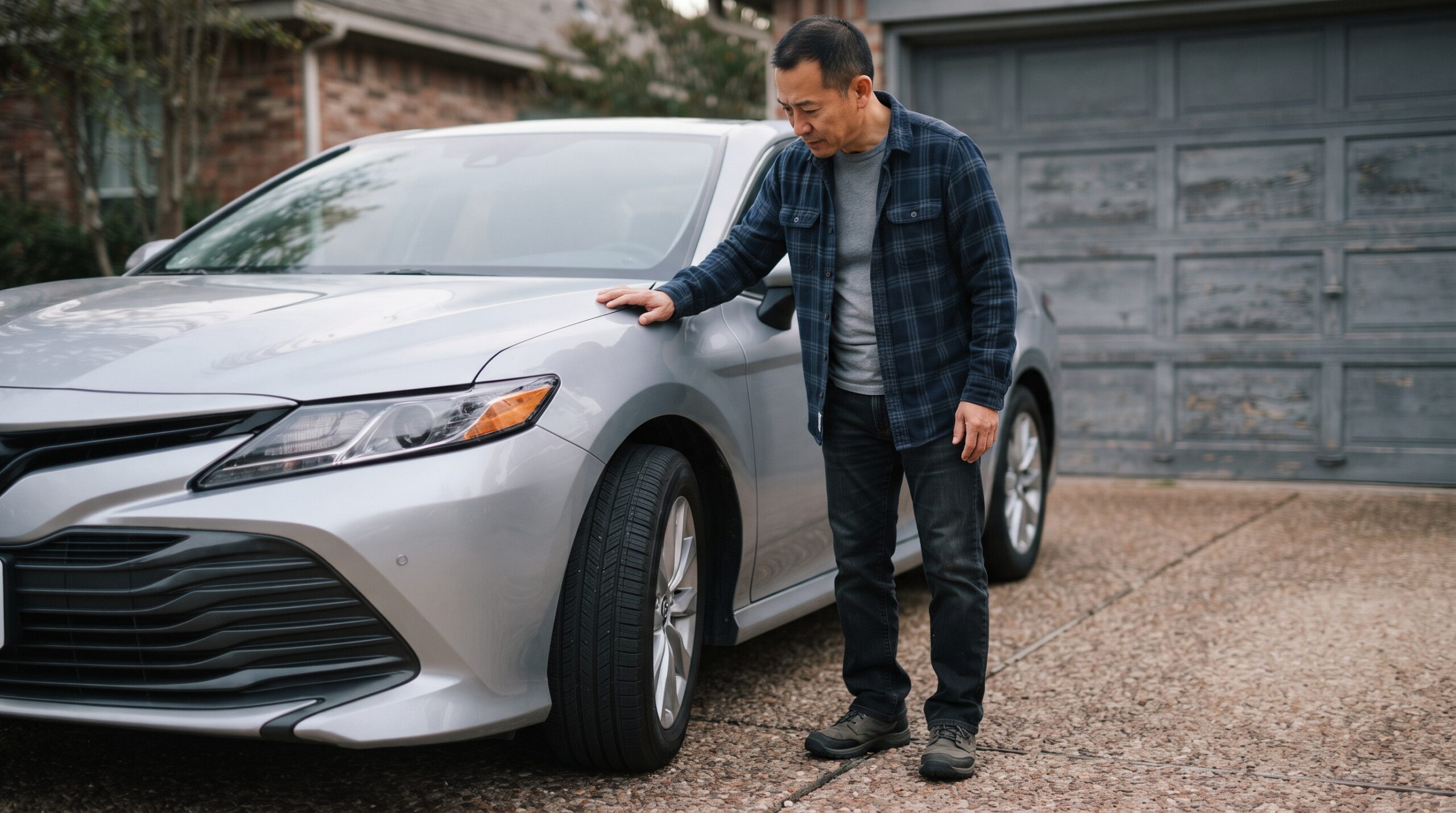
Maria’s dashboard clicked over to 104,212 miles on the drive home last Tuesday, and the timing belt her owner’s manual has been flagging since 90,000 is still sitting on her to-do list. That single part, plus the water pump most shops replace alongside it, is one of at least four separate jobs a car in this mileage window is statistically due for. None of them show up on a brand reliability chart. They show up on an invoice. These schedule-based jobs are due on mileage alone, regardless of how those miles were driven; a separate wear pattern, how many times the engine has started cold, tracks a different set of components and can make two cars at the same odometer reading age very differently.
What Actually Fails Between 100,000 and 150,000 Miles
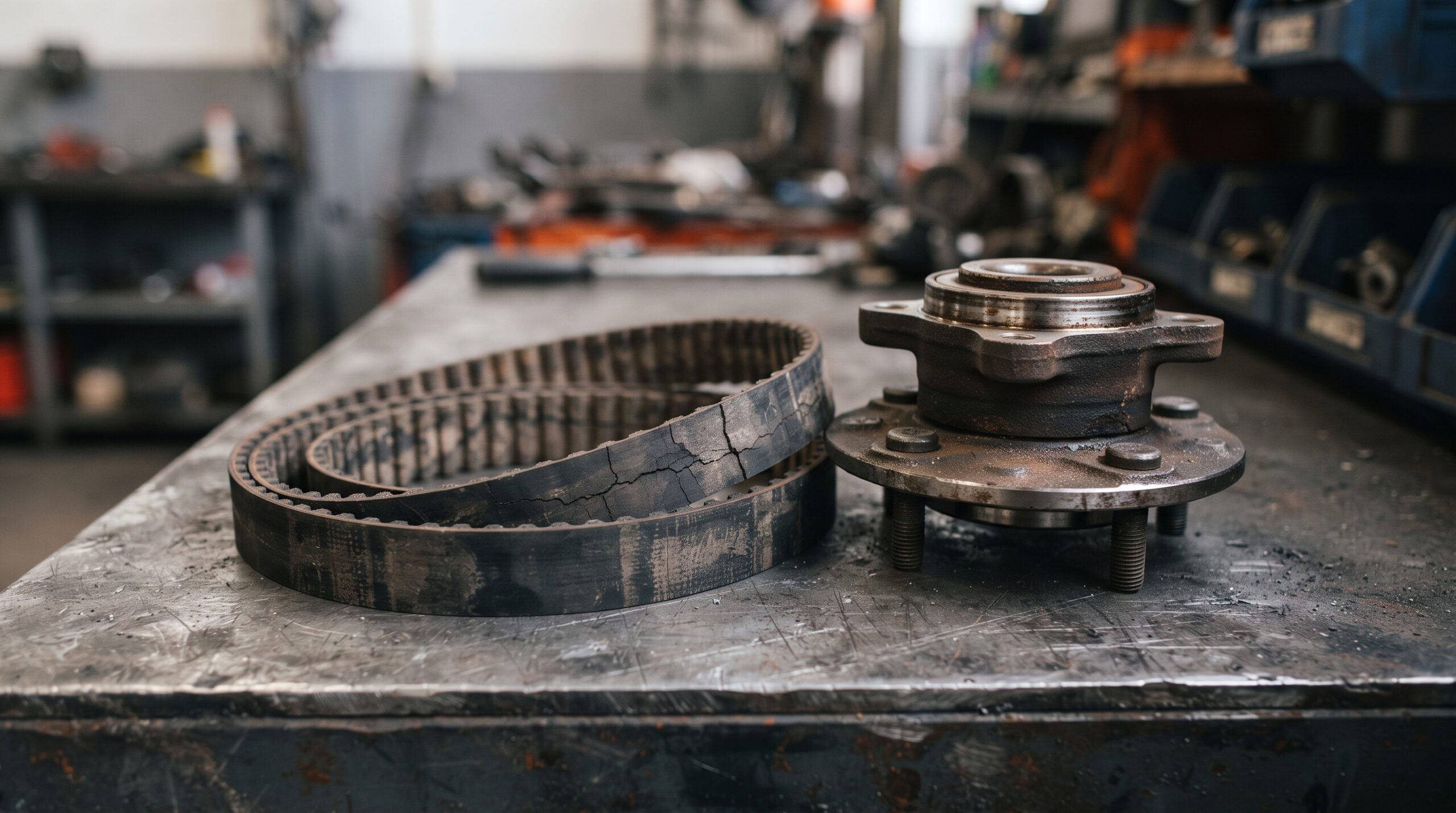
Four components account for most of the unavoidable spending in this window, and each has a real, sourced cost range. A timing belt runs $367 to $585 installed, according to Kelley Blue Book. Manufacturers commonly schedule it between 60,000 and 100,000 miles, which puts a lot of belt-driven engines squarely inside the 100,000-150,000 stretch if the belt was not already done. Water pumps often get replaced in the same visit since the labor to reach one usually means reaching the other, and KBB prices a standalone water pump replacement at $400 to $800.
Wheel bearings wear out from years of small vibrations and typically fail one wheel at a time. KBB puts the national average to fix one wheel’s bearing at about $350. Struts and shocks are the fourth predictable item. Car Talk prices a full set on a mainstream car at $500 to $1,000, with some designs running as high as $2,500 on the low-volume or luxury end.
Does Your Drivetrain Change the List?
Front-wheel-drive and all-wheel-drive cars, which make up most of what is on the road, connect the engine to the wheels through constant velocity (CV) axles, with a rubber boot sealing grease around each joint. A boot caught while it is torn but the joint is still clean costs $150 to $600 to fix, per CostHelper’s reader-reported data. Once dirt gets past a torn boot, the joint itself grinds and clicks under turns, and a full axle replacement becomes the only fix. Rick’s Free Auto Repair Advice, a working mechanic’s cost breakdown, puts a full axle at $400 to $1,000 or more depending on the vehicle. CarBuzz prices a new Original Equipment Manufacturer (OEM) axle including labor at $850 to $1,000.
Rear-wheel-drive cars route power through a driveshaft with U-joints instead of CV axles, and that assembly fails less often in this mileage range. If your car is rear-wheel-drive, the boot-and-axle story above mostly does not apply to you, and a technician checking your car for the 100,000-mile window should be looking at the driveshaft, not the axle boots.
The 100,000-Mile Bill: A Worked Example
Take a 2016 four-cylinder sedan, front-wheel-drive, at 104,000 miles, with a belt-driven engine that has never had the timing belt done. Say the shop finds four things due at once. The timing belt and the water pump are worth doing together, and one front wheel bearing is making noise while the front struts start to bounce on rough pavement. Here is what the bill looks like:
| Item | Low estimate | High estimate | Source |
|---|---|---|---|
| Timing belt | $367 | $585 | Kelley Blue Book |
| Water pump | $400 | $800 | Kelley Blue Book |
| One wheel bearing | $350 | $350 | Kelley Blue Book (national average) |
| Front struts (pair) | $500 | $1,000 | Car Talk |
| Total, if all four land together | $1,617 | $2,735 | Sum of above |
That $1,617 to $2,735 is what lands if all four hit in the same visit. Spread across the full 50,000-mile window to 150,000 miles, also add a CV boot or axle ($150 to $1,000) and a brake job. Pads alone run about $300 per axle per KBB’s brake pad guide, or $200 to $800 for a complete pad-rotor-caliper job per Jiffy Lube. The realistic window total runs roughly $2,000 to $4,500, depending on how much arrives at once versus spread over a few years.
Repair Bill vs. Trade Value: How to Weigh It
None of this means sell the car. It means get a real number before deciding anything. Pull your car’s current trade-in value from Kelley Blue Book using your actual mileage and condition. Then compare it to the window total above, priced with your own shop’s labor rate. If the 50,000-mile bill is a small fraction of what the car is worth, spend the money. The alternative is financing a different car at a much higher monthly cost. If the bill approaches or exceeds the trade value, have an honest conversation with your mechanic instead. Ask which items are truly due now, and which can wait a few thousand miles. If you decide to sell instead of repair, keep the receipts for whatever you did have done; a Carfax pull can show almost nothing for a car serviced entirely at an independent shop, so your own paperwork is often the only proof a buyer will see.
If a timing belt is anywhere on that estimate, treat it differently than the rest of the list. On an interference engine, skipping it is not a deferred repair, it is a bet on an engine rebuild.
None of this mileage-based math accounts for a car’s other clock. If you’ve driven this vehicle through winters in a salt-belt state, check the frame and brake lines for structural corrosion before you commit to any of the repairs above, since a rusted-through frame can end a car’s useful life regardless of how sound the engine still is.
Maintenance and repair costs in this mileage range are also part of a bigger number most owners never separate out. AAA’s annual Your Driving Costs study tracks maintenance and repair as one of the largest ongoing ownership expenses alongside fuel and insurance, which is worth remembering before you compare this window’s bill against only what you paid to buy the car.
Powertrain choice also shapes how big that ongoing maintenance number runs. AAA’s 2026 data compares five-year maintenance cost across a four-cylinder sedan, a V6 SUV, and a hybrid, which is worth checking against whichever powertrain you’re driving through this mileage window.
Frequently asked questions
Does a higher reliability ranking mean a lower repair bill at 100,000 miles? Not directly. Reliability rankings measure how often a model line reports problems across a large sample. Your specific car’s bill depends on its own maintenance history, driving conditions, and which of the predictable parts above have already been done, not on where its badge ranks. It also depends on which model year you have: a car built in the first year of a full redesign tends to need more of these repairs earlier than one built two or three years into the same unchanged generation.
Which single repair in this window is usually the most expensive? Struts and a torn CV axle both compete for that spot. A full strut set runs up to $1,000 on a mainstream car. A neglected CV joint that turns into a full axle job lands in that same $400 to $1,000-plus range, per the sources above.
Should I fix everything at once or spread it out? If a shop is already in the front end for one job, ask what else shares the same labor. Reaching a timing belt often means reaching the water pump anyway. Items that do not share labor, like brakes and struts, can usually wait for separate visits without added risk.
How do I compare the repair bill to my car’s trade-in value? Look up your exact mileage and condition on Kelley Blue Book’s trade-in tool. Set that number next to your shop’s written estimate for the items above. The comparison, not the reliability badge, is what should drive the keep-or-sell decision.
Leave a Reply