
6 min read · Last updated August 12, 2026
- Consumer Reports found that 45% of new-or-redesigned vehicles in its owner survey landed below average on predicted reliability, versus 33% above average and 22% average.
- CR’s own reporting states it typically takes automakers two to three years, or longer, to work the bugs out of a full redesign.
- The 2018 Honda Odyssey lost its CR recommendation to infotainment and power-equipment glitches after that year’s redesign. The 2018 Tesla Model 3 had rear-glass cracks and paint defects that were largely gone a year later. The BMW X3 lived through the identical pattern twice, in 2011 and again in 2018.
- Brand-level rankings average dozens of models at different points in their life cycle. Your specific car is only one of them, and generation plus model year predicts its risk far better than the badge on the grille does.
In this article
- Why a redesign resets the reliability clock
- Three real cases of the same pattern
- How to check where your own car sits inside its generation
- If you already own a first-year redesign
- Frequently asked questions
The BMW X3 dropped to well-below-average reliability in Consumer Reports’ owner survey the year after its 2018 redesign. One year later, with no major engineering change to the platform, the 2019 X3 scored above average. The SUV had already lived through the identical pattern once before: its 2011 redesign took Consumer Reports’ own tracking until 2016, five years, to fully resolve.
Why a redesign resets the reliability clock
Consumer Reports draws a real distinction between three kinds of model-year changes. A freshening is cosmetic or incremental, a new grille or infotainment update on an existing platform. A redesign replaces the engine, transmission, suspension, or safety systems on a model that’s been sold for at least one generation. An all-new model is a debut with no prior version to inherit fixes from. The more systems that change at once, the more places a new defect can hide, and Consumer Reports’ own survey data backs that up starkly: in its most recent published breakdown, 45% of new-or-redesigned models tested landed below average on predicted reliability, compared with 33% above average and 22% average, and CR’s own analysis states plainly that it typically takes automakers two to three years, or longer, to work the problems out of a full redesign. That’s not a knock on any one manufacturer. It’s a structural fact about how many new parts get asked to work together for the first time in a production vehicle.
Three real cases of the same pattern
The pattern isn’t theoretical. Consumer Reports has tracked it play out on specific, named vehicles across multiple redesign cycles.
| Model | Redesign year | What went wrong | When it recovered |
|---|---|---|---|
| Honda Odyssey | 2018 | Infotainment and power-equipment glitches cost it CR’s recommendation | Problems still present in the 2019 model year |
| Tesla Model 3 | 2018 | Rear-glass cracks, loose trim, paint defects | Far fewer reports on the 2019 model, average predicted reliability |
| BMW X3 | 2018 (second redesign) | Well-below-average reliability | Above-average by the 2019 model year, one year later |
| BMW X3 | 2011 (first redesign) | Below-average reliability | Not fully resolved until 2016, five years later |
Two things stand out. First, the recovery timeline isn’t fixed. The X3’s second redesign cleared up in one year; its first took five. Second, the same nameplate can swing from a reliability liability to a safe bet within two or three model years, which means “I’ve heard bad things about that model” is often true about a specific year, not the car itself.
Owner-survey data isn’t the only place this shows up. NHTSA’s public complaint database logs 955 separate owner complaints against the 2018 Honda Odyssey alone, a real-world echo of the same redesign-year pattern Consumer Reports tracked in its survey. Pulling that same lookup for your own car’s exact model year, before you buy or right after you notice a new quirk, takes about a minute and tells you whether other owners are reporting the same thing.
How to check where your own car sits inside its generation
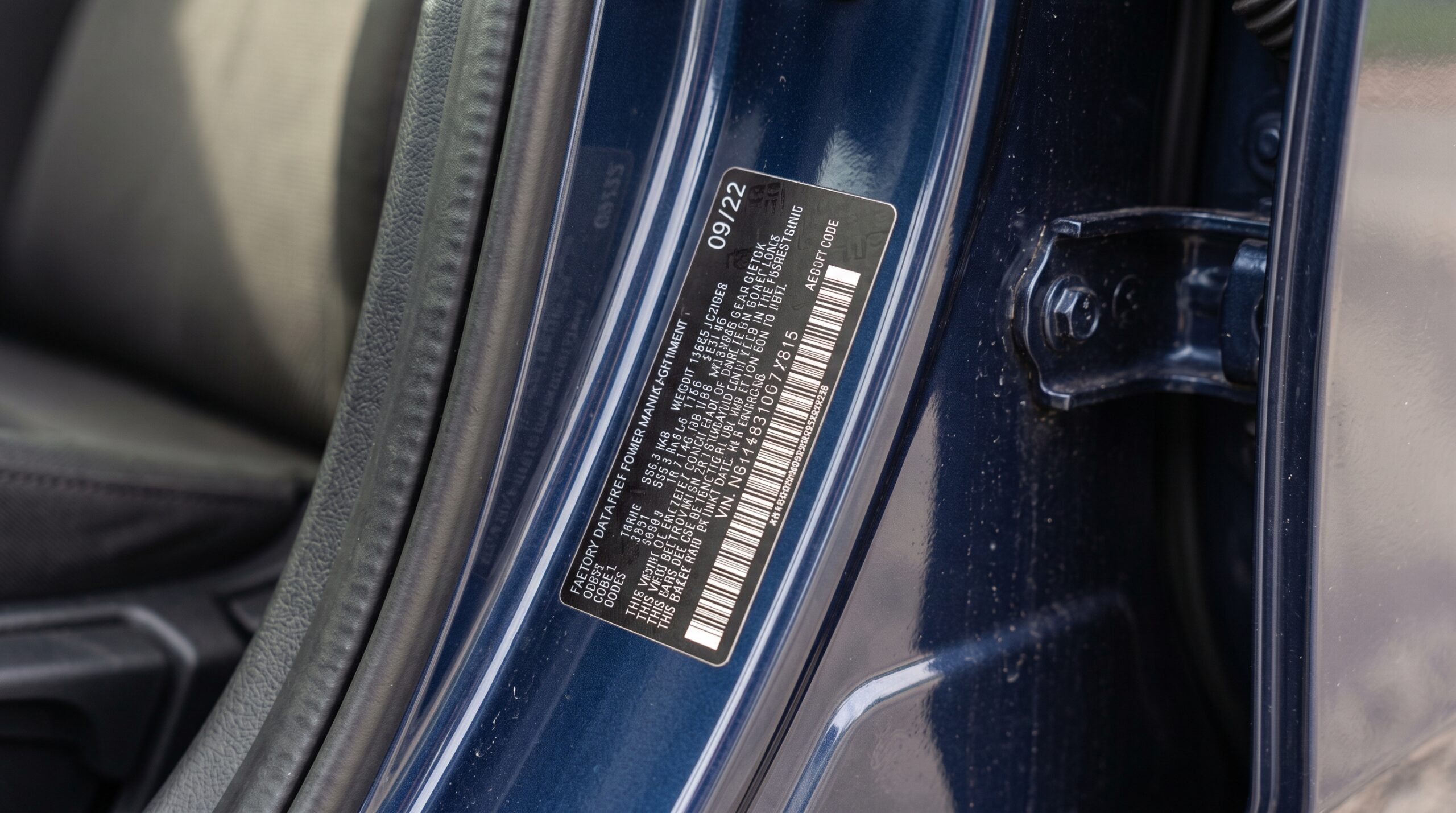
Every vehicle generation has a start year, the model year its redesign launched, and every later model year in that generation inherits whatever fixes have accumulated since. Find yours with a quick search for your model name plus the word “generation,” which will show you how many years into the current body style your specific car sits. If your car is a first- or second-year redesign, that context is worth having even well after the sale: it tells you to watch technical service bulletins and recall notices more closely than you would on a car three or four years into an unchanged generation, since manufacturers issue bulletins for exactly the kind of early-life glitches Consumer Reports documents, often before a problem becomes a recall. A recall lookup by VIN takes less time than an oil change and it’s free. It’s also worth knowing when you eventually sell: brand-level reliability rankings average in cars from every point in a generation, so a buyer who only checks the brand’s overall score is missing the exact detail this article is built on.
If you already own a first-year redesign
If you’re already driving a first-year redesign, the fix isn’t panic, it’s tracking. Sign up for recall notifications tied to your VIN, since manufacturers issue technical service bulletins for exactly the kind of early-life glitches Consumer Reports documents, often before they become recalls. Keep every service record from year one, since a documented pattern of the same complaint strengthens any warranty claim, and a dealership is far more likely to cover a repair under warranty when you can show it’s the third occurrence of the same issue rather than a one-off. And budget for the first two years the way you would for a car with a shorter track record, because on the data above, that’s what it actually is. None of this means the car is a mistake. The BMW X3’s own history shows the same nameplate clearing the bar within a year or two once the fixes catch up. Some of the most expensive bulletins target one specific engine or transmission within a model line, not the whole vehicle; Honda’s turbo oil-dilution bulletin and Nissan’s CVT warranty extension are two real examples worth checking your own VIN against.
Frequently asked questions
Does a redesign always mean worse reliability? No, but the odds move against you. Consumer Reports found 45% of redesigned or all-new models it tested scored below average, compared with 33% above average. It’s a real statistical tilt, not a guarantee of trouble on any single car.
How do I know if a car is in its first redesign year? Search the model name plus “redesign” or “generation,” or check the manufacturer’s own press release archive for when the current body style launched. The first model year after that announcement is the highest-risk year in the pattern above, and each following year in the same generation carries progressively fewer of the original bugs.
Does a car near the end of its generation carry less risk than a first-year redesign? Generally yes for reliability specifically. Consumer Reports’ data shows problems concentrate early and clear by year two or three, so a car near the end of an unchanged generation has had the most time for fixes to reach production, even though it may look identical to the newest redesign from the outside. A discontinued nameplate is a different risk entirely: once the model itself is gone, parts and dealer support start thinning long before any official notice says so.
Do all-new models carry the same risk as redesigns? Sometimes less. Consumer Reports notes that all-new models sharing major components with an existing model, rather than starting from nothing, can have fewer early problems because those parts are already debugged elsewhere.
What should an owner of a first-year redesign actually track? Open recalls tied to your VIN, technical service bulletins for your specific model, and every service record from year one. That paper trail is what turns a repeated early-life glitch into a strong warranty claim instead of a series of unconnected complaints.
Leave a Reply