7 min read · Last updated September 14, 2026
- Georgia’s vehicle emissions program, run through its Clean Air Force, covers 13 metro Atlanta counties and does not accept an out-of-state emissions test as a substitute, no matter how recently the car passed one elsewhere.
- California’s Department of Motor Vehicles (DMV) requires a California-certified smog check on most gasoline vehicles from a state or country outside California before that vehicle’s first California registration, with no exception for one that already passed an emissions or safety check elsewhere.
- Under the Uniform Commercial Code (UCC), the model sales law most states have adopted, the implied warranty of merchantability applies only when the seller is a “merchant.” A private, one-time seller usually is not one, so an “as is” clause is mostly waiving a warranty that was never there.
- CarMD’s 2025 Vehicle Health Index put the average cost to replace a catalytic converter, the most common emissions-test-failure repair, at $1,348 in 2024.
When a used car passes inspection in one state and then fails the buyer’s home-state safety or emissions test, the buyer almost always owes the repair. Private sellers generally are not bound by the UCC’s implied warranty of merchantability, and no bill of sale can override a different state’s own inspection and registration law.
In this article
- Why the inspection you already passed doesn’t travel with the car
- Who owes the repair once the money has already moved
- What a bill of sale can and cannot waive
- The real math on Jasmine’s $9,500 sedan
- Frequently asked questions
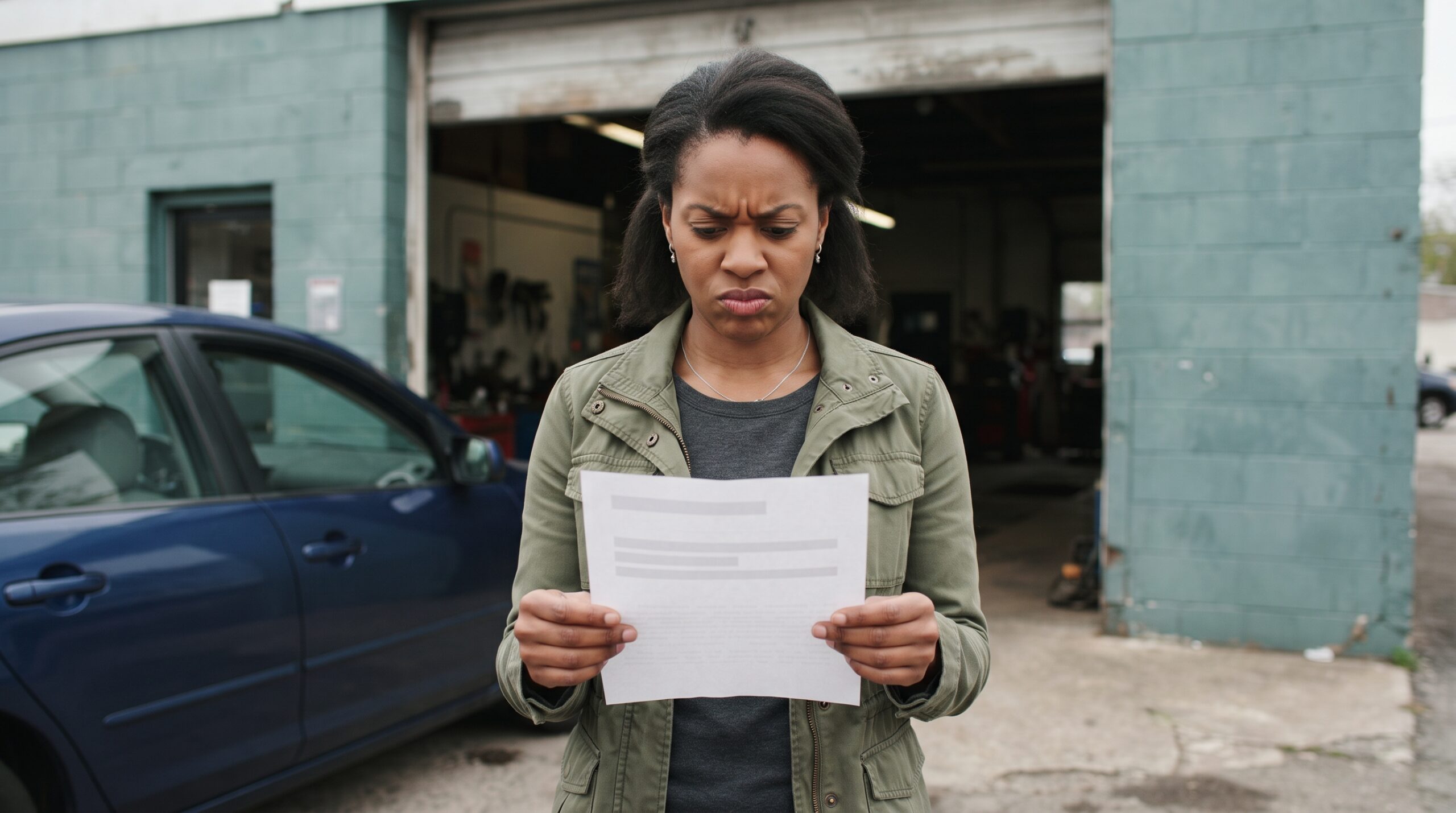
Jasmine paid $9,500 by cashier’s check for a 2016 sedan a private seller in Virginia had driven off a state inspection lane three weeks earlier, the sticker still fresh on the windshield. By the time the check cleared, the money had moved the way it usually does in a private sale, before either side can undo it. She had the car shipped to her home in DeKalb County, Georgia, and took it in for the state’s required emissions test before titling and registering it inside Georgia’s 7-day window for a private purchase. It failed. The catalytic converter that had satisfied Virginia’s safety inspector meant nothing to a Georgia emissions analyzer, and the repair bill landed at $1,348, on a car she had already paid for in full.
Why the inspection you already passed doesn’t travel with the car
State vehicle inspection programs are licensing requirements tied to registering a car in that state, not credentials that travel with it. Virginia requires an annual safety inspection on every registered vehicle, enforced by the Virginia State Police, covering brakes, tires, lights, and steering. That inspection confirms emissions equipment is present and untampered, but it is not a functional tailpipe emissions test. A catalytic converter can look intact and still be failing internally, something Virginia’s checklist never tests for.
Georgia runs an entirely separate program. Its emissions inspection system, branded Clean Air Force, covers 13 metro Atlanta counties, DeKalb among them, and its own guidance says plainly that “an emissions inspection from another state is not transferable and is not acceptable for Georgia registration.” A new resident gets 30 days to test and register a vehicle; an existing resident who buys from a private, out-of-state seller instead falls under the Georgia Department of Revenue’s casual-sale rule: title and registration within 7 days of purchase. Either way, Virginia’s sticker counts for nothing there.
California runs the same logic in reverse. Its Department of Motor Vehicles’ own guide to registering a nonresident vehicle requires a California smog certification for gasoline vehicles from model year 1976 on, before that vehicle’s first state registration, no exception for one that already passed a check elsewhere.
Who owes the repair once the money has already moved
Once a private sale closes, the buyer generally owns whatever the car needs next, a failed home-state inspection included, unless the seller committed fraud or broke a specific written promise. Private sellers are not “merchants” under the UCC, which only implies a warranty of merchantability “if the seller is a merchant with respect to goods of that kind.” Someone selling their own car once is generally not a merchant, so the warranty many buyers assume exists in every used-car sale often does not exist in a private one at all.
Official guidance draws that line directly. Washington’s Attorney General’s office frames the implied warranty of merchantability as a dealer obligation, stating the rule applies to “every used car sold by a dealer.” Nothing in that guidance reaches a private, one-time seller.
What a bill of sale can and cannot waive
A bill of sale is a private contract, and it can only waive rights the two parties actually control. It cannot bind Georgia’s Clean Air Force program, California’s DMV, or any state agency that never signed it, so no “as is” line exempts a car from the buyer’s home-state inspection. It also cannot erase active concealment: “as is” blocks a claim that the seller implied the car was flawless, not a claim that the seller lied outright, the way it wouldn’t cover an undisclosed lien or a check engine light reset the morning of the sale. The bill of sale settles what buyer and seller owe each other, not what the buyer owes the state.
The real math on Jasmine’s $9,500 sedan
Virginia’s inspection checks brakes, tires, lights, and steering, not tailpipe emissions, so a car can pass it clean while carrying an aging catalytic converter that would never survive Georgia’s test. When DeKalb County failed Jasmine’s car, the shop quoted a catalytic converter replacement. CarMD’s 2025 Vehicle Health Index put the average cost to replace one in 2024 at $1,348.
Jasmine’s total: $9,500 purchase price plus $1,348 repair equals $10,848, a full 14.2% above the number on her bill of sale, before she ever drove the car to work.
Frequently asked questions
If a car fails inspection in my state after I bought it privately, is the seller responsible for the repair? Almost never automatically. Once the sale closes, the seller has no ongoing duty to keep the car passing a different state’s inspection standard. You could have a claim only if the seller lied about the car’s condition or hid a known defect. A failed inspection alone, with no evidence of dishonesty, is the buyer’s cost to fix.
Does an “as is” bill of sale protect a private seller from all responsibility? It protects less than most sellers assume. Private sellers usually are not “merchants” under state sales law, so the implied warranty an “as is” clause is meant to waive often never applied to them anyway. What “as is” cannot do is excuse fraud: a seller who actively lied about the car’s condition can still be held responsible.
How long do I have to get a newly purchased car inspected and registered in my state? It depends entirely on your state and situation. Georgia gives someone who buys a car in a private, casual sale 7 days to title and register it, and a covered county’s emissions test has to happen before that registration goes through. A new Georgia resident instead gets 30 days from the move. Check your own state’s deadline before you drive the car home.
Does a passing emissions or safety test from my old state count anywhere else? Generally, no. Georgia’s own guidance states plainly that an emissions inspection from another state is not transferable and is not accepted for Georgia registration. California takes the same position on incoming vehicles. Treat an out-of-state inspection sticker as proof the car passed there, not proof it passes everywhere.
What should I ask a private seller for before I pay, if I’m buying across state lines? Ask for the seller’s current inspection or emissions documents, and separately look up your own state’s rules for out-of-state vehicles before sending any money. A valid sticker from the seller’s state proves the car passed there. It tells you nothing about whether it passes where you actually plan to register it.
Leave a Reply