
7 min read · Last updated September 14, 2026
- No federal law sets how many years an automaker must keep making parts for a discontinued model. The National Highway Traffic Safety Administration (NHTSA) has stated directly that no such requirement exists.
- State-level protection only applies when a whole brand exits the U.S. New York requires the manufacturer to keep letting former dealers service vehicles and supply parts for at least 5 years after withdrawal.
- Ford’s own May 2023 bulletin for the transmission control module (TCM) on the discontinued 2011-2015 Fiesta and 2012-2016 Focus cites “ongoing limited part availability” and created a formal backorder rental-reimbursement process.
- Ford’s one-time free TCM replacement for out-of-warranty cars closed June 30, 2025. Anyone who missed it now buys the part at full price, if a dealer can get one at all.
NHTSA has stated directly that no federal law requires an automaker to keep making parts for a discontinued model for any period, or at all. New York is the exception that proves the rule: it requires five years of guaranteed parts and service, but only once a whole brand exits the U.S., not when a single model like Gary’s Fiesta gets discontinued inside a manufacturer still in business.
In this article
- How parts support winds down after a model dies
- The real timeline of which parts fail first
- How to tell if your car is headed for a parts problem
- Deciding whether to repair, wait, or sell
- Frequently asked questions
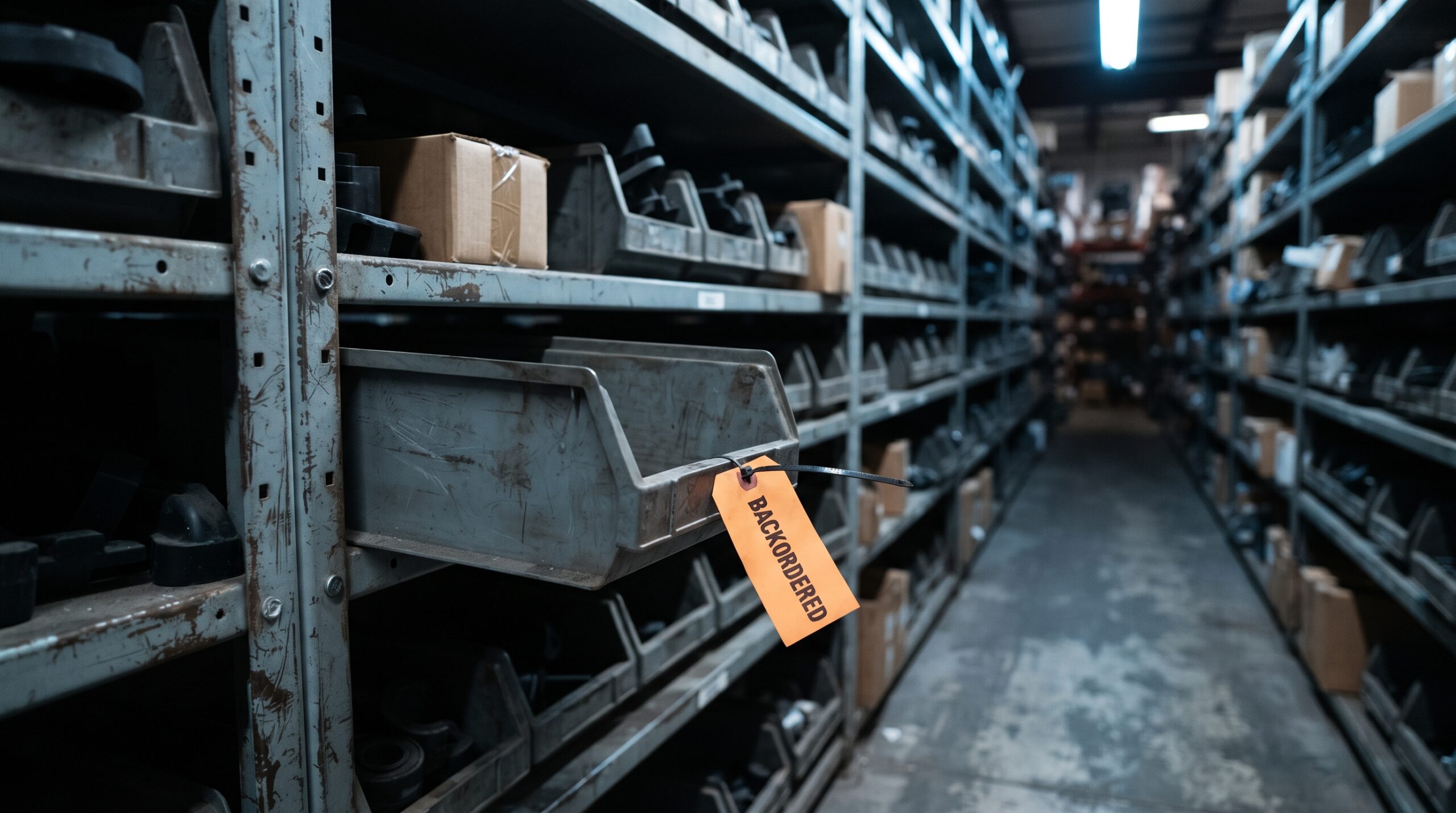
Gary Hendricks bought his 2014 Ford Fiesta in 2019, the year Ford stopped selling the Fiesta in the U.S. Seven years later the transmission started hesitating between gears, and his dealer pulled up the part number for the transmission control module (TCM), the computer running the car’s dual-clutch transmission. On backorder, no ship date given. Ford’s own paperwork already knew this: a bulletin covering the same module on 2011-2015 Fiestas and 2012-2016 Focuses cites “ongoing limited part availability” by name.
How parts support winds down after a model dies
Most owners assume a rule exists that doesn’t. NHTSA has stated directly that no provision in federal law requires a manufacturer to make replacement parts available for any period, or at all. The “10-year rule” people repeat is a different law: under 49 U.S.C. § 30120, a manufacturer must provide a free remedy if a safety defect is found within 10 years of a vehicle’s first sale. That’s a recall protection, not a parts-stocking mandate.
Real protection shows up only when a whole brand exits the U.S., not when one model drops from an active lineup. New York’s Franchised Motor Vehicle Dealer Act requires a withdrawing manufacturer to keep letting former dealers service vehicles and supply parts, including warranty parts, for at least five years. That’s the floor smart fell under when Daimler ended U.S. and Canadian sales after model year 2019, though Mercedes-Benz went further, committing to keep service and parts through authorized dealers indefinitely. A single discontinued nameplate inside a manufacturer still in business, Gary’s actual situation, gets none of that. Which brands over-deliver isn’t random; it tracks how long cars actually last by brand.
The real timeline of which parts fail first
The parts that disappear first are never the ones a new owner worries about. Brake pads, filters, and belts are shared across model years and brands, so independent makers keep supplying them long after a model is dead. What goes scarce is anything unique to one nameplate: single-generation body panels, brand-specific trim, and proprietary electronic modules built for one drivetrain.
Gary’s Fiesta is the textbook case. Ford’s May 2023 bulletin for the 2011-2015 Fiesta and 2012-2016 Focus, both discontinued from the U.S. lineup (Focus in May 2018, Fiesta in May 2019), builds a formal process around it: dealers can request rental reimbursement for what the bulletin calls TCM backorders, and Ford extended the module’s warranty to 10 years or 150,000 miles. A one-time free replacement for cars past that coverage ran only through June 30, 2025. That window is closed; anyone still driving one of these cars pays full price for a part Ford’s own dealers were told to expect delays on.
The dual-clutch transmission behind Gary’s problem is a reminder that powertrain design, not badge, usually decides which parts get exposed like this; see how powertrain design drives reliability risk.
| Case | What ended | What’s actually guaranteed |
|---|---|---|
| Ford Fiesta/Focus transmission control module | U.S. Fiesta sales ended after 2019, Focus after 2018 | Ford extended the module’s warranty to 10 years or 150,000 miles and offered a one-time free replacement, but only through June 30, 2025 |
| smart brand exit | Mercedes-Benz ended U.S. and Canadian smart sales after model year 2019 | Mercedes-Benz voluntarily committed to keep providing service and parts through authorized dealers, with no stated end date |
| Any brand fully leaving the U.S. market | Applies whenever a manufacturer withdraws entirely, not just one model | New York law requires the manufacturer to keep letting former dealers service vehicles and supply parts for at least 5 years after withdrawal |
How to tell if your car is headed for a parts problem
Ask the parts counter the actual lead time, not the generic “it’s on order” line; a real advisor can tell you if it’s a same-week part or a chronic backorder. Check whether the part is shared across model years or unique to your car’s single generation, since single-generation parts thin out first. Watch whether your model’s brand is still active in the U.S., since only a full brand exit triggers any state-level protection, the kind Gary’s single-model Fiesta discontinuation never got.
A model getting killed is often the flip side of a different risk: a brand-new redesign’s first year carries its own defect exposure, covered in first-model-year redesign risk. A mature, final-year nameplate is frequently the safer buy, right up until the parts problem shows up.
Deciding whether to repair, wait, or sell
Repair a shared wear item without hesitation; those parts aren’t going anywhere. If it’s a proprietary module already flagged as scarce, the way Gary’s TCM is, get a firm delivery date in writing before committing to the repair, and ask an independent shop whether a remanufactured unit exists; electronics are what the aftermarket is slowest to cover, since reverse-engineering a proprietary module takes real work, unlike stamping a brake pad. If the dealer can’t give a real timeline and your model’s brand has otherwise moved on, price a trade-in or private sale now, while the car still runs, rather than after a monthslong delay has already cost you its use.
Frequently asked questions
Is there a federal law requiring automakers to keep making parts for a discontinued model?
No. NHTSA has stated there is no provision in federal law requiring a manufacturer to make replacement parts available for any specific period, or at all. The often-cited “10-year rule” is a different law, the safety-defect recall remedy under 49 U.S.C. § 30120, not a parts-stocking requirement.
What happens to service and parts if an entire brand leaves the U.S., not just one model?
It depends on the state. New York’s Franchised Motor Vehicle Dealer Act requires a manufacturer withdrawing from the U.S. market to keep letting former dealers service vehicles and supply parts, including warranty parts, for at least five years after withdrawal. Some manufacturers, like Mercedes-Benz with smart, have voluntarily committed to more.
Which parts actually go scarce first on a discontinued model?
Not the common ones. High-volume wear parts like brake pads, filters, and belts stay available for years because they’re shared across models. The real risk is proprietary electronics built for one specific drivetrain, like the transmission control module on the discontinued Ford Fiesta and Focus, which Ford’s own 2023 bulletin cites as running short.
Does a discontinued model lose resale value faster once parts get hard to find?
Often, yes. Once a specific parts problem is searchable alongside the model name, buyers and their mechanics tend to find it before you list the car. If a dealer can’t give you a real timeline on a needed part and the brand has otherwise moved on, that’s a signal to price a sale now rather than after a repair drags out.
Should I avoid buying a used car whose model was just discontinued?
Not automatically. A mature nameplate in its last year on sale is often a proven, well-sorted design. What matters more is whether the brand itself is still operating in the U.S., since a single-model discontinuation carries far less parts risk than a full brand exit, and whether your model’s known failure parts already show up in manufacturer bulletins.
Leave a Reply