7 min read · Last updated October 5, 2026
- Washington and Virginia cap a shop at 10% over the written estimate before authorization is required (Virginia allows 20% on vehicles at least 25 model years old).
- California and New York require the shop’s customer to consent to any amount over the estimate, even one dollar, before the work happens.
- A jump from $620 to $830 is a 34% increase, more than triple Washington’s 10% tolerance.
- Supplemental authorization can be a phone call, a text, or a signature. California specifically requires the shop to log who approved it, when, and how.
Can a mechanic charge you more than the estimate without asking first? In Washington and Virginia, yes, up to 10% over the written number. In California and New York, no, not even one dollar over.
In this article
- Can a mechanic charge you more than the estimate?
- What “supplemental authorization” actually means
- The math: a $620 estimate becomes $830
- What your state requires before the shop can bill you more
- What to do if the shop already did the work and billed you
- Frequently asked questions
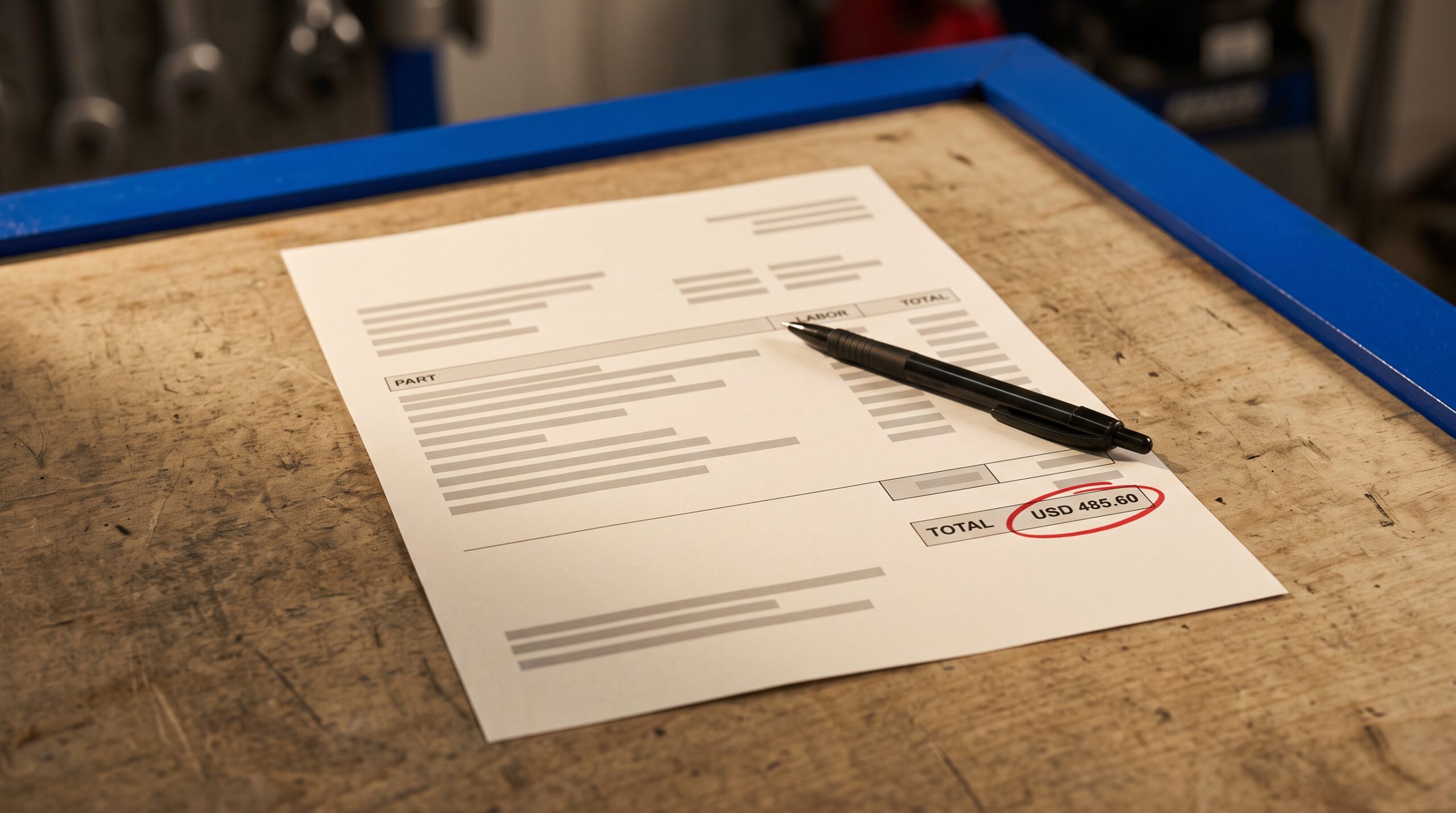
Say your brake job was quoted at $620. The shop calls mid-repair: the total is now $830 because a caliper seized once the wheels came off.
That kind of call makes car owners nervous, and it should prompt a question before a yes. This article covers what your state requires, what counts as real authorization, and what to do if the shop skipped that step. A repair that drags on for weeks while a part is on backorder raises a related question: who pays for the rental car you need in the meantime.
Can a mechanic charge you more than the estimate?
State auto repair laws almost all require a written estimate before work starts, then draw a line on how far the final bill can run past that number. Cross the line, and the shop needs your authorization, not just a courtesy call telling you the news.
Where that line sits is the part that actually varies. Washington caps the overage at 10% above the written total under Revised Code of Washington (RCW) 46.71.025, the state’s automotive repair chapter.
Virginia sets the same 10% ceiling under its Automobile Repair Facilities Act, Code of Virginia § 59.1-207.3. That cushion grows to 20% for vehicles at least 25 model years old.
California and New York take a stricter line. California’s Business and Professions Code § 9884.9 blocks any charge above the estimated price without the customer’s oral or written consent, no percentage cushion at all. New York’s Vehicle and Traffic Law § 398-d uses nearly identical wording: no charge in excess of the estimate without the customer’s consent.
What “supplemental authorization” actually means
Authorization is not the shop telling you the new price. It is you agreeing to the new price, and California specifically expects the shop to prove it happened.
California’s regulations spell this out in practice. If the shop gets your okay by phone, it has to log the date, time, who you spoke to, the phone number, and the extra repairs and cost. A text or email works too, as long as it describes the extra work and the new total.
Washington’s estimate form shows the same idea from the customer’s side. The form lets you flag that the shop must call if the price goes more than 10% over, or set your own dollar cap instead. Either way, the paper trail is what protects you later.
The math: a $620 estimate becomes $830
The increase is $830 minus $620, or $210. Divide $210 by the original $620 and you get 0.339, a 34% jump.
Compare that to Washington’s 10% tolerance. Ten percent of $620 is $62, so the shop could go up to $682 without asking. An $830 total blows past $682 by $148, which means Washington law requires your authorization before that work happens.
Under California or New York’s zero-tolerance rule, the shop needed your consent the moment the real number crossed $620.01, long before it reached $830. Either way, the fix is the same: ask what changed, and ask for the new total in writing. Do not say yes until you have both in hand.
What your state requires before the shop can bill you more
Of the four state rules verified for this article, two allow no overage at all without consent and two cap it at a flat 10%. That split means there is no single percentage to memorize nationwide, so check your own state’s rule or ask the shop which standard it follows.
| State | Overage allowed before authorization is required | Statute or regulation |
|---|---|---|
| California | None. Any amount over the estimate needs the customer’s oral or written consent. | Business and Professions Code § 9884.9 |
| New York | None. Any amount over the estimate needs the customer’s consent. | Vehicle and Traffic Law § 398-d |
| Virginia | 10% over the written estimate (20% for vehicles at least 25 model years old) | Code of Virginia § 59.1-207.3, Automobile Repair Facilities Act |
| Washington | 10% over the written estimate total (shop may not collect more than 110% without authorization) | RCW 46.71.025 |
For more on what should be on that original paperwork, see how to read a car repair estimate. For how that labor line gets built before an estimate ever reaches you, see flat-rate book time.
What to do if the shop already did the work and billed you
If the shop skipped authorization and the car is already fixed, you still have options. Start by asking for an itemized invoice that separates the originally authorized work from the extra charges.
Pay the amount you actually authorized, put the dispute over the rest in writing, and name the statute. Telling a California shop “Business and Professions Code § 9884.9 requires my consent before charging over the estimate” carries more weight than a general complaint.
If the shop won’t budge, file a complaint with your state’s auto repair regulator. Dispute the charge with your credit card company if you paid that way, or consider small claims court for the disputed amount. Keep every text, call log, and copy of the estimate as proof.
Frequently asked questions
What percentage can a repair shop go over an estimate without permission? It depends on the state. Washington and Virginia allow up to 10% over the written estimate before the shop needs authorization, and Virginia stretches that to 20% for vehicles at least 25 model years old. California and New York require consent for any amount over the estimate, even one dollar.
Can a shop keep my car until I pay the full bill, including charges I never approved? Many states let a shop hold your car under a mechanic’s lien, but that lien typically covers only authorized charges. Ask for an itemized invoice separating approved work from the disputed amount, pay the approved portion, and contest the rest in writing.
Does a text message count as valid authorization for extra repair work? In most states, yes, if it clearly describes the additional work and the new cost. California’s regulations specifically allow electronic authorization and require the shop to log the details on the work order. Save the text thread as your own copy of the approval.
What should I say when the shop calls with a higher price mid-repair? Ask exactly what changed, the new total dollar amount, and whether that increase exceeds your state’s authorization threshold. Request the revised number in writing or by text before you approve anything, and ask how much extra time the added work will take.
Where do I file a complaint if a shop charged me more than the estimate without asking? Contact your state’s auto repair regulator. California’s Bureau of Automotive Repair handles complaints there. Washington routes them through the Attorney General’s office, while New York and Virginia direct complaints to their motor vehicle or consumer affairs agencies.
Leave a Reply