6 min read · Last updated October 21, 2026
- Crossing 100,000 miles costs sellers an extra $150 to $210 beyond normal depreciation, per a study of 22 million used-car sales.
- Kelley Blue Book (KBB) prices depreciation smoothly, but real sale prices step down by that extra $150 to $210 right at round-number marks like 100,000 miles.
- On an illustrative 2018 Toyota Camry example, selling at 99,000 miles instead of 101,000 is worth $300 to $360, not just the $150 a smooth depreciation curve shows.
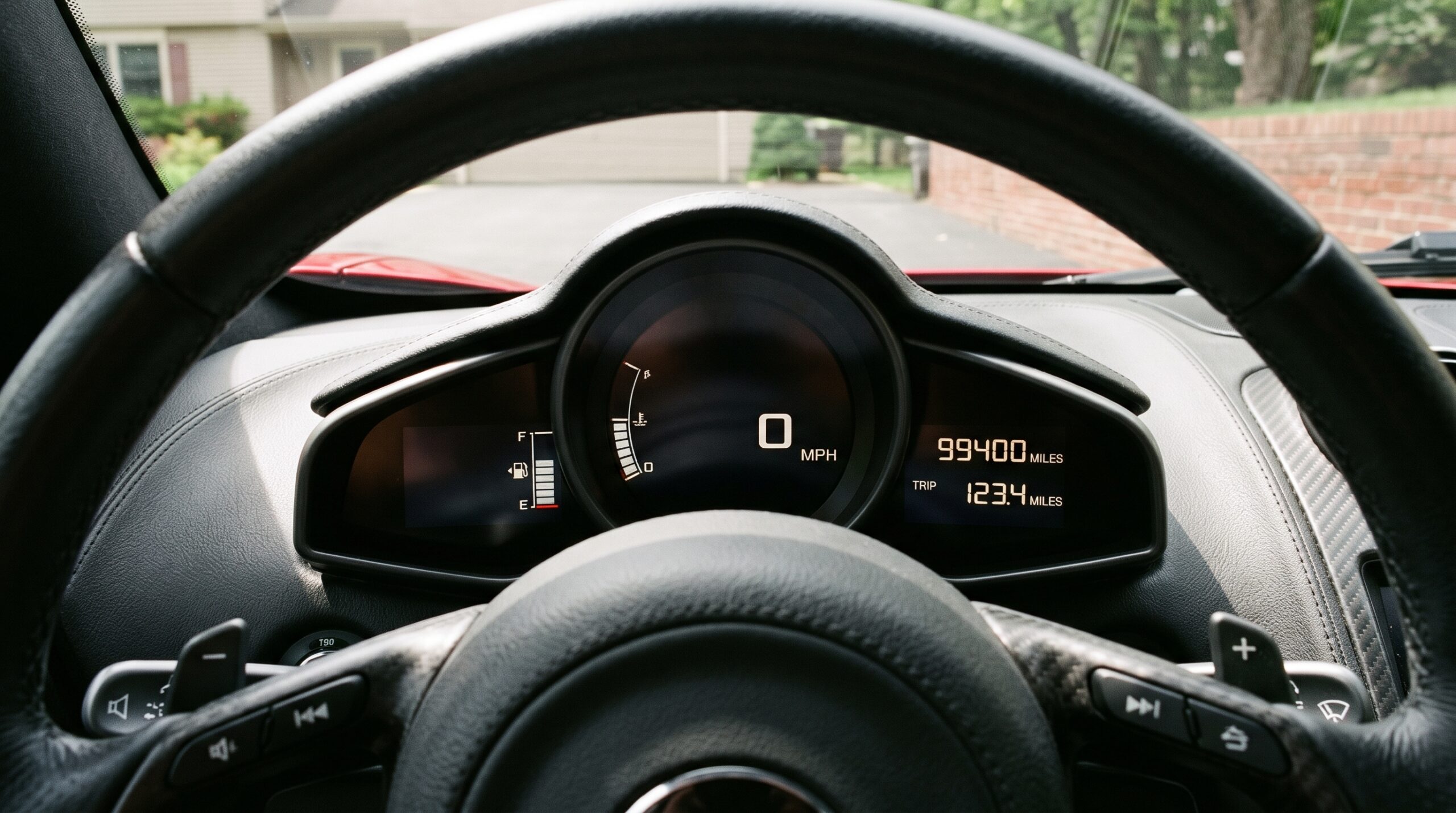
A car’s resale value takes its sharpest hit at 100,000 miles, where sale-price data shows an extra $150 to $210 drop beyond normal mileage depreciation. Selling in the weeks before the odometer crosses that mark is worth real money.
In this article
- Why your car’s value drops in steps, not a straight line
- The 100,000-mile test case: a 2018 Toyota Camry
- The other cliffs: redesigns, warranties, and when to just let go
- Frequently asked questions
The mileage where your car’s value drops hardest is 100,000 miles, where sellers lose an extra $150 to $210 beyond ordinary depreciation, per a 22-million-transaction study of used-car sales. In a representative example, a 2018 Toyota Camry worth an estimated $15,040 at 99,000 miles would be worth about $14,890 just 2,000 miles later on mileage alone. That $150 gap is before the threshold penalty even hits.
Why your car’s value drops in steps, not a straight line
Kelley Blue Book’s own valuation tool treats depreciation as smooth. Pull a private-party quote for the same car at 95,000 miles and again at 105,000 miles, and the line between them looks like a ramp, not a staircase. That is the tool averaging thousands of sales into one curve, which hides what happens right at the threshold.
Economists Nicola Lacetera, Devin Pope, and Justin Sydnor tested that assumption against more than 22 million wholesale used-car transactions. They found real sale prices drop in discrete jumps at every 10,000-mile mark between 10,000 and 100,000 miles, in the $150 to $210 range, not a steady slope. A car with 79,900 to 79,999 miles sold for about $210 more than an identical car just over 80,000 miles.
Buyers are not calculating wear mile by mile. They read the leftmost digit on the odometer, react to it, then filter listings by round numbers before looking at a single car.
Sellers react to this pattern too. The same wholesale auction data shows volume spikes right before each 10,000-mile threshold. Plenty of sellers already time their listings to beat the number, even without knowing the exact dollar figures behind it.
The 100,000-mile test case: a 2018 Toyota Camry
Kelley Blue Book’s 2018 Toyota Camry LE page prices today’s resale value at $14,200. To isolate the mileage effect on its own, the example below applies a smooth, illustrative depreciation pace of $75 per 1,000 miles, a representative rate for this model and class, rather than treating each mileage point as a live KBB quote for that exact mileage.
Starting from an estimated $15,340 at 95,000 miles, that smooth pace puts the car at $15,040 by 99,000 miles. At 101,000 miles, once the odometer rolls into six figures, the same smooth pace already implies $14,890. By 105,000 miles, it sits at an estimated $14,590.
| Mileage | Typical Private-Party Value | Note |
|---|---|---|
| 95,000 miles | $15,340 | Comfortably under the threshold |
| 99,000 miles | $15,040 | Last stop before six figures |
| 101,000 miles | $14,890 | Just over 100,000 on the dash |
| 105,000 miles | $14,590 | Smooth decline continues |
On its own, that smooth curve is a $150 loss across those 2,000 miles, matching the $75-per-1,000-mile rate used in the example. Real-world transaction data suggests the actual hit runs worse.
Once a car is visibly over 100,000 miles, buyers who filter listings at round numbers never see it at all. The ones who do apply something close to the $150 to $210 discount researchers measured at the 80,000-mile mark.
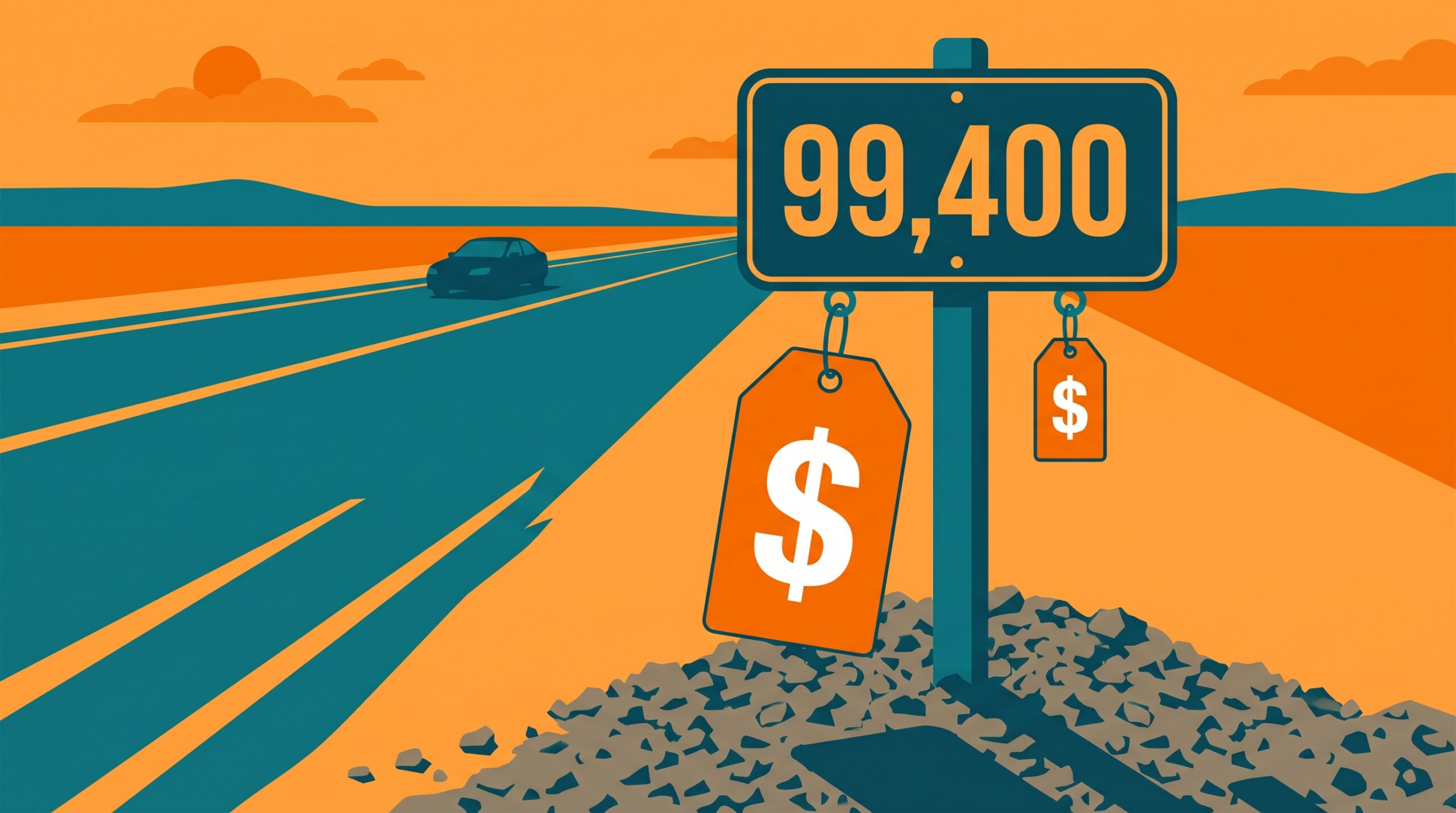
Stack that on the $150 the smooth curve already shows. Selling at 99,000 miles instead of 101,000 is worth $300 to $360 to the seller in this illustration, not just the $150 mileage alone would suggest.
That gap only shows up if the car actually sells before the threshold. A trade-in appraisal, an instant cash offer, and a private-party listing price the same mileage differently, so the channel you pick changes how much of that gap you keep.
The other cliffs: redesigns, warranties, and when to just let go
Mileage is not the only cliff, since a model-year redesign does similar damage to resale value the moment the new body style reaches dealer lots. Toyota’s own Camry is the clear case: the eighth-generation XV70, sold from 2018 through 2024, was replaced by the fully redesigned, hybrid-only ninth-generation XV80 for the 2025 model year. Any 2018-2024 Camry on the road today is now the outgoing generation, even though the newest examples are barely a few years old.
Shoppers compare photos, not spec sheets, and a sedan that looked current one year can look dated the next once the redesigned model arrives. Dealers often preview a next-generation model two to three months before it reaches lots, and demand for the current generation softens as soon as those photos leak.
A lapsed factory warranty matters less than most sellers assume, since typical powertrain coverage windows rarely line up with where the real depreciation cliffs sit. Condition, maintenance records, and the number on the odometer carry more weight with a private-party buyer than whether the warranty lapsed last month or three years ago.
If a car has already crossed every cliff, mileage, age, and body style, and would cost more to fix than it would fetch, selling it whole stops making sense. At that point, donating it, scrapping it, or parting it out usually nets more than listing it and waiting for a buyer who never shows up.
Frequently asked questions
What mileage makes a car’s value drop the most? Value drops fastest right around 100,000 miles. Kelley Blue Book’s own pricing already shows a steady decline through that range. A study of 22 million used-car sales found an extra $150 to $210 drop at each 10,000-mile mark, beyond normal wear, because buyers react to the odometer’s leftmost digit.
Is the 100,000-mile cliff real, or just a myth? It is real in sale-price data, even though appraisal tools like Kelley Blue Book show a smooth curve. Researchers studying wholesale auctions found discontinuous price drops at every 10,000-mile threshold up to 100,000 miles. The effect comes from buyer psychology, not mechanical risk, since a car at 99,900 miles is not meaningfully different from one at 100,100.
Does a model-year redesign lower resale value on the old version? Yes. Once a redesigned model year reaches dealer lots, the outgoing generation looks dated by comparison, even with identical mileage and condition. Private-party and trade-in values on the older body style typically soften within a few months of the redesign’s release, separate from any mileage-based depreciation the car was already experiencing.
Does it matter if my car’s warranty has expired before I sell it? Less than most sellers expect. Mileage thresholds like 100,000 miles move buyer behavior far more than a lapsed factory warranty does. Most powertrain coverage windows do not line up with where the real depreciation cliffs sit, and condition and maintenance records matter more to a private-party buyer than the warranty date.
Should I sell my car before or after it hits 100,000 miles? Before, if selling is already on the table, since KBB pricing data and academic sales research both point the same direction. A car sold at 99,000 miles nets more than the same car sold at 101,000, by more than the extra 2,000 miles of wear alone would explain. Waiting past the threshold costs real money for no added benefit.
Leave a Reply