
6 min read · Last updated October 16, 2026
- A do-it-yourself pre-trip check costs $0 and takes about 20 minutes; many shops add a multi-point inspection free with any paid service, per the American Automobile Association (AAA).
- Electrical issues, mostly a failing battery, caused 23% of AAA’s tow-worthy breakdowns. Tire damage caused another 10%, the two systems this checklist covers first.
- Tread below 2/32 inch is the point the National Highway Traffic Safety Administration (NHTSA) treats as worn out. Automakers recommend replacement at 6 years old regardless of tread; tire manufacturers put the outside limit at 10 years.
- A tow plus one hotel night for a breakdown 300 miles from home runs $359, against $0 for the do-it-yourself inspection that could have caught the problem first.
A pre-trip inspection costs nothing when you do it yourself and takes about 20 minutes. A breakdown 300 miles from home runs $359 once a tow and a hotel room are added in.
In this article
- The 10-point pre-trip vehicle inspection
- Why battery and tire failures cause most tow-worthy breakdowns
- What skipping the check actually costs
- What to do with what you find
- Frequently asked questions
A full pre-trip vehicle inspection is ten checks covering almost everything that strands a driver far from home: tires, battery, fluids, lights, belts, and brakes. Most take under two minutes each and need no tools beyond a tread gauge and a flashlight. None of it costs anything done yourself, and many shops run the same checklist as a free multi-point inspection with any paid service.
The 10-point pre-trip vehicle inspection
Run this list the weekend before any trip over a few hours, not the morning you leave, so a failed item still has time to get fixed.
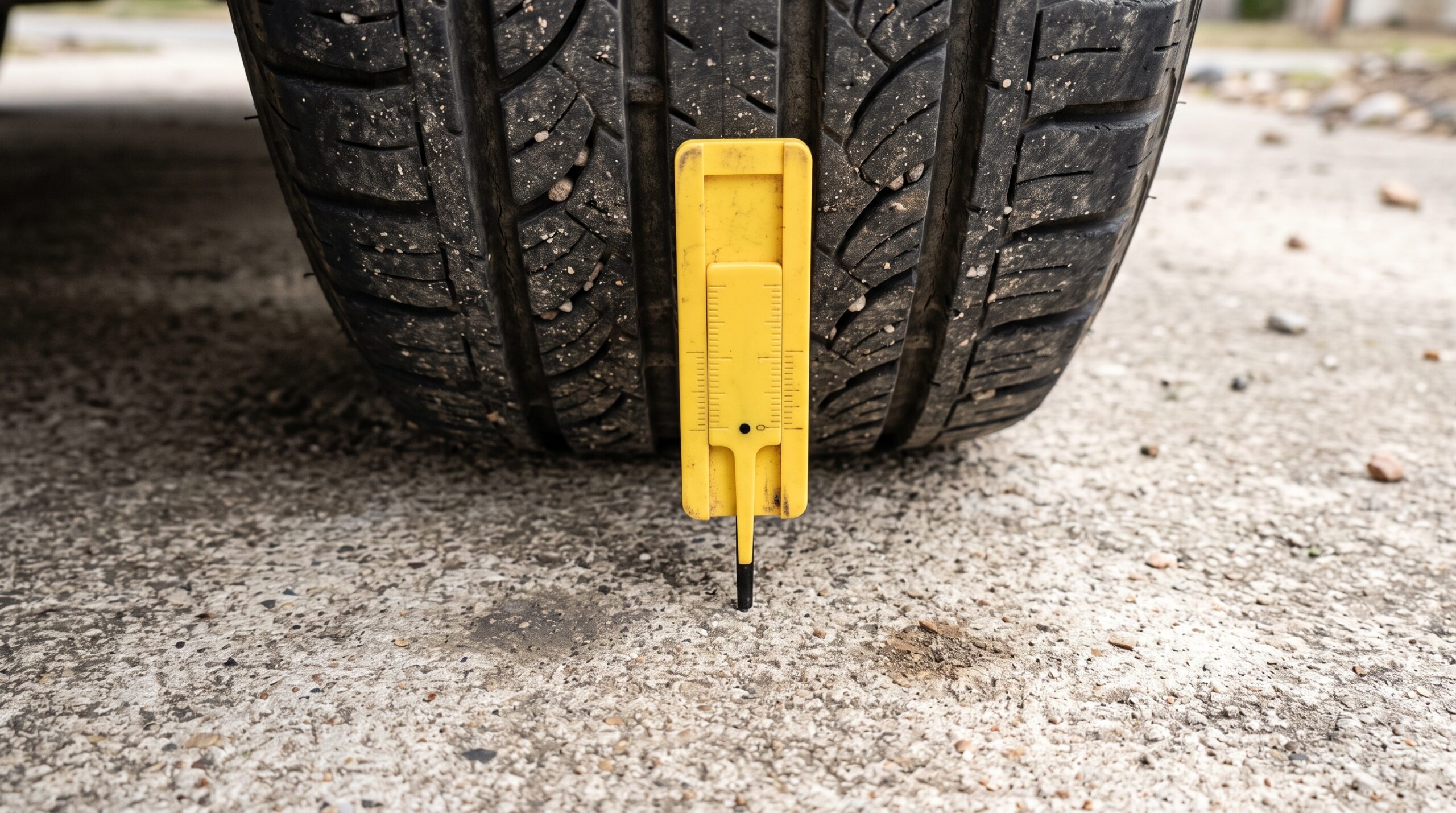
- Tread depth on all four tires and the spare, checked with a gauge or a penny; replace anything near the 2/32-inch wear bars
- Tire pressure on all four tires and the spare, matched to the number on the driver’s door jamb sticker, not the tire sidewall
- Battery age and terminal corrosion; most batteries last 3 to 5 years, per AAA
- Engine oil level and color on the dipstick
- Coolant level in the clear overflow tank, checked cold
- Brake fluid and power steering fluid levels in their reservoirs
- Wiper blades for cracking, splitting, or streaking on the glass
- Every exterior light: headlights, taillights, brake lights, and turn signals
- Belts and hoses for cracks, fraying, or a soft, swollen feel
- Brake pad thickness or a squeal under light braking, plus any open recall checked by vehicle identification number (VIN) at NHTSA.gov
A shop can run the same list as a multi-point inspection. Most do it free with a paid service, or bill it against the flat-rate book time they already use for other work. Either way, it rarely runs more than a half hour.
Why battery and tire failures cause most tow-worthy breakdowns
AAA’s own analysis of its roadside data found electrical issues, mostly a dying battery, caused 23% of breakdowns serious enough to need a tow. Tire damage caused another 10%, and engine cooling failures caused 11%. Cars 10 years and older are twice as likely to need roadside help, and four times as likely to need an actual tow.
A car already carrying a repair history past 150,000 miles is exactly the vehicle this checklist matters most for. Older components fail without much warning, and a long trip is the worst place to find out.
What skipping the check actually costs
Say a dying battery or a tire failure strikes 300 miles into a 500-mile trip, and the car needs a tow to the nearest shop. AAA’s own guide to getting towed puts an out-of-pocket tow, without roadside coverage, at a base fee of $84 to $150 plus $2.25 to $5.00 a mile.
Take a tow 20 miles to the nearest shop, with a $120 base fee and $3.00 a mile: $120 plus $60 in mileage comes to $180. Add one night in a motel while the car gets fixed, at the current U.S. average hotel rate of $179, per CoStar’s weekly hotel industry data. $180 plus $179 comes to $359.
The do-it-yourself version of this checklist costs $0 and took 20 minutes the weekend before. That gap, $359 against nothing, is before counting the lost day of the trip itself.
What to do with what you find
A worn wiper blade or low washer fluid is a same-day fix, no appointment needed. Tread near 2/32 inch, the point NHTSA’s own safety standard treats as worn out, a battery past 5 years, and a cracked belt are different. Replace those before you leave, not after you are stranded 300 miles from home.
Some automakers recommend tire replacement at 6 years regardless of remaining tread. Tire manufacturers themselves put the outside limit at 10 years, per NHTSA’s own tire-aging research summary. That date has nothing to do with how the tread looks.
An open recall costs nothing to check and usually nothing to fix at a dealer. Clear it before a long trip, not after a warning light forces the issue mid-drive.
Frequently asked questions
How long does a pre-trip vehicle inspection actually take? Most of the 10 checks take under two minutes each, so a full pass runs about 20 minutes if you already know where your fluid reservoirs and tire gauge are. Checking all four tires and the spare takes the longest. Do it a day or two before you leave, not the morning of.
Can I do this myself, or do I need a mechanic? Every item on this list is checkable with a tire gauge, a flashlight, and the owner’s manual for fluid locations. A shop adds the most value on brake pad thickness and belt condition, which are easier to judge with the car on a lift. Many shops run a full multi-point inspection free with any paid service.
How old can a tire be before it needs replacing, even with good tread? Some automakers recommend replacement at 6 years from the manufacture date regardless of remaining tread. Tire manufacturers themselves put the outside limit at 10 years, per the National Highway Traffic Safety Administration’s own tire-aging research. Check the last four digits of the Department of Transportation (DOT) code on the sidewall for the exact week and year built.
What actually causes most roadside breakdowns on a long trip? AAA’s own analysis of its roadside calls found electrical issues, mostly a failing battery, caused 23% of breakdowns serious enough to require a tow, with tire damage causing another 10%. Together those two systems account for a third of all tow-worthy breakdowns, which is why this checklist covers them first.
Does AAA or a repair shop offer a free pre-trip inspection? Many shops offer a multi-point inspection free or at low cost, especially alongside any paid service. AAA members get one free upon request at AAA Approved Auto Repair shops and AAA Tire and Auto Centers. Ask when you book, since pricing and availability vary by shop.
Leave a Reply