
7 min read · Last updated October 5, 2026
- The federal hybrid battery warranty floor is 8 years or 100,000 miles, whichever comes first.
- California and states that follow California Air Resources Board (CARB) rules extend that to 10 years or 150,000 miles for certified vehicles.
- A module-level cell repair runs about $499 to $699; a remanufactured pack runs $999 to $1,899; a new pack runs $1,499 to $2,999.
- On a 2016 Toyota Prius at 110,000 miles, the $2,250 new-pack option actually costs less per year of coverage than the cheaper remanufactured option.
A hybrid battery replacement costs $1,499 to $2,999 for a new pack once it’s out of warranty, and a module-only repair can run as little as $499. The federal warranty on that battery ends at 8 years or 100,000 miles. It stretches to 10 years or 150,000 miles only in California and the states that follow its emissions rules.
In this article
- The federal floor: 8 years or 100,000 miles
- Why California owners get more time
- What a hybrid battery replacement costs
- The math on a 2016 Prius at 110,000 miles
- Deciding what to do when the warranty runs out
- Frequently asked questions
The federal floor: 8 years or 100,000 miles
Hybrid battery coverage comes from emissions law, not a comfort warranty. The Clean Air Act requires automakers to warranty emissions-related parts, and the Environmental Protection Agency (EPA) enforces that through federal regulation. For hybrid traction batteries, the long-standing nationwide baseline has been 8 years or 100,000 miles, whichever comes first.
Toyota’s own warranty announcement confirms this was the standard hybrid battery coverage nationwide before the company voluntarily extended it for 2020-and-later models. Honda, Ford, and most other hybrid makers set the same 8-year, 100,000-mile floor on their earlier hybrids.
That floor tracks the original in-service date and odometer reading, not the ownership history. A used 2016 Prius bought at 60,000 miles still runs out of federal battery coverage at 8 years or 100,000 miles from when it was first sold. Resale date doesn’t change it.
Why California owners get more time
California runs its own emissions program, and the California Air Resources Board (CARB) requires longer battery coverage than the federal floor. CARB’s own warranty fact sheet spells out which cars qualify.
Vehicles certified as Partial Zero Emission Vehicles (PZEV) from 2001 to 2017, or Transitional Zero Emission Vehicles (TZEV) from 2018 to 2025, qualify. Those vehicles carry a 10-year or 150,000-mile battery warranty in California and in states that adopt its rules.
That’s a real gap between the federal floor and the CARB-state figure: four more years and 50,000 more miles of coverage. Not every hybrid qualifies, though. Some hybrid trims and model years were never PZEV- or TZEV-certified, so they don’t get the longer battery warranty even if they’re registered in California.
Check the original warranty booklet or the window sticker for a PZEV or TZEV certification before assuming the longer coverage applies.
What a hybrid battery replacement costs
Three real options exist once a hybrid battery fails outside its warranty: a new pack, a remanufactured pack, or a module-level repair that swaps only the weak cells. Prices vary by make, model, and cell count. The ranges below come from quoted installed prices at independent aftermarket hybrid-battery shops, not a neutral cost study. Treat them as real market quotes to compare against, not a fixed national rate.
| Option | Typical price range | What you’re buying |
|---|---|---|
| Module-level cell repair | $499 – $699 | Only the weak cells (usually 2 to 8 out of 20 to 40) are swapped; rest of the pack is untouched |
| Remanufactured pack | $999 – $1,899 | Every cell tested, sorted, and rebalanced into a complete pack, typically 12 to 24 months warranty |
| New pack | $1,499 – $2,999 | All-new cells and wiring harness, typically 36 to 48 months warranty |
A cell repair is the cheapest fix on paper, but it only replaces what’s failing right now. Exclusively Hybrid’s own pricing page notes a technician typically finds 2 to 8 bad cells out of the 20 to 40 in a pack. The untouched cells are the same age as the ones that just failed.
The math on a 2016 Prius at 110,000 miles
Dave owns a 2016 Toyota Prius with 110,000 miles, registered in Ohio, which follows the federal emissions program rather than California’s. Both clocks on his federal battery warranty have already run out.
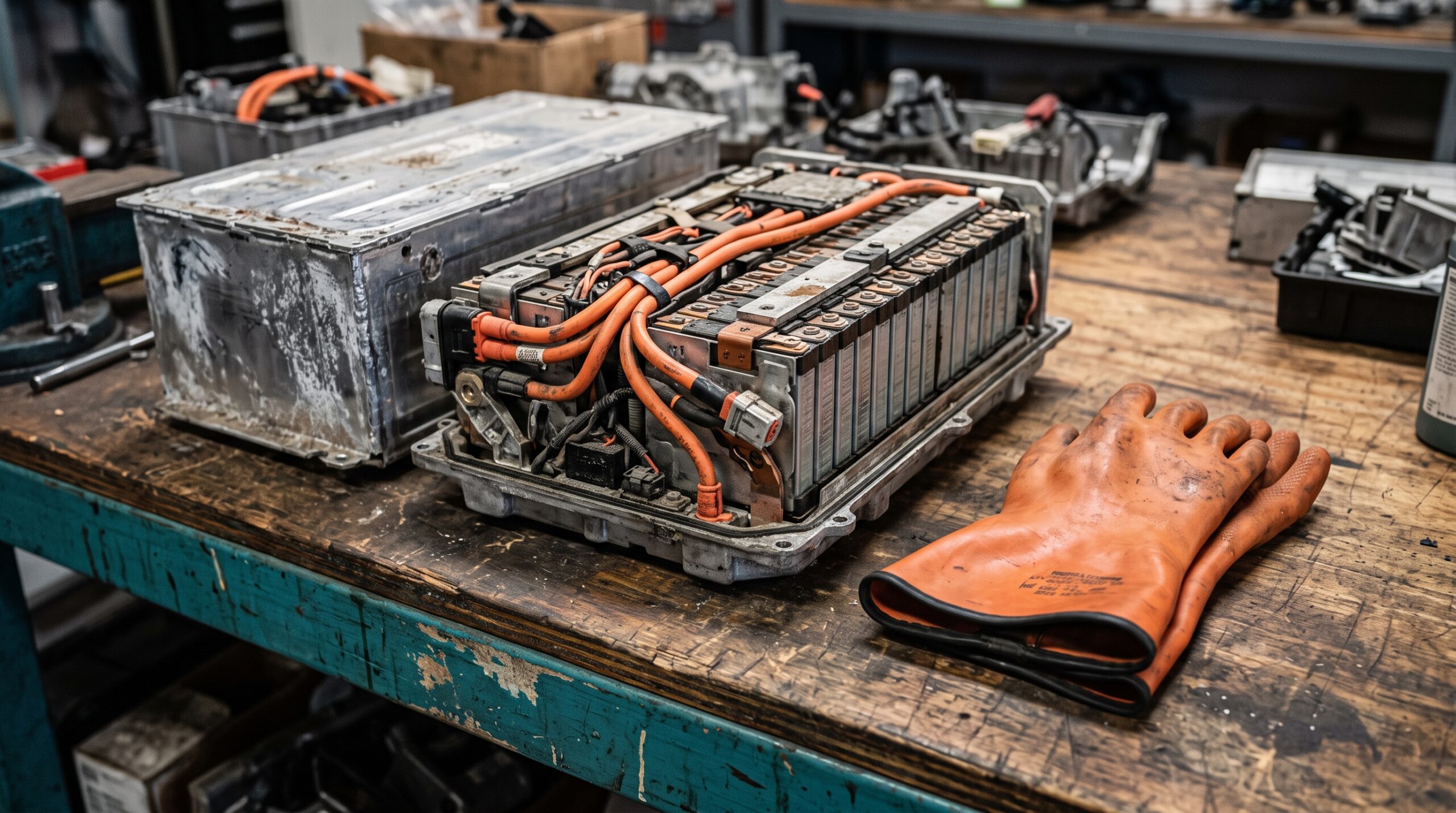
His battery warning light comes on, and a shop finds 2 of the Prius’s 28 cells reading weak. He gets three real numbers.
The module repair, replacing just those 2 cells, runs $599 with no meaningful warranty behind it. A remanufactured pack with a 24-month warranty runs $1,650. A new pack with a 48-month warranty runs $2,250.
Divide each price by its warranty term and the ranking flips. The new pack works out to $562.50 per year of covered confidence. The remanufactured pack works out to $825 per year.
The $599 repair has no warranty term to divide by, and the shop warns 2 more cells could fail within a year or two, stacking another bill on top.
If Dave plans to keep the Prius another 4 years, the new pack is both the most durable and the cheapest option per year. If he’s planning to sell within a year, the $599 repair is the rational bet, as long as he accepts the risk the fix doesn’t hold.
Deciding what to do when the warranty runs out
Start by confirming where the warranty actually stands. Pull the original warranty booklet, or call a dealer’s service desk with the vehicle identification number (VIN). Check both the in-service date and current mileage against the federal 8-year, 100,000-mile floor and, if applicable, the CARB-state 10-year, 150,000-mile figure.
Next, get an actual diagnostic before pricing anything. A shop that tests individual cells can tell you whether you’re looking at a 2-cell repair or a pack degraded across the board. The dashboard warning light alone won’t tell you which price tier applies.
Finally, weigh the repair cost against how long you’re keeping the car, the same math that applies to any repair-or-replace decision. A hybrid battery repair sits inside the broader pattern of bills that show up between 100,000 and 150,000 miles. It’s expensive, but rarely a reason by itself to walk away from a car that’s otherwise sound.
A hybrid’s battery risk is a separate question from its routine maintenance bill. AAA’s five-year maintenance data compares a hybrid sedan against a four-cylinder and a V6, and the routine-maintenance side of the ledger usually favors the hybrid even before a battery replacement enters the picture.
Frequently asked questions
What is the federal warranty on a hybrid battery? Federal law requires automakers to cover hybrid traction batteries for emissions-related defects for at least 8 years or 100,000 miles, whichever comes first. That’s a minimum, not a ceiling. Some automakers have since voluntarily extended it further on newer models, so check your own warranty booklet for the exact terms.
Does a hybrid battery warranty transfer to a used-car buyer? Yes. The warranty tracks the vehicle’s original in-service date and odometer reading, not the current owner. A used hybrid bought at 60,000 miles still runs out at the original 8-year, 100,000-mile mark from when it was first sold new. It doesn’t matter how many owners it’s had since.
How much does a hybrid battery replacement cost without warranty coverage? Expect roughly $499 to $699 for a module-level cell repair, $999 to $1,899 for a professionally remanufactured pack, and $1,499 to $2,999 for a full new pack. The exact price depends on the make, model, and how many cells actually need replacing.
Is a remanufactured hybrid battery as good as a new one? A remanufactured pack has every cell tested, sorted, and rebalanced, and typically carries a 12 to 24 month warranty versus 36 to 48 months on a new pack. It’s usually cheaper up front but covers a shorter stretch of ownership.
Can I just replace the bad cells instead of the whole pack? Yes, and it’s the cheapest option, often $499 to $699. But a shop is only fixing the cells testing weak today. The rest of the pack is the same age, and a second failure within a year or two is a real possibility.
Leave a Reply