5 min read · Last updated October 30, 2026
- Tire pressure drops about 1 to 2 psi (pounds per square inch) for every 10°F change in temperature, confirmed by the U.S. Tire Manufacturers Association (USTMA).
- The Tire Pressure Monitoring System (TPMS) warning light is only required to trigger at 25 percent below the vehicle’s recommended cold pressure, under Federal Motor Vehicle Safety Standard (FMVSS) 138.
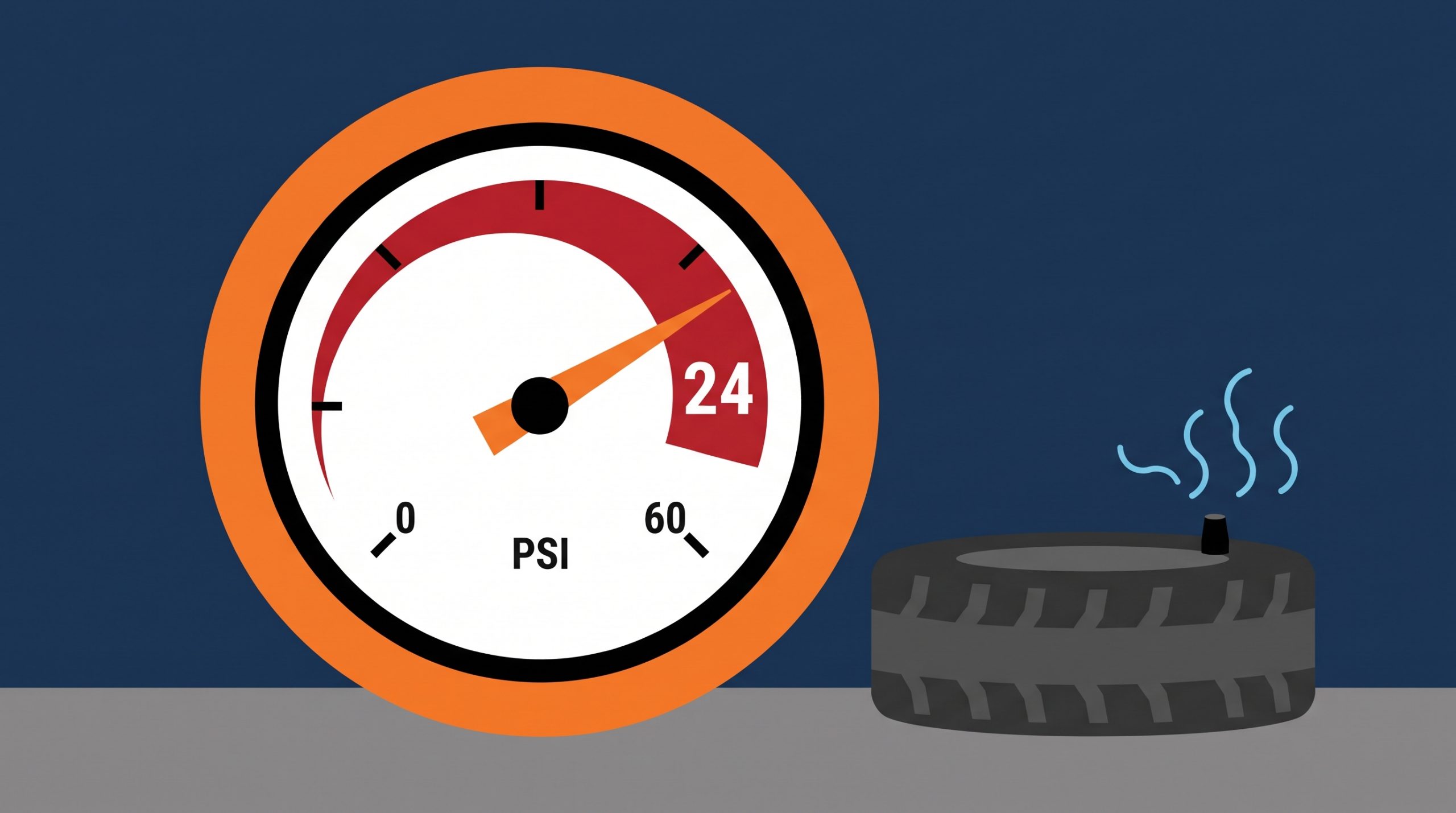
- On a 32 psi placard tire, that is an 8 psi loss, often a 40 to 80°F swing, before the light comes on.
- Under-inflation cuts fuel economy about 0.2 percent for every 1 psi of average pressure lost, per the U.S. Department of Energy (DOE).
Tire pressure falls roughly 1 to 2 psi per 10°F. The TPMS light only warns once a tire drops 25 percent below the door jamb placard pressure, a gap of about 8 psi on a typical 32 psi tire.
In this article
- Why Cold Weather Drops Tire Pressure
- Why the TPMS Light Waits Until You’re a Quarter Flat
- Door Jamb Placard vs. Sidewall Max: Which Number to Trust
- What Driving on Low Tires Actually Costs You
- Frequently asked questions
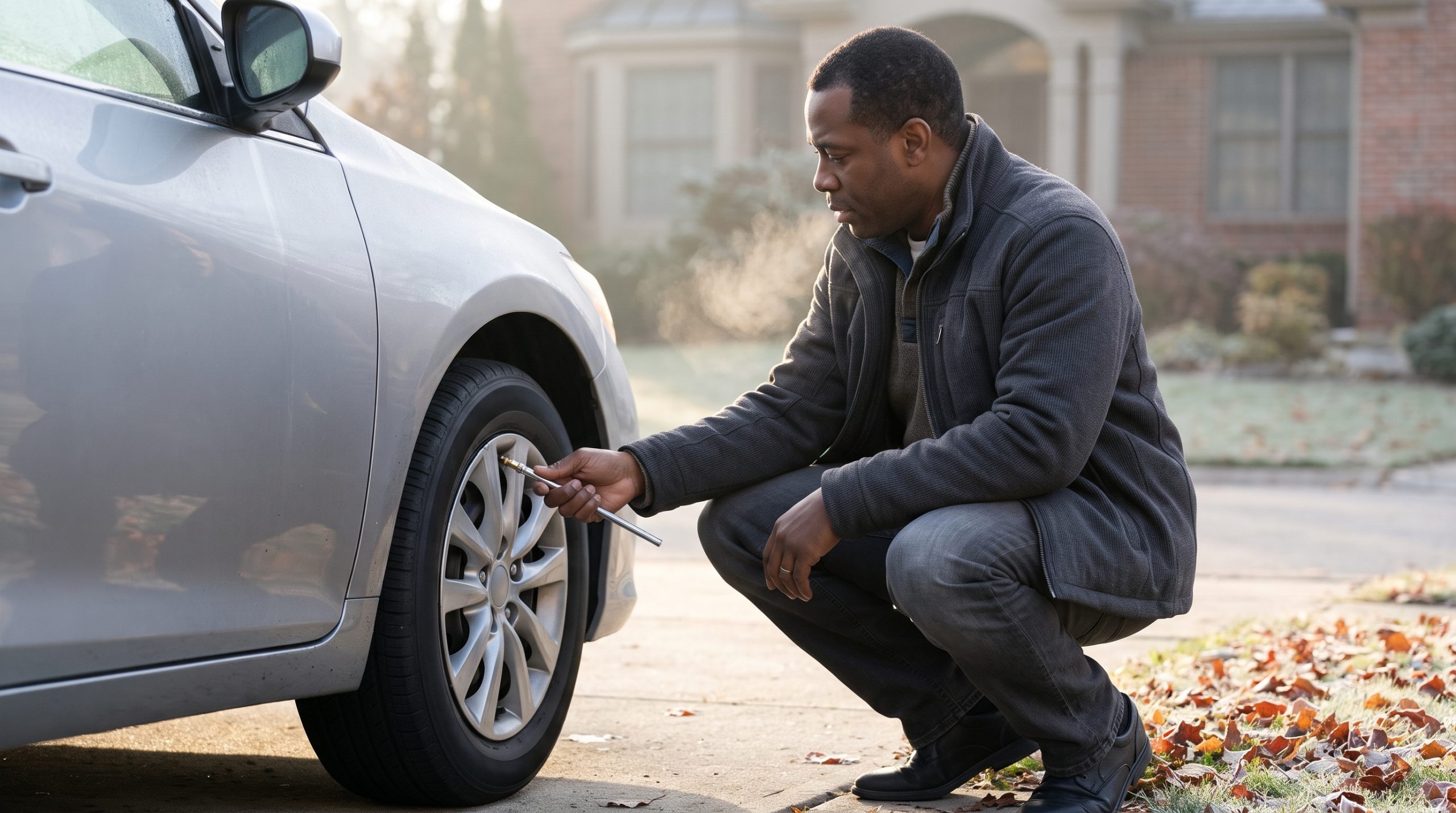
A cold-morning pressure check takes under five minutes and catches what the dash will not flag for days. Skipping it quietly costs tire life, fuel economy, and stopping distance long before any warning light earns its keep.
Why Cold Weather Drops Tire Pressure
Tire pressure is just air sealed in a fixed volume, and air pressure tracks temperature closely. USTMA puts the real-world rate at 1 to 2 psi for every 10°F the temperature changes, rising in warm weather and falling in cold.
A tire filled to 32 psi on a 70°F afternoon can read 28 psi on a 30°F morning, a 4 psi drop from a 40 degree swing alone. That is not a leak; it is air contracting as it cools.
The first hard cold snap of the season is when most drivers notice it, because that swing is often the single biggest temperature change of the year. If you are also weighing a switch to dedicated winter rubber before the next one hits, our winter tires versus all-season tires cost comparison covers that decision separately.
Why the TPMS Light Waits Until You’re a Quarter Flat
The National Highway Traffic Safety Administration (NHTSA) does not require the warning light to catch a tire the moment it slips below the recommended number. FMVSS 138, found in the Code of Federal Regulations (CFR) at 49 CFR 571.138, sets the trigger at 25 percent below the vehicle manufacturer’s recommended cold inflation pressure.
The system then has up to 20 minutes to illuminate the telltale once a tire crosses that line. On a car with a 32 psi door jamb placard, 25 percent below is 24 psi. That means you can lose 8 psi, roughly a 40 to 80°F swing at the USTMA rate, before the dash says anything.
That threshold filters out normal seasonal drift so the light is not constantly nagging drivers. It also means the light is a floor, not an early warning, and a tire can sit several psi low for weeks before TPMS notices.
Door Jamb Placard vs. Sidewall Max: Which Number to Trust
Two numbers live on every tire, and they answer different questions. The sticker in the driver’s door jamb lists the vehicle manufacturer’s recommended cold inflation pressure, the number your TPMS system and fuel economy depend on.
The number molded into the tire’s sidewall is the tire’s maximum pressure, the structural ceiling the tire can hold, not what the automaker wants you running day to day. The DOE’s own fuel economy guidance is direct: “Do not use the maximum pressure printed on the tire’s sidewall.”
Mixing the two up is common, since the sidewall number sits right on the tire itself, often in larger print than any door sticker. If you are also tracking tread wear alongside pressure, tire age versus tread depth breaks down the other number worth checking before winter.
What Driving on Low Tires Actually Costs You
Under-inflation has a direct, measurable fuel cost. The DOE’s fueleconomy.gov maintenance guidance calculates that under-inflated tires lower gas mileage by about 0.2 percent for every 1 psi drop in average pressure across all four tires.
At the 8 psi gap that sits right at the TPMS threshold, that works out to roughly a 1.6 percent fuel economy loss. It is invisible day to day but real over a tank.
USTMA also notes that under-inflated tires generate excessive heat and stress, causing irregular wear and internal damage well before anyone sees a blowout. Handling suffers too: a soft tire rolls on more sidewall, slows steering response, and lengthens stopping distance.
None of this requires a leak or a puncture. It is the predictable result of the season changing while the gauge stays in the glovebox.
The same cold snap that drops your tire pressure is also freezing any leftover summer washer fluid still sitting in the reservoir. A washer fluid freeze point rating works the same way a TPMS threshold does: it only protects you once you have actually checked it ahead of the first hard freeze.
| Overnight Temperature Drop | Approx. psi Change | What To Do |
|---|---|---|
| 10°F | 1 to 2 psi lower | Normal drift, recheck at your next fill-up |
| 20°F | 2 to 4 psi lower | Check with a gauge this week |
| 30°F | 3 to 6 psi lower | Likely below placard pressure, check now |
| 40°F | 4 to 8 psi lower | Approaching the 25% TPMS threshold on many vehicles |
| 50°F or more | 5 to 10+ psi lower | Often past the TPMS threshold, check immediately |
| Best practice | Any swing | Check monthly with a gauge regardless of temperature |
Frequently asked questions
How much does tire pressure drop in cold weather? Tire pressure typically falls 1 to 2 psi for every 10°F drop, according to the U.S. Tire Manufacturers Association. A 40°F overnight swing, common at the season’s first cold snap, can cost a tire 4 to 8 psi before you ever check a gauge.
Why didn’t my TPMS light come on when my tires were already low? Federal rule FMVSS 138 only requires the Tire Pressure Monitoring System to trigger once a tire is 25 percent below the manufacturer’s recommended pressure. The system then has up to 20 minutes to illuminate after that point, so a tire can run several psi low for weeks before the light notices.
Should I inflate my tires to the number printed on the sidewall? No. The sidewall number is the tire’s maximum pressure rating, not the recommended one. Use the pressure listed on the sticker in the driver’s door jamb or the owner’s manual, since that is what the automaker calibrated for ride and handling.
Does under-inflated tire pressure actually hurt gas mileage? Yes. The Department of Energy’s fueleconomy.gov states under-inflated tires lower gas mileage by about 0.2 percent for every 1 psi drop in average pressure across all four tires. An 8 psi gap, the amount TPMS allows before warning, costs roughly 1.6 percent.
How often should I check tire pressure once the weather turns cold? Check at least monthly year-round, and add a check right after the season’s first hard temperature drop. A cold-morning gauge check takes under five minutes and catches pressure loss the TPMS light is not required to flag for weeks.
Leave a Reply