
5 min read · Last updated August 12, 2026
- A seller who took a car to CarMax for an in-person appraisal after getting an online quote of $17,000 walked away with a written offer of $14,500, a $2,500 cut, according to Motor1’s review of the process.
- CarMax has stated it only adjusts a written number when “a car’s condition, use, or history differs from the information we received.” It isn’t a negotiating tactic; it’s a second, more thorough look.
- The federal minimum tire tread depth is 2/32 of an inch (49 CFR 393.75), but most instant-offer buyers grade toward resale condition, not the legal floor, and tires are one of the most common line items behind a deduction.
- Consumer Reports’ own member data puts the average price of one replacement tire at $212, plus a median $31 installation charge. That’s roughly $972 for four tires, mounted and balanced, which is the rough size of a tire-driven deduction.
In this article
- What the online tool can’t see
- The tire math behind the deduction
- The number can also go up
- The five-minute check before you drive over
- Frequently asked questions
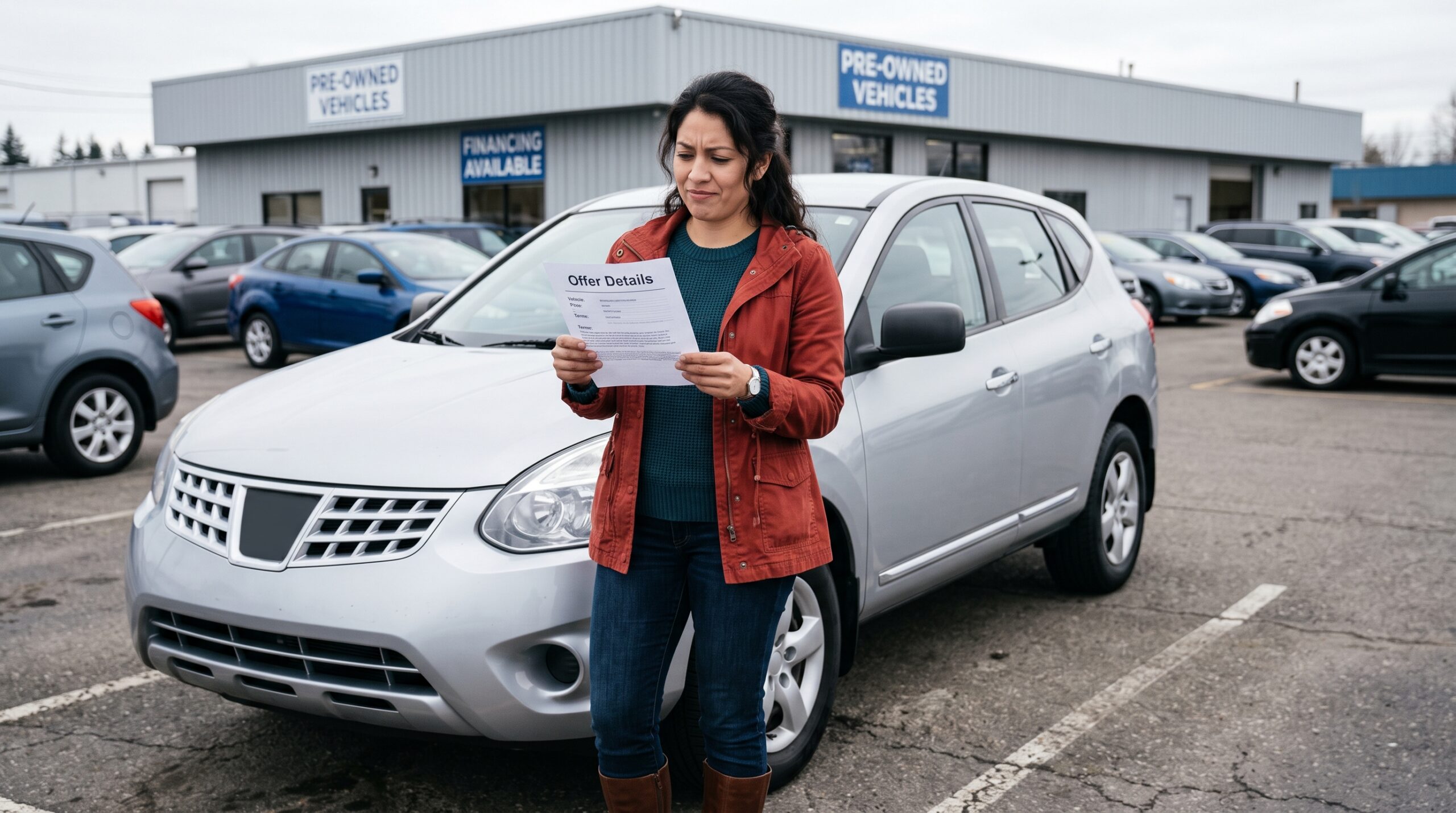
One seller ran a car through CarMax’s online instant-offer tool and got a $17,000 quote. At the in-person appraisal, the written number came back at $14,500, a $2,500 cut, with the difference attributed to condition rather than anything the seller could negotiate away, according to Motor1’s reporting on how CarMax’s online and in-person numbers compare. Every instant-offer tool works the same basic way: answer a set of questions on a screen, get a number in under two minutes, and it feels final. It usually isn’t.
What the online tool can’t see
The online number is built entirely from what you type in: mileage, trim, features, and a handful of yes/no questions about damage and mechanical problems. It’s an estimate based on your word. The in-person appraisal is the first time anyone actually looks at the car, and CarMax has said publicly that it only revises a written offer when “a car’s condition, use, or history differs from the information we received,” per Motor1’s coverage of the process. That statement matters because it tells you exactly where to look before you go: the same things an appraiser checks are the same things a self-reported form can’t verify. Tire condition, glass chips, dashboard warning lights, aftermarket modifications, and whether the odometer matches what you entered are the recurring items behind a revised number. None of them are hidden tricks. They’re the parts of a used car that a photo and a checklist genuinely can’t capture.
The tire math behind the deduction
Tires are one of the most common reasons a written offer lands below the online quote, and the math behind it is worth knowing before you go in. Federal rule 49 CFR 393.75 sets 2/32 of an inch as the minimum legal tread depth on a passenger tire, a floor most states also enforce at inspection. But a buyer who plans to resell your car isn’t grading it against the legal minimum. It’s grading whether the tires need replacing before the next owner drives off the lot, and that bar sits well above 2/32.
Here’s what replacing a set actually costs. Consumer Reports surveyed its own members and found they paid an average of $212 for a single replacement tire, with a median installation charge of $31 per tire. Four tires at $212 comes to $848. Four installation charges at $31 comes to $124. Add those together and a full set, mounted and balanced, runs about $972. If a reinspection finds all four tires below the buyer’s resale bar, that single line item accounts for most of a deduction the size of the $2,500 gap in the case above, once you add a smaller item like a windshield chip or a scuff the online photos didn’t catch.
The number can also go up
It’s worth saying plainly: this isn’t always a story about buyers lowballing sellers at the door. Motor1’s reporting also documented a case where a 2019 Mazda CX-5 came in at $28,400 in person, higher than its $26,900 online offer, because the car checked out better than the online form suggested. The appraisal cuts both ways. What it consistently is not is a formality. Treat the online number as a starting estimate, not a promise, in either direction.
The five-minute check before you drive over
A short check before the appointment closes most of the gap between the online quote and the pickup number:
- Check tread depth yourself on all four tires. A quarter inserted into the tread groove, Lincoln’s head down, shows roughly 4/32 of an inch if the top of his head disappears.
- Confirm the odometer reading matches exactly what you entered online, down to the mile.
- Walk the glass for chips or cracks, especially the windshield, and note any dashboard warning lights currently lit.
- Photograph anything you already know is wrong so nothing gets discovered fresh at the counter.
- Bring the title and confirm there’s no lien mismatch before you drive over, since a title problem stops the transaction entirely rather than just adjusting the price.
If you’re deciding whether an instant offer beats a private sale in the first place, the cash-in-hand math usually favors private sale by more than people expect. And if you’re carrying a loan on the car you’re about to appraise, check the payoff gap before you accept any number, because a reinspection deduction lands on top of whatever you still owe, not instead of it. That comparison can flip depending on your state’s sales tax rules too, since trading in only saves tax where your state actually credits it against the purchase price. For a side-by-side look at all three paths on one real car, see how a dealer trade-in, an instant offer, and a private sale compared for one seller’s Camry.
Frequently asked questions
Is an online instant offer legally binding once I accept it? No. Accepting an online quote only books the appointment. The number becomes a firm written offer only after the in-person inspection confirms the car matches what you disclosed. Before that appraisal, the online figure is an estimate, not a contract either side is bound to.
Can the in-person number come back higher than the online quote? Yes. Motor1 documented a case where a 2019 Mazda CX-5 appraised $1,500 higher in person than online, because the car checked out better than the online form suggested. Appraisers adjust in both directions based on what they actually find at pickup, not just downward.
What’s the single most common reason a written offer drops? Tire condition below the buyer’s resale bar is one of the most frequently cited reasons, along with windshield damage, mismatched mileage, an open recall the seller never closed, and mechanical issues the online form didn’t ask about directly. Any one of these can trigger a revised number, and several together compound into a larger cut.
Can I negotiate after a reinspection deduction? You can ask what specifically changed the number, and a legitimate buyer should be able to point to it. You generally can’t negotiate the deduction itself, but you can decline the revised offer and sell elsewhere if it doesn’t add up.
How long is a written offer good for once I get one? It varies by buyer, but every instant-offer company treats a written number as good for a short, specific window rather than indefinitely. Ask the appraiser directly and get the expiration in writing before you leave.
Leave a Reply