7 min read · Last updated October 26, 2026
- A 2016 American Automobile Association (AAA) survey found rust can reach brake lines, fuel tanks, and exhaust systems. Rust repairs averaged $490 each.
- A 2018 Consumer Reports reader answer calls an $800 dealer undercoating package unnecessary, because new cars already ship with factory corrosion protection.
- At an illustrative $175 a year, reapplying undercoat costs $1,400 over eight years. Get a written local quote, since no published price survey exists.
- AAA’s own rust-prevention checklist is free: wash, wax, and touch up paint. It does not list paying for undercoating as a recommended step.
Annual undercoating is worth it mainly as a math problem: a yearly shop bill, such as $175, against AAA’s $490 average cost for a salt-related rust repair. Over eight years, that math favors an aging truck with steel brake lines in a heavy-salt state far more than a newer car in a mild one.
In this article
- What Rust Damage Actually Threatens
- Why the Dealer’s Undercoating Package Isn’t Worth It
- Is Annual Undercoating Worth It? The Worked Math
- Which Vehicles the Math Actually Favors
- Frequently asked questions
An oil-based undercoat sprayed on once a year is a recurring shop bill. Whether it is worth paying depends on what it actually insures against. The repair side of that trade is well documented, and the price side varies by shop.
What Rust Damage Actually Threatens
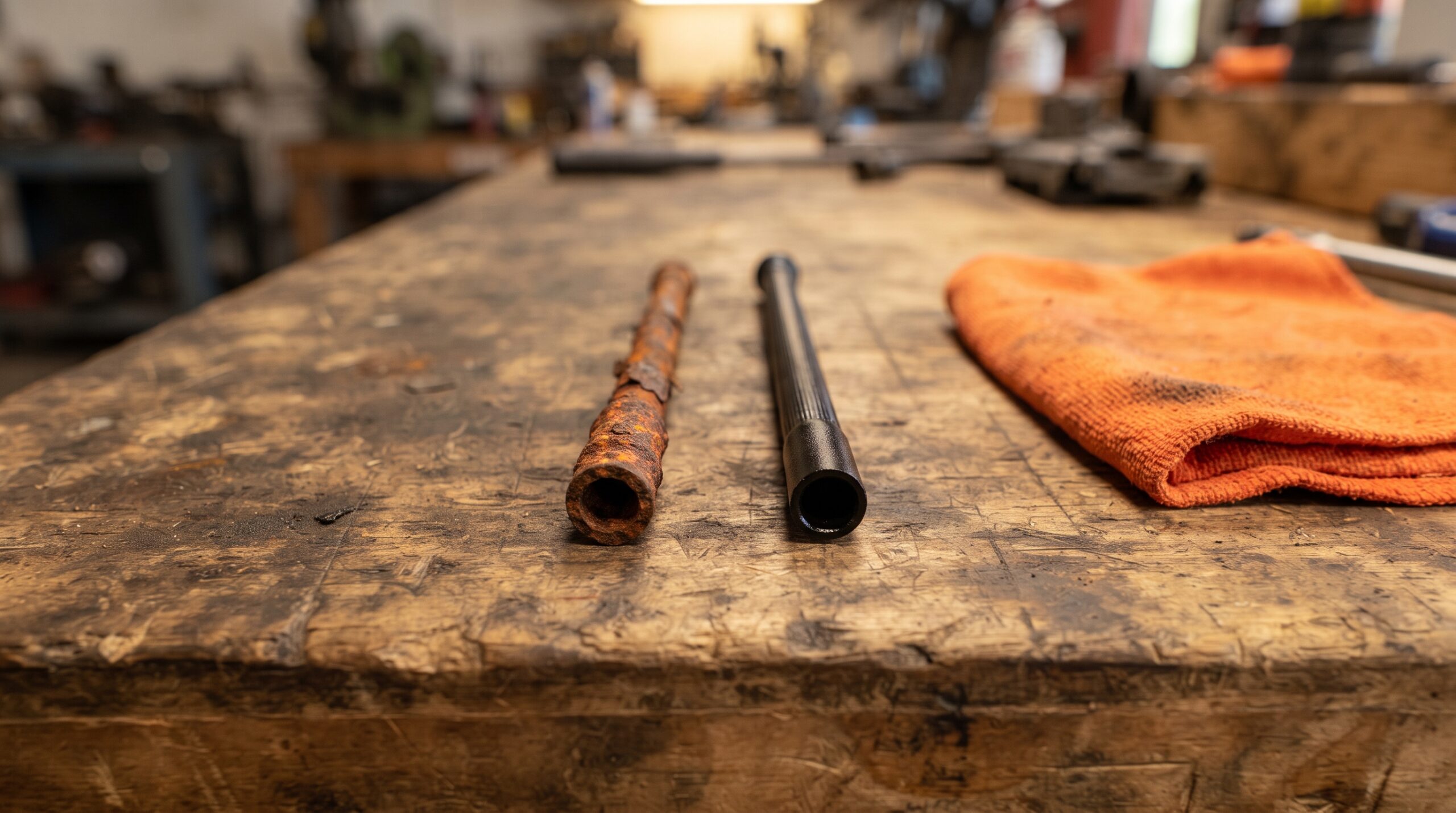
Rust is not just a cosmetic problem. AAA’s 2016 survey found that road salt can damage brake lines, fuel tanks, and exhaust systems. Those are the parts a car needs to stop and run safely.
YourAutoOptions has already covered the general rust clock that eventually ends a car’s life through frame and floor pan corrosion. This article narrows that question to one decision: should you pay every year to slow that clock down?
In that survey, 70% of U.S. drivers lived in a winter-climate region, and 15% of those drivers needed at least one rust repair in the five years before the survey. Drivers who had at least one repair averaged one and a half repairs over five years. Each cost $490 in 2016 dollars, so today’s bills likely run higher.
A rusted brake line is not a paint problem. Brake repair costs already run into real money before corrosion adds a second, separate bill on top of normal wear.
AAA’s own prevention list includes steps such as:
- Wash the car before winter
- Fix paint chips
- Wax the finish
- Limit driving during storms
- Rinse the undercarriage, especially once winter ends
Every item on that list is free or near-free. Paying a shop for an annual oil-based spray is not on it.
Why the Dealer’s Undercoating Package Isn’t Worth It
In a 2018 answer, Consumer Reports fielded this exact question from a reader who declined an $800 dealer “protective undercoating” on a new car. Its answer: “The short answer is no.”
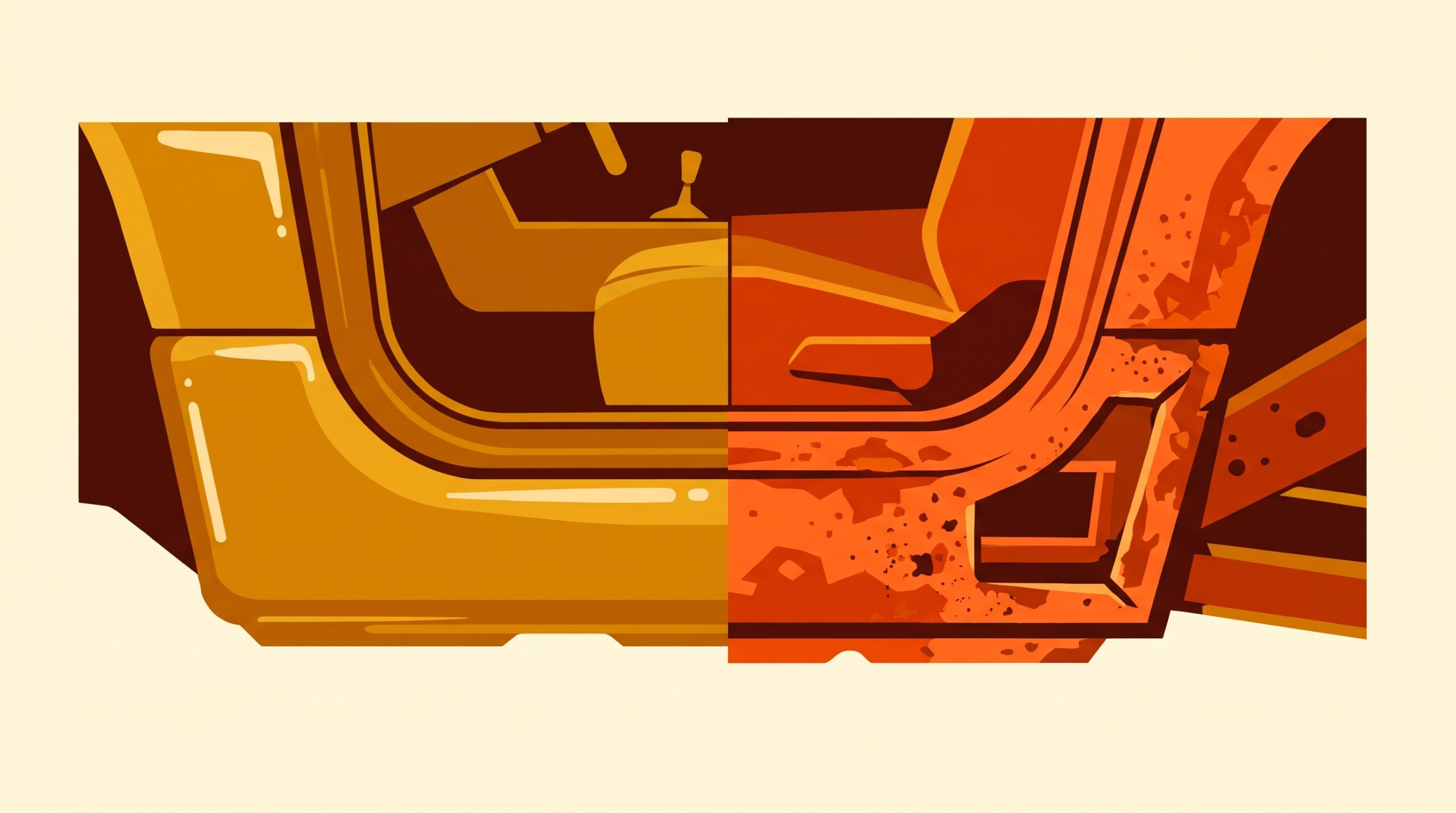
Consumer Reports explains that modern cars already ship with factory corrosion protection. The dealer add-on duplicates what is already built in, and it is profitable for the dealership instead.
That $800 is the only dealer price Consumer Reports cites, so treat it as one reader’s quote, not a market average.
Some dealers market these packages as “lifetime” coverage, but Consumer Reports never uses that word, so read the contract’s actual terms. Either way, the package is sold on a brand-new car that does not yet need extra protection, not on the older vehicle this article is about.
Is Annual Undercoating Worth It? The Worked Math
Say a driver named Hank owns a nine-year-old pickup with steel brake lines and a few spots of surface rust already showing on the rocker panels. He lives in a state that salts its roads every winter and plans to keep the truck eight more years.
An independent shop quotes him $175 a year for an oil-based undercoat. That figure is illustrative, so your own quote will differ. Over eight years, that comes to $175 times 8, or $1,400.
For that bet to pay off in avoided repairs alone, it has to prevent close to three of AAA’s $490 average rust repairs. That is because $1,400 divided by $490 works out to 2.86.
AAA’s own numbers suggest Hank is not quite that likely to hit three. Drivers who already had one salt-related rust repair averaged 1.5 of them over five years. Stretched across eight years on a straight-line basis, that is roughly 2.4 repairs, below the 2.86 Hank needs just to break even.
The math is close, not a clear win. It tips toward paying only if Hank’s real risk runs higher than AAA’s national average for winter-climate drivers. His truck’s age, its visible surface rust, and his state’s heavy salt use are exactly the factors that could push it there.
Which Vehicles the Math Actually Favors
The break-even math above is a national average, and it shifts fast depending on the vehicle. It moves in favor of paying when the truck is old enough that factory corrosion protection has worn thin. It also favors paying when the brake lines are plain steel rather than coated, or the state salts roads more heavily than the national average.
It moves against paying when the car is newer, still carries the factory protection Consumer Reports describes, or spends most winters garaged. A car that rarely touches salted roads does not generate enough rust-repair risk for $175 a year to make sense.
| Option | Cost | What the evidence says |
|---|---|---|
| No treatment | $0 | AAA’s own prevention advice is free: washing, waxing, and paint touch-ups |
| Rinse the undercarriage after winter | $0 | AAA lists it among its own rust-prevention steps |
| Independent shop, annual reapplication | $175 a year, illustrative | This article’s own math shows it is close to break-even, not a clear win, even for already-affected drivers |
| Dealer undercoating package | $800, per a Consumer Reports reader’s quote | Consumer Reports calls it unnecessary on a car that already has factory corrosion protection |
| Best for | Older trucks and sedans with steel brake lines and visible surface rust in heavy-salt states should weigh the annual spray; skip the dealer package on a new car, and skip paid treatment entirely on a newer car in a mild climate | |
The honest takeaway is not “always pay” or “never pay.” The dealer’s package is the easiest option to rule out. The annual independent spray is a genuine judgment call that depends on the specific truck, not a blanket rule for every car in a salt state.
Whatever you decide on undercoating, a cheaper habit works alongside it: an unlimited car wash membership that rinses the undercarriage every visit keeps salt from sitting on the metal long enough to need any of the repairs above. The actual underbody wash schedule AAA and Consumer Reports recommend matters more than which membership you buy to get there.
Frequently asked questions
Does undercoating actually stop rust? No independent, controlled test confirms a specific effectiveness rate for today’s oil-based or rubberized products. Consumer Reports says factory corrosion protection already covers a newer car. An older vehicle may see some benefit, but no study puts a verified number on how much rust it actually prevents.
How much does annual undercoating cost? Prices vary by shop, region, and vehicle, and this article found no published price survey. The worked example uses $175 a year for illustration, so get a written quote. The only dealer figure cited here is $800, from a Consumer Reports reader’s question about a new-car package.
Is the dealer’s undercoating package worth paying for? Usually not on a new car, since Consumer Reports says factory corrosion protection already covers that risk. The package is profitable for the dealership, and it is sold on a car that doesn’t need it yet. That math shifts once the same car is years older and already shows surface rust.
Does rust really damage brake lines? Yes. AAA’s 2016 survey lists brakes, fuel tanks, and exhaust systems as genuine rust-damage targets, not just cosmetic ones. Its survey found 15% of winter-climate drivers needed at least one salt-related rust repair within five years, averaging $490 per rust repair of any kind.
What does AAA recommend instead of paying for undercoating? Washing the car before winter, repairing paint damage, waxing the finish, limiting driving during storms, and rinsing the undercarriage after winter ends. AAA lists these steps in its own rust-prevention advice, and none of them require a shop visit or an annual bill.
Leave a Reply