6 min read · Last updated October 14, 2026
- A burned-out brake light typically costs $45 to $80 to fix, the cheapest of the four common failure points.
- A failed emissions sensor usually runs $150 to $400 to replace, depending on the vehicle.
- Tread-depth tire failures cost the most, often $240 to $600 because inspectors frequently reject a tire’s axle mate too.
- Virginia gives drivers 15 days and up to two free reinspections to fix most safety items, but only 14 days for a free emissions retest.
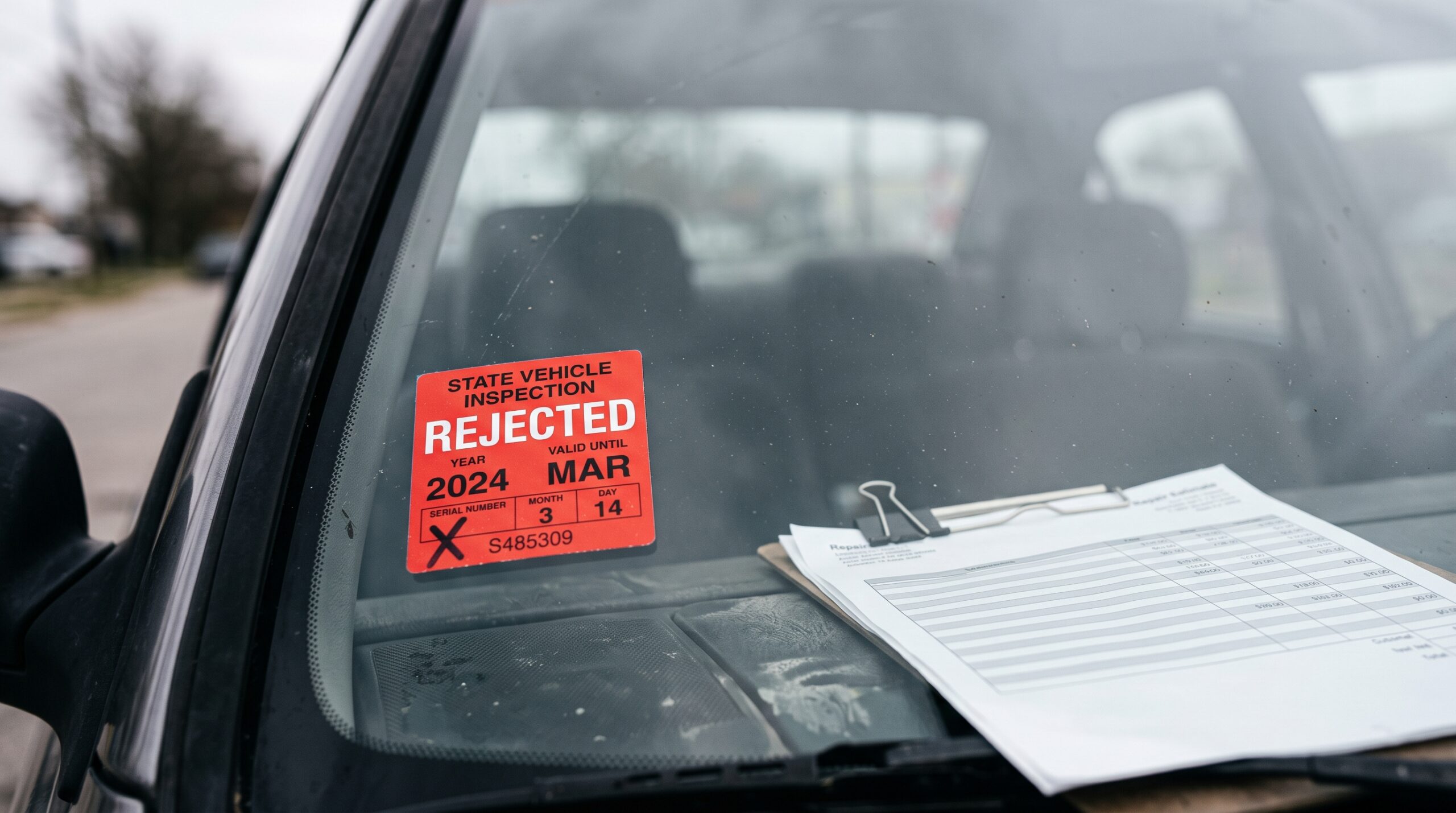
Fixing a failed vehicle inspection item costs $45 to $80 for a brake light and $100 to $300 for illegal window tint. Tread-depth tire replacement runs $240 to $600, and a failed emissions sensor costs $150 to $400, depending on the vehicle and state.
Failed vehicle inspection repair costs swing wildly by failure type, not by the inspection itself. A $12 bulb and a pair of new tires can both trigger the same rejection sticker.
In this article
- What a Failed Emissions Sensor Costs to Fix
- Window Tint Violations Are Usually the Cheapest Fix
- Tire Tread Depth Failures Cost the Most
- Brake Light Failures Are the Fastest Fix
- Failed Vehicle Inspection Repair Costs and Retest Windows in Virginia
- Frequently asked questions
What a Failed Emissions Sensor Costs to Fix
Most of these failure points are catchable before an official inspection ever flags them: a free 10-point pre-trip check covers the same tires, lights, and fluids an inspector looks at.
An emissions-related check-engine light usually traces back to a failed oxygen sensor, the component that measures unburned fuel in the exhaust stream. Replacing one typically costs $150 to $400, split between a $50 to $250 part and $60 to $150 in labor depending on how many sensors the engine uses.
A diagnostic scan to confirm which sensor triggered the light usually adds $50 to $120, though many shops waive that fee if the customer approves the repair. Older vehicles with more than one oxygen sensor can push the total toward the high end of the range.
Virginia requires this check only in its Northern Virginia emissions program area, covering Arlington, Fairfax, Loudoun, Prince William, and Stafford counties, plus several nearby cities. Under Virginia’s emissions inspection regulations, a station must give a failed vehicle one free retest within 14 days of the original chargeable test.
Miss that 14-day window and the next test counts as a new, chargeable inspection. That rule rewards getting the sensor replaced quickly rather than waiting to see if the light clears on its own.
Window Tint Violations Are Usually the Cheapest Fix
Virginia law sets a visible light transmittance (VLT) floor of 50 percent on front side windows and 35 percent on rear windows. Reflectance is capped at 20 percent on any window, under Code of Virginia § 46.2-1052. Film darker than that fails inspection outright.
Aftermarket tint shops sometimes sell film below those limits without mentioning the inspection risk. A driver who bought dark film without checking the law is the one most likely to see this failure point.
Stripping illegal tint and reapplying a compliant film runs $100 to $300 for a full vehicle, making it the least expensive of the four failure points most weeks. Removing tint from a single window alone, without a full redo, often costs $25 to $75.
Tire Tread Depth Failures Cost the Most
Under Virginia’s tire tread inspection standard, a tire isn’t rejected the moment one reading comes up short. A tire first flagged with two adjacent tread grooves under 2/32 of an inch gets remeasured at two more equally spaced points around it. It only fails if that same shallow reading shows up at every one of those additional points.
That depth is the same wear-bar level built into nearly every tire sold. A single replacement tire installed costs $120 to $250, depending on tire size and brand. Shops commonly replace it in a pair to keep tread depth matched across an axle, pushing the real bill to $240 to $600.
A wheel alignment check often gets added at the same visit, since uneven wear is one sign a car has been out of alignment. That inspection typically adds $75 to $150 if the shop finds the car actually needs it.
Brake Light Failures Are the Fastest Fix
A burned-out brake light is usually a $10 to $30 bulb plus $35 to $50 in shop labor, for $45 to $80 total. It costs nothing if a driver swaps the bulb at home. A cracked housing or corroded socket raises the bill to $50 to $150 for the full assembly.
Corrosion shows up more often on vehicles over eight years old, especially in areas that salt roads in winter. A quick bulb and socket check before an inspection appointment can catch this failure before it costs a reinspection trip.
Failed Vehicle Inspection Repair Costs and Retest Windows in Virginia
| Failure Point | Typical Repair Cost | Virginia Retest Window |
|---|---|---|
| Emissions sensor | $150 – $400 | 14 days, one free retest |
| Window tint violation | $100 – $300 | 15 days, up to two free reinspections |
| Tire tread depth | $240 – $600 (pair) | 15 days, up to two free reinspections |
| Burned-out brake light | $45 – $150 | 15 days, up to two free reinspections |
Virginia’s rejection sticker regulation gives drivers 15 days from a failed inspection to fix the problem and return. The same station owes no more than two reinspections during that window. The emissions program runs on a separate, shorter 14-day clock.
Take a 2015 sedan registered in Fairfax County that fails on two points: one front tire below 2/32 of an inch and a burned-out brake light. The shop replaces both front tires to match tread depth at $140 each, installed, for $280.
The brake light bulb and labor add $45. The total repair bill before reinspection comes to $325, and the car has 15 days to pass before the rejection sticker expires.
A second driver in the same county, with a 2012 sedan subject to the emissions program, fails on a window tint violation and a failed oxygen sensor. The tint redo costs $180, and the sensor replacement, including a $70 diagnostic scan, adds $320.
That driver’s total comes to $500, but faces the tighter 14-day emissions clock rather than the 15-day safety window.
Frequently asked questions
How much does it cost to fix a failed emissions sensor? Replacing a failed oxygen sensor typically costs $150 to $400, including both the part and labor. The exact price depends on how many sensors the vehicle uses and whether the check-engine light points to a related part, like a catalytic converter, that also needs attention.
Can I fix a window tint violation myself before a retest? Removing illegal tint film yourself is possible with a heat gun and patience, but reapplying film that meets Virginia’s 50 percent and 35 percent visible light transmittance limits is easier to get right at a shop. A professional redo typically runs $100 to $300 for the full vehicle.
Why do inspectors often reject two tires instead of one? A single worn tire usually shares an axle with another tire that is close behind it in tread depth. Shops commonly replace both to keep the axle matched, since uneven tread depth side to side can affect handling and traction, which raises the repair bill from one tire to two.
How many days do I have to fix a failed inspection in Virginia? Virginia’s rejection sticker stays valid for 15 days from the failed inspection, during which a driver can get up to two free reinspections at the same station. The emissions program runs on a separate 14-day window for a free retest after a failed test.
Does a burned-out brake light always mean a new bulb? Usually, yes. A bulb and labor typically cost $45 to $80 total. If the housing is cracked or the socket has corroded, which happens more often on older vehicles, the full assembly replacement can run $50 to $150 instead.
Leave a Reply