6 min read · Last updated November 6, 2026
- A chewed wiring harness is a real repair cost, not a rare fluke: one documented case hit $6,000, another just over $700, depending on how many wires or components the rodent reaches.
- Comprehensive car insurance, not collision or liability, typically pays for this kind of damage once your deductible is met, per the Insurance Information Institute.
- Toyota’s 2018 lawsuit over soy-based wiring insulation was dismissed for lack of proof, so a newer, soy-free car is not automatically rodent-proof.
- Honda sells a capsaicin-treated wiring tape, the compound that makes chili peppers hot, specifically for rewrapping a harness rodents have already chewed into.
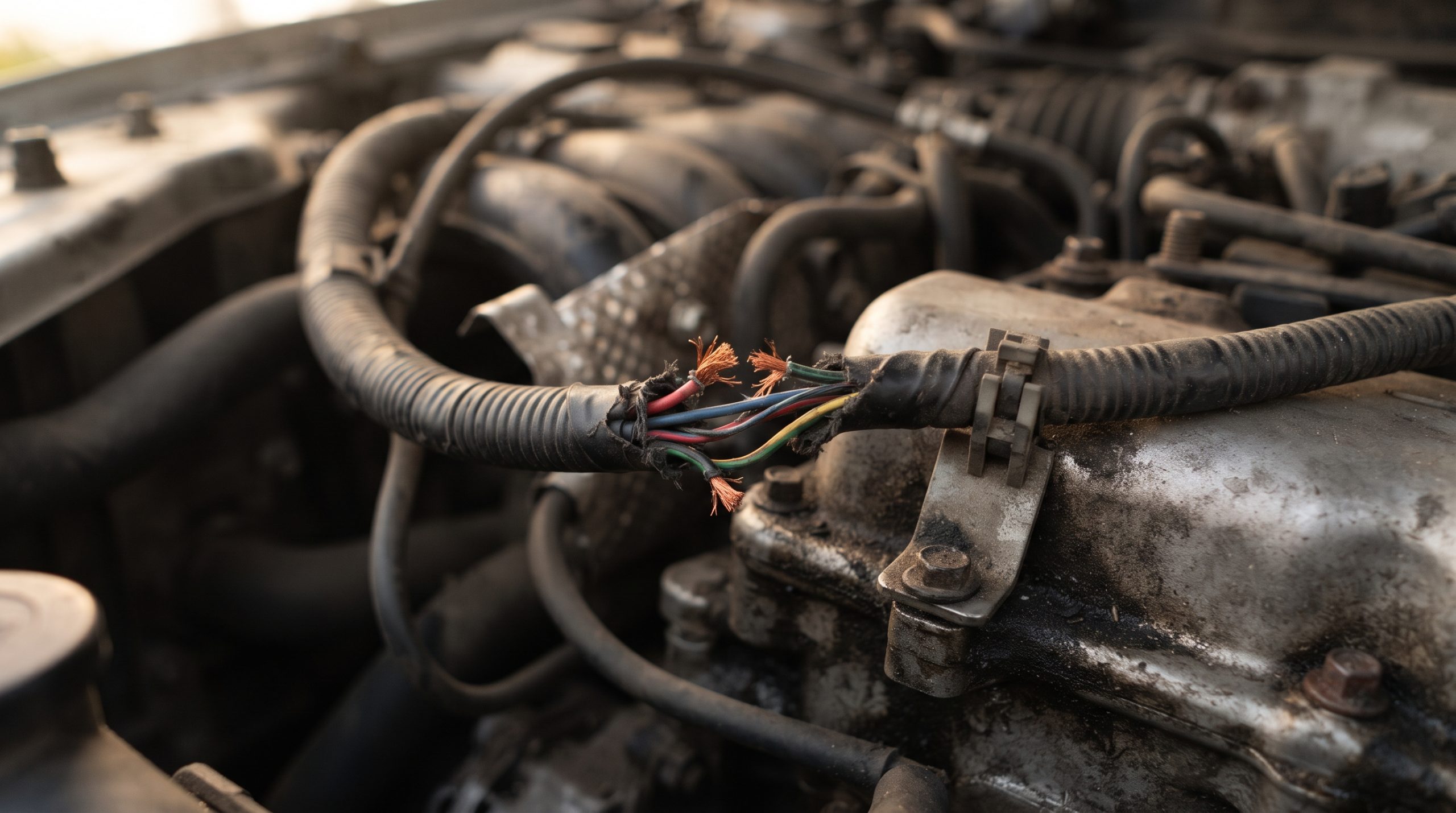
A rodent-chewed wiring harness is a real repair-cost risk, not a horror story. Two documented cases show repair costs ranging from about $700 to $6,000, depending on how many wires, connectors, or components the animal reaches before anyone notices.
In this article
- What a rodent-chewed wiring harness costs to repair
- Is soy-based wiring actually to blame?
- What actually deters rodents from chewing wiring
- Frequently asked questions
What a Rodent-Chewed Wiring Harness Costs to Repair
Christine Moss found that out the expensive way. She heard a bang under the hood of her 2023 Ford F-150, then watched the dashboard light up and the engine stutter.
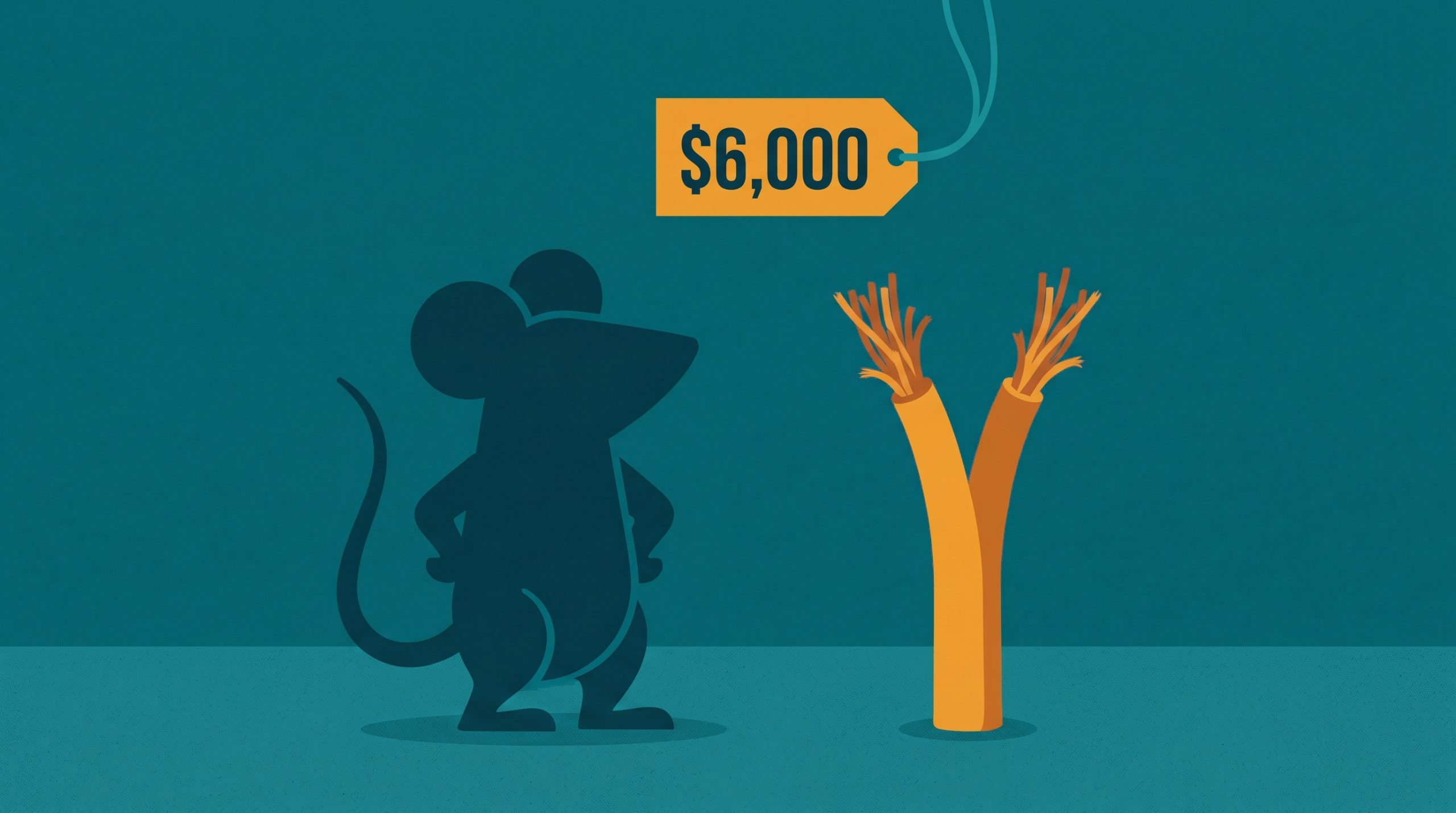
Rodents had chewed through her fuel pump wiring, filters, and most of what sat under the hood. Her total repair bill came to $6,000.
In Texas, Paco Aguirre’s repair bill after rats chewed wiring under his hood came to just over $700. That smaller figure matters for a different reason: it sits close enough to a typical insurance deductible that filing a claim might not net him anything.
Rodent damage like this falls under comprehensive coverage, not collision or liability. The Insurance Information Institute (III), an insurance-industry research and communications group, lists “contact with animals such as birds or deer” as one of the specific losses comprehensive coverage pays for, with typical deductibles running $100 to $300. Moss’s deductible was $1,000, so her insurer covered the remaining $5,000 of her $6,000 bill ($6,000 minus her $1,000 deductible), and the deductible is still what made the repair cost her real money.
Comparing those two real bills produces a simple rule of thumb: subtract your deductible from the repair estimate before you decide whether to call your insurer. If the result is a few hundred dollars or less, paying out of pocket usually beats filing, since a claim can still affect your renewal rate even when it pays out. If the result is a few thousand dollars, like Moss’s $5,000, filing is the clear move.
Chewed wiring is also one of the pricier line items on a repair order when it shows up alongside other common inspection failure points, since a technician has to trace each affected circuit before quoting a fix. That math only holds if you catch the damage early. A chewed sensor wire can trip a check engine light long before it strands you, and ignoring it works the same way as any other deferred repair: the $700 fix becomes a $2,000 one once a downstream part fails from the exposed wiring shorting against it.
Is Soy-Based Wiring Actually to Blame?
Some mechanics believe it. A general manager at a Florida repair shop told a local news investigation that “the soy itself is what attracts them, and they can pick up the scent.” Automakers disagree just as directly. Ford told the same investigation that its F-150 wiring harnesses don’t use “biologically-based additives or components.” Toyota and Honda both faced class-action lawsuits over claims that soy-based wiring insulation drew rodents to their vehicles; a federal judge dismissed the Toyota case in 2018, in part because the plaintiffs couldn’t tie the damage specifically to soy-coated wiring rather than other parts of the car.
That dismissal matters for a newer-car buyer who assumes soy-free wiring solves the problem. The same Florida mechanic noted that rodents don’t only go after wires. They also chew hard plastics and eat into hood insulation to build nests, regardless of what the wiring itself is coated in.
What Actually Deters Rodents From Chewing Wiring
One product with an actual documented mechanism: Honda sells a wiring-harness repair tape treated with capsaicin, the compound that makes chili peppers hot, specifically for rewrapping wiring that rodents have already chewed into. It’s a repair material, not a whole-engine-bay shield. You apply it to the exposed wiring itself, not to the surrounding compartment.
Wrapping a few feet of tape yourself costs the price of the roll. A full harness rewrap, the kind a chewed section that causes a no-start usually needs, is a different job entirely, closer to the labor-heavy end of a shop-versus-doing-it-yourself repair comparison, since a shop has to trace every affected circuit before it can quote the fix.
For prevention rather than repair, the most consistent advice is mechanical rather than chemical: don’t store pet food, birdseed, or trash near where the car parks, and check under the hood yourself if the car has sat unused for more than a few days. A five-minute look costs nothing. A $6,000 repair does not.
Frequently asked questions
Does car insurance cover rodents chewing wires? Comprehensive coverage does, since it pays for damage from something other than a collision, including contact with animals. Collision-only or liability-only policies will not pay for it. You’ll need to show a mechanic’s diagnosis tying the damage to animal activity, and your deductible still applies before your insurer pays the rest.
Is soy-based wiring really why rodents target cars? It’s disputed, not settled. Some mechanics believe soy-based insulation attracts rodents, but automakers deny it, and a 2018 federal lawsuit against Toyota over the claim was dismissed for lack of proof. Rodents also chew hard plastics and hood insulation with no soy content at all, so avoiding soy-wired cars is not a guaranteed fix.
How much does rodent wiring damage typically cost to repair? Two documented cases ran from just over $700 to $6,000, depending on how many wires, connectors, filters, or fuel-system parts the animal reached. A single chewed wire can be a quick splice. A nest built deep in the engine bay can mean replacing most of the harness.
Will filing a claim for rodent damage raise my car insurance rates? It can, even though a comprehensive claim isn’t your fault the way an at-fault collision is. Compare your repair estimate to your deductible first. If the gap is only a few hundred dollars, paying out of pocket can cost less over time than a rate increase at renewal.
How can I keep rodents out of my engine bay? No single method is guaranteed. One documented case involved daily repellent spray, rat poison, and mothballs before a $6,000 repair still happened. The more reliable habits are mechanical: don’t park near stored pet food or trash, and pop the hood to look if the car sits unused for several days.
Leave a Reply