6 min read · Last updated November 20, 2026
- A reading of 12.6 volts with the engine off means the battery itself is likely fine, per testing guidance from AAA (the American Automobile Association). Anything meaningfully lower points to a dead or undercharged battery.
- With the engine running, 13 to 14.5 volts at the battery means the alternator is charging it correctly, according to AAA.
- A new battery that goes dead again within a week or two is almost always an alternator problem, not a second bad battery.
- Typical repair costs run $70 to $200 for a battery, depending on how hard it is to reach. An alternator runs $350 to $900, and a starter runs $350 to $1,100, per AAA and iSeeCars data.
Two multimeter readings tell you which part failed. One reading is taken with the engine off, the other with it running. Together they point to a $150 battery, a $350 to $900 alternator, or a $350 to $1,100 starter, before a shop charges to find out.
In this article
- The first test: 12.6 volts with the engine off
- The battery and alternator test: 13 to 14.5 volts with the engine running
- What a single click without cranking usually means
- The repair-cost ladder once you know which part failed
- Frequently asked questions
A $15 multimeter from any hardware store does both tests. You do not need a shop visit to narrow down the problem, and knowing the answer before you call one keeps a mechanic from starting with the most expensive guess.
The first test: 12.6 volts with the engine off
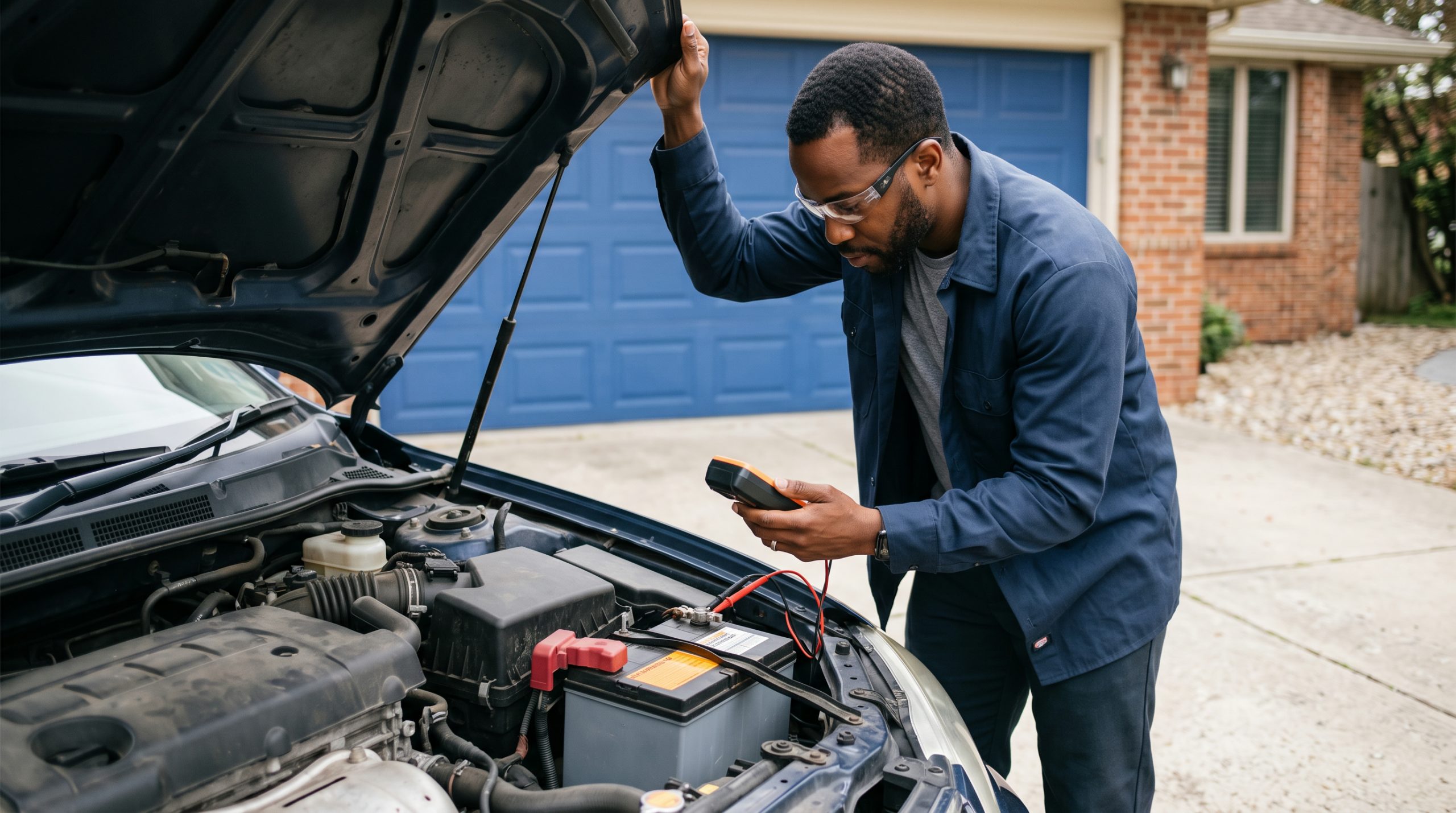
Touch the multimeter’s probes to the battery terminals with the engine off and everything else shut down. AAA (the American Automobile Association) says a fully charged battery should read about 12.6 volts in this state. A reading meaningfully below that means the battery is either dead or undercharged, not necessarily bad.
If the number is low, charge the battery on a wall charger and let it sit for a day before testing again. A battery that holds 12.6 volts after a full charge and rest period is healthy.
One that drops back down on its own is the actual problem, and the one you replace. A load test goes a step further and confirms a battery that reads fine at rest but still fails under real cranking demand.
This test only tells you about the battery at rest. It does not rule out the alternator, which is why the second test matters even when the first one passes.
The battery and alternator test: 13 to 14.5 volts with the engine running
Start the engine and take the same reading at the same terminals. AAA’s guidance is direct: a reading of 13 to 14.5 volts means the alternator is correctly charging the battery. Anything outside that range means the alternator is over or under charging it.
A more detailed technical reference, AA1Car, narrows the normal idle number further: 13.8 to 14.2 volts at idle with the lights and accessories off. AAA’s wider range accounts for a car with headlights, the blower motor, or a phone charger pulling extra current. That extra draw lowers the reading slightly without anything being wrong.
If the running voltage still sits at 12.6 volts or lower, the alternator is not adding any charge at all. The battery is only running on what it already had stored.
AA1Car also warns against a shortcut some drivers try. Never disconnect a battery cable while the engine is running to test the alternator, since doing that can send a voltage spike through the car’s electronics and damage them.
What a single click without cranking usually means
If both voltage tests pass and the engine still will not crank, the problem has moved to the starter circuit. A single click when you turn the key, with the engine not turning over at all, usually means the solenoid is engaging but the starter motor itself is not spinning.
A rapid, repeated clicking sound points somewhere else first: a weak battery or a loose or corroded connection, not the starter itself. Lights, the radio, and power windows still working normally is a useful tell. It means the battery has some charge left, which shifts the suspicion toward the starter or its wiring instead.
Corroded or chewed-through wiring between the battery and starter can produce the same symptoms as a failed starter. Rodent damage to wiring is a common, often-overlooked cause. It is worth a visual check before paying for a new part.
The repair-cost ladder once you know which part failed
Once a test confirms which part failed, the repair-cost range is fairly predictable. The table below uses AAA’s and iSeeCars’ published ranges, not a single average. The real number for your car depends on local labor rates and how hard the part is to reach.
| Part | Parts cost alone | Typical total with labor | What confirms it |
|---|---|---|---|
| Battery | $50 to $140 | $70 to $150 standard, $100 to $200 if hard to reach | Low voltage at rest that stays low after a full charge and rest period |
| Alternator | $100 to $350 | $350 to $900 | Running voltage outside the 13 to 14.5-volt range with a healthy battery |
| Starter | $80 to $400 | $350 to $1,100 | Normal voltage at both tests, but a single click or no crank at all |
Labor is most of what separates the low end of each range from the high end. AAA puts its own approved-shop labor rates at $150 to $300 an hour. A starter in an easy-to-reach spot can cost hundreds less to replace than one buried under the intake manifold on the same car.
Frequently asked questions
What does a 12.6-volt reading actually tell me? It means the battery itself is holding a normal resting charge with the engine off. It does not confirm the alternator is working. It also does not rule out a battery that looks fine at rest but fails once it is asked to deliver real current under load.
Why would a brand-new battery die again within a week? A healthy new battery that goes dead again almost always means something else is draining it or failing to recharge it while you drive, usually a weak or failing alternator. Replacing the battery again without testing the alternator usually just repeats the same failure.
Can a bad battery damage a good alternator? Yes. A weak or failing battery can force the alternator to work harder than it is designed for, which can shorten the alternator’s life. That is one reason AAA and other sources recommend testing the battery first, before assuming the alternator is at fault.
Is one loud click with no cranking always the starter? Not always, but it is the more likely explanation once the battery and alternator both test normal. A single, solid click usually means the solenoid engaged but the starter motor did not spin. Rapid, repeated clicking more often points back to a weak battery or a loose connection instead.
Is it worth replacing a starter myself to save on labor? It can be, if the starter is easy to reach and you are comfortable with the work. AAA notes labor alone often makes up more than half the total bill. On some vehicles the starter sits beneath other components, which turns a simple part swap into a much longer job better left to a shop with a lift.
Leave a Reply